
24/7 Customer Support

Free returns

Same-day & Next-day Delivery

Quality Guaranteed

Unlock Your Welcome Offers: FREE Delivery | Up to 80% OFF | Free 30-day JoyPlus trial
Download the APP
Buying bakeware sets can appear straightforward until a tin warps, a coating starts to peel or the dimensions do not fit your oven. A low price is not always good value if you need to replace individual pieces after a short period. The right choice depends on how you bake, how much storage you have and whether the set can handle everyday cooking as well as occasional recipes.
This guide explains the specifications worth checking before buying a non-stick bakeware set, baking tins set or wider collection of oven-safe accessories.
An eight-piece set may sound more useful than a three-piece set, but the actual sizes and shapes matter more than the number on the box. Some collections contain several similar tins that may not suit your recipes or oven shelves.
Before buying, check:
A smaller cake tin set with three genuinely different shapes may be more useful than a larger collection with limited size variation.
Non-stick coatings can simplify food release, but they still need suitable care. Metal utensils, abrasive cleaners and rough scouring pads can scratch the surface. Some products are dishwasher safe, while others require hand washing, so this detail should be checked before purchase.
A non-stick surface is also not a substitute for correct preparation. Certain recipes may still need light greasing or baking paper, particularly when using intricate moulds or sticky mixtures.
“Oven safe” does not normally mean suitable for a hob, grill, microwave or open flame. Carbon steel bakeware, for example, may be intended for conventional ovens only. Ceramic ramekins can be oven and microwave safe, but their plastic lids may have a separate temperature limit and should not be placed in a conventional oven.
Always follow the product’s stated temperature range and appliance restrictions.
Carbon steel bakeware is relatively light and can provide even heat distribution when it is sufficiently thick. It is commonly used for cake tins, loaf pans and baking trays. However, many carbon steel products should be hand washed and dried promptly to help maintain their condition.
Metal bakeware is practical for flans, pies and roasting. Look for a stable construction and consider whether a loose base or springform mechanism will make removal easier.
Silicone baking moulds are flexible and useful for cupcakes, themed cakes, jellies and frozen desserts. They can be easy to release, but flexible moulds should usually be placed on a firm baking tray before filling. This reduces the risk of spills when moving them into the oven.
Ceramic is useful for individual portions and serving. A ramekin set can handle desserts, soufflés, dips and small quiches, but ceramic may chip or break if dropped. Avoid sudden temperature changes, such as transferring a frozen ceramic dish directly into a hot oven.
Look for clear care information rather than relying on general claims. Check whether the product is:
For example, some non-stick baking trays are dishwasher safe, while several carbon steel collections in this guide recommend hand washing. This difference can affect your everyday routine more than a small price variation.
A baking tray set should offer sizes that match your household and oven. A large tray is useful for family meals, but it must leave enough space around the sides for safe handling and air circulation. A roasting tray set with wire racks may suit Sunday roasts and vegetables, while shallow trays can be more convenient for biscuits and pastries.
For cakes, springform cake tins and loose-base designs help with delicate bakes. Confirm the diameter and depth before buying, particularly if you use recipes written for a specific tin size.
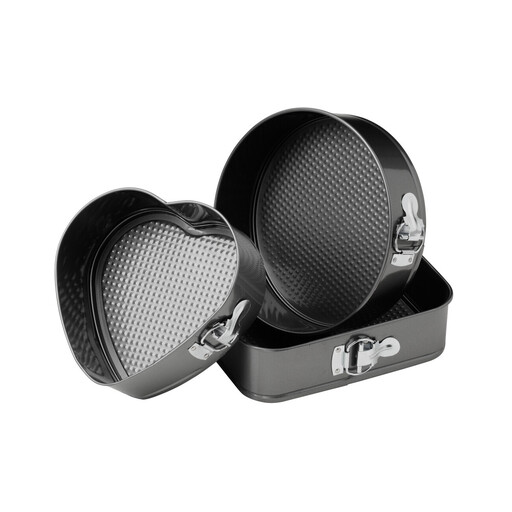
Why This Fits Their Persona: The round, square and heart-shaped tins give beginners several formats for birthdays, family baking and everyday cakes without buying separate moulds.
The set states its material, non-stick coating and detachable springform bases clearly, helping shoppers assess release and removal features rather than relying only on piece count.
Three different shapes, carbon steel construction, non-stick coating and dishwasher-safe care instructions.
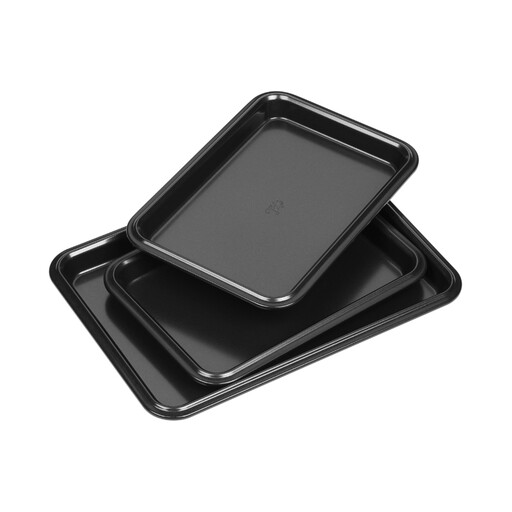
Why This Fits Their Persona: Regular bakers and cooks may value a heavier tray set with multiple sizes for biscuits, roasting and general oven cooking.
The listing specifies 1mm-thick carbon steel, tray measurements, stackable storage, dishwasher suitability and a 10-year guarantee, giving useful details beyond generic durability wording.
One 34.5 x 24.4cm tray and two 25 x 18cm trays, with stackable construction and a stated 10-year guarantee.
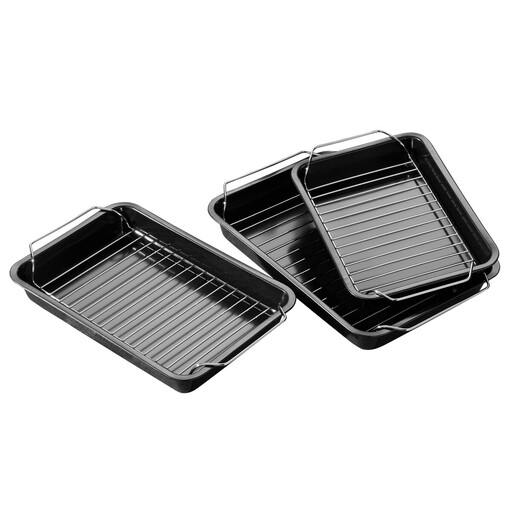
Why This Fits Their Persona: Families, meal-prep users and frequent Sunday cooks can use different tray sizes for roasts, vegetables and smaller portions.
The set identifies three tray sizes and includes wire racks, so the intended roasting function is clearer than with a collection marketed only for baking.
Three tray sizes, included wire racks and a stated non-stick metal construction for roasting and cooking.
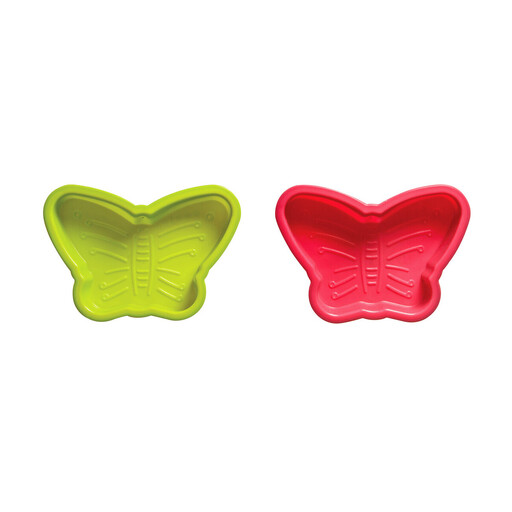
Why This Fits Their Persona: Suitable for themed parties, children’s baking and shoppers who want silicone moulds for more decorative desserts.
The product states its 100% silicone material, 230°C oven limit, microwave and freezer suitability and the recommendation to support the flexible mould on a stable surface.
Two stackable butterfly moulds, flexible silicone construction and stated oven, microwave, freezer and dishwasher suitability.
We have compiled a complete, real-time list of products that fully satisfy these strict selection criteria and UK safety regulations.
A complete setup may also benefit from a mixing bowl set, especially if the bowls stack for compact cupboard storage. The BoxedHome Sunyana four-piece bowls are described as BPA-free, reusable, stackable and fitted with non-slip bottoms, making them suitable for baking, salads and meal preparation.
For individual portions, an eight-ounce ceramic ramekin set can be used for crème brûlée, puddings, soufflés, dips and small quiches. If you plan to refrigerate or freeze prepared portions, check whether lids are included and whether their temperature limit differs from the ceramic dish.
They can be worthwhile when the included shapes and sizes match your recipes. A starter may benefit from a cake tin set containing round, square or springform tins, while a household cook may gain more from a baking tray set with different dimensions. Compare the individual contents rather than choosing by piece count alone.
Lifespan depends on coating quality, frequency of use and care. Avoid sharp or metal utensils unless the product specifically permits them, and follow the stated washing instructions. Replacing a damaged or peeling item is preferable to continuing to use it.
Do not assume this is safe. Ceramic products can be vulnerable to thermal shock, even when they are labelled oven and freezer safe. Follow the manufacturer’s instructions and allow frozen dishes to warm gradually when required. Also remember that plastic storage lids are generally not suitable for conventional ovens or grill use.