
24/7 Customer Support

Free returns

Same-day & Next-day Delivery

Quality Guaranteed

Unlock Your Welcome Offers: FREE Delivery | Up to 80% OFF | Free 30-day JoyPlus trial
Download the APP
As a Joybuy Product Recommendation Officer, my role is to help you navigate the crowded market of kitchen essentials. When it comes to bakeware, it’s easy to be swayed by clever marketing, only to end up with a cupboard full of items that disappoint. From a Victoria sponge that sticks to the tin to a roasting tray that buckles under the heat of a Sunday lunch, the wrong equipment can frustrate even the most enthusiastic baker.
This guide cuts through the clutter, focusing on the practical details that separate durable, reliable baking supplies from those destined for the bin after a few uses. We will look at the common traps to avoid and the key features to check before you buy.
Before investing in new equipment, be aware of these frequent issues that lead to buyer's remorse:
To ensure your purchases are sound investments, focus on these three non-negotiable parameters.
The material of your bakeware dictates its heat distribution, durability and longevity.
For non-stick bakeware, the quality of the coating is paramount. Instead of taking marketing claims at face value, look for specific indicators of quality. A superior product will often feature a double-layer coating, which provides enhanced durability and longevity. Check if the coating is specified as free from chemicals like PFOA and PTFE. Some high-end coatings, like Whitford Eclipse, are even durable enough to be considered metal-utensil safe, a clear sign of a robust finish.
Consider how a piece will fit into your routine. A good roasting tin should have deep sides to contain juices and prevent splatters. A set of stackable baking trays saves precious cupboard space. For items like a jam thermometer or apple corer, a simple, sturdy design made from stainless steel is often more reliable than a complex gadget with multiple plastic parts that can fail.
Here are a few items selected to match different baking needs, each chosen for its practical design and ability to avoid the common pitfalls.
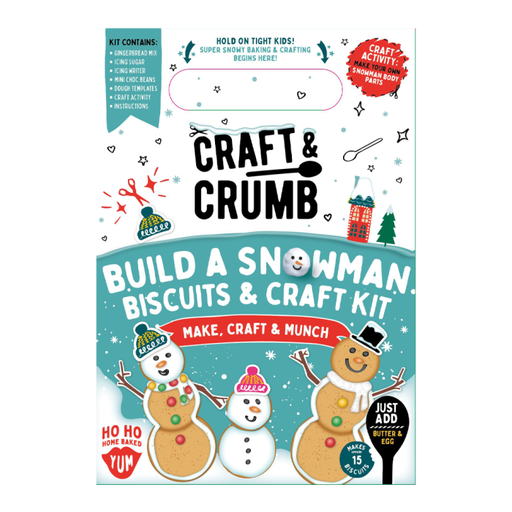
Why This Fits Their Persona: This is ideal for families in the UK looking for a fun, self-contained weekend or holiday activity. It provides the joy of baking and crafting without the need to source lots of individual ingredients or tools.
This is a consumable activity, not a permanent tool, neatly sidestepping the "Gadget Graveyard" trap. It is one of those perfect kids baking kits that provides a complete experience without adding long-term clutter.
Includes pre-measured dry ingredients, templates and decorations. It is a low-stress way to introduce children to baking.
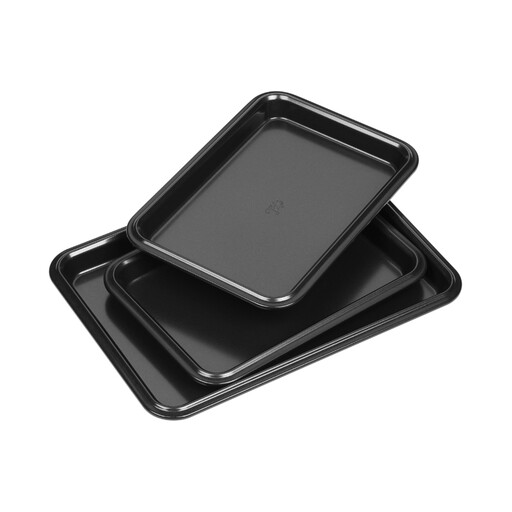
Why This Fits Their Persona: For the passionate cook who bakes and roasts frequently, this set is a long-term investment. It is designed for performance and durability, handling everything from delicate biscuits to high-temperature roasting.
Its 1.0mm commercial-weight carbon steel construction directly prevents warping. The premium Whitford Eclipse double-layer non-stick coating addresses the peeling issue, offering superior durability.
Extremely robust and warp-resistant. The set is dishwasher safe, metal-utensil safe and comes with a 10-year guarantee, reflecting its build quality.
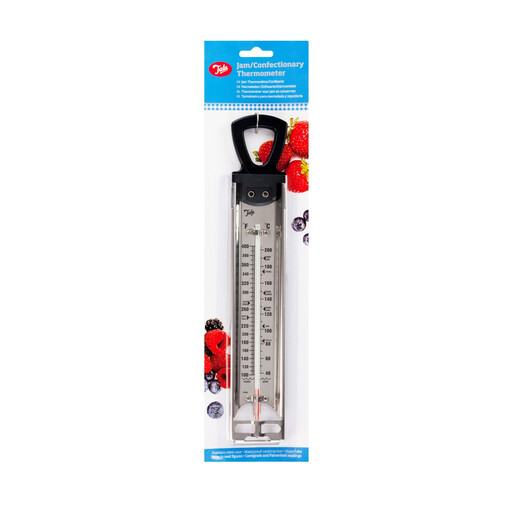
Why This Fits Their Persona: For anyone in the UK making homemade jams, marmalades or sweets, temperature control is not a luxury—it is essential. This tool is for the person who needs precision for a specific, technical task.
This is the opposite of a useless gadget. It is a purpose-built kitchen gadget that solves a critical problem, ensuring perfect results and preventing wasted batches of ingredients. Its simple, robust design is built to last.
Features a clear, easy-to-read scale with markings for jam setting points and sugar stages (e.g., soft ball, soft crack). The stainless steel construction is durable and food-safe.
We have compiled a complete, real-time list of products that fully satisfy these strict selection criteria and UK safety regulations.
The lifespan of non-stick bakeware depends entirely on the quality of the coating and how it is cared for. An inexpensive, single-layer coating may only last a year with regular use, especially if harsh detergents or metal utensils are used. A high-quality, double-layer coating on a heavy-gauge pan can last for many years. To prolong its life, always wash by hand where possible (even if dishwasher-safe) and use wooden or silicone utensils.
Each material has its strengths.
A great starter kit doesn't need to be extensive. Focus on versatile, high-quality basics:
With these core items, you can tackle the vast majority of home baking recipes. You can then add more specialised cake decorating supplies or pastry tools as your skills and interests grow.