Use the cottage’s existing oven if it is clean, working properly and has room for the intended tray. Choose a compact countertop oven if you need a separate station for small batches, checking tray fit, worktop space and the electrical setup before buying. A larger multifunction model makes more sense when the cottage regularly needs extra capacity or cooking modes beyond baking apple slices.
Who needs a separate oven?
Small-batch cottage bakers
If one modest tray of apple slices is the main task, weigh the available worktop space against the size of the tray you actually want to use. Russell Hobbs and Tower list countertop models with adjustable thermostats and supplied baking accessories, but cavity capacity alone does not establish tray fit.
Hosts needing an extra oven station
A separate countertop oven may be useful when the installed oven is occupied or cannot accommodate the intended batch. Larger cavities or additional cooking modes are worth considering if the appliance will also be used for other meals.
Safety-conscious holiday-let operators
Guest use makes appliance placement, socket loading and ongoing visual checks part of the choice. Electrical Safety First warns that ovens used alongside other high-power appliances can overload extension equipment.
What matters when choosing?
Start with the existing oven and intended baking tray: if they work together, a second appliance may add little for this task. If you need a countertop oven, compare usable tray space and temperature controls before deciding whether extra capacity or cooking modes justify the space they take.
| Concern | What to check | Who this matters to |
|---|
| Controlled baking |
Check for adjustable temperature controls suited to your recipe and confirm that the intended tray fits the exact oven. |
If apple slices are the main use, I want room for my batch and control over the baking temperature. Around 50% of consumers put controlled baking first. |
| Space and batch size |
Compare external dimensions and required clearances with the worktop, then check usable tray dimensions rather than litres alone. |
In a small cottage kitchen, I need the oven to fit without giving up more counter space than the batch warrants; around 30% of consumers prioritise space and batch flexibility. |
| Electrical and guest safety |
Check the appliance rating, socket arrangement and manufacturer’s placement instructions; avoid overloading extension equipment. |
When guests may use the oven, I need a safe place for it and an electrical setup that can handle it. For around 20% of consumers, that assurance is the primary concern. |
Checks that are easy to miss
-
Assuming capacity tells you whether a tray fits
A litre figure describes cavity capacity, not the usable width and depth of a rack or baking tray. Your preferred dish may still be too wide.
Measure the dish first, then check the exact oven’s internal dimensions, supplied tray and rack positions.
-
Putting an oven and other high-power appliances on one extension setup
Electrical Safety First warns that an overloaded extension lead can overheat. Models with hotplates make it especially important to consider what might run at the same time.
Check appliance ratings against the extension equipment’s marked limit, do not daisy-chain leads and fully unwind a cable reel before use.
-
Relying on an annual PAT test as the only safety check
The Health and Safety Executive says electrical equipment that could cause injury must be maintained safely, but does not prescribe universal annual portable appliance testing. Damage can also become apparent between inspections.
Include visual checks and arrange competent inspection or testing at intervals appropriate to the appliance and its setting. Withdraw a damaged appliance from use.
-
Choosing a larger oven before checking its position
A larger countertop model still needs a suitable worktop position, access to a socket and the clearances required by its manufacturer.
Measure the intended position and check the model’s placement instructions before ordering.
Relevant brands to consider
Russell Hobbs
The 22780 Mini Kitchen is a 30 L fan-assisted countertop oven with double hotplates, a 60°C to 230°C thermostat, an oven tray and a grill rack, according to Russell Hobbs.
- The stated temperature range and supplied accessories are relevant to tray baking.
- Check that your tray fits internally and that the worktop and electrical setup can accommodate the oven and hotplates.
Sage
Sage describes the Smart Oven Air Fryer SOV860BSS4GUK1 as having 10 functions, including Bake and Air Fry, and an Element iQ temperature-control system.
- The additional cooking modes may be useful if the cottage needs more than a dedicated apple-slice oven.
- Check its worktop fit and whether those extra functions will see enough use to justify a separate appliance.
Tower
Tower lists the T14045 as a 42 L countertop oven with a 90°C to 230°C thermostat, a baking tray, a wire rack and two hotplates.
- Its stated capacity and accessories make it a model to consider when one small tray is not enough.
- Check usable tray dimensions, placement and electrical load, particularly if the hotplates may be used alongside the oven.
Countertop oven options on Joybuy
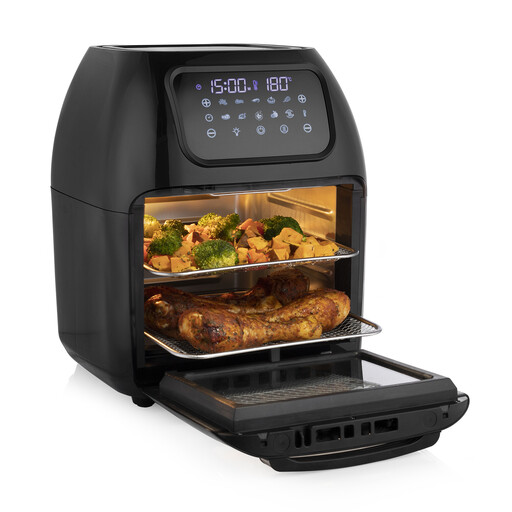
This countertop option is relevant if you need a separate oven for modest batches of apple slices. Check its baking controls, usable tray space and placement requirements against the cottage before choosing it over the installed oven.
 No image available
Tristar Multi Crispy FR-6964 Air Fryer Oven, 10 L, 1800 W
Consider this countertop oven for a modest apple-slice batch if its baking settings and usable tray space suit your recipe and dish.
The listed capacity is 10 L and the stated power is 1800 W; the product name also specifies touch-screen controls and 10 programmes.
Confirm the internal tray dimensions, worktop clearances and compatibility with the cottage’s socket arrangement before use.
View on Joybuy
Common questions
Can I use a countertop oven on an extension lead in a holiday cottage?
Only if the extension equipment is suitable for the appliance and the total connected load stays within its marked rating. Electrical Safety First warns against daisy-chaining leads and advises fully unwinding cable reels; a suitable wall socket is the simpler arrangement where the oven’s instructions permit it.
What should I check before using a cottage’s plug-in oven?
Check that the plug, cable and socket show no damage, scorching or signs of overheating, and follow the manufacturer’s clearance instructions. Keep flammable items away and do not leave food cooking unattended; if a socket becomes hot or a protective device trips, stop using the appliance and arrange competent inspection.
Does every holiday-cottage countertop oven need an annual PAT test?
No universal annual portable appliance testing requirement follows from the Health and Safety Executive’s guidance. Electrical equipment that could cause injury must be maintained safely, with inspection or testing appropriate to the equipment and environment; a host should also check any requirements specific to the property.


