
24/7 Customer Support

Free returns

Same-day & Next-day Delivery

Quality Guaranteed

Unlock Your Welcome Offers: FREE Delivery | Up to 80% OFF | Free 30-day JoyPlus trial
Download the APP
Choosing baking moulds and cake tins can seem straightforward until a cake sticks, a springform tin leaks or a flexible mould collapses when moved to the oven. For UK home bakers, the right choice depends on more than colour and shape. Material, heat limits, release design and cleaning instructions all affect whether bakeware remains useful after repeated use.
This guide explains the main buying pitfalls and highlights practical options for cakes, biscuits, chocolate, cake pops and themed bakes.
Non-stick coatings can make release easier, but they still need suitable care. Metal utensils, abrasive sponges and excessive heat may scratch or weaken the surface. Look for clear information about the coating, cleaning method and maximum temperature rather than relying on the phrase “non-stick” alone.
Silicone cake moulds generally release food by flexing the sides, while non-stick cake tins rely on a coated rigid surface. Both can work well, but they suit different baking habits.
Flexible silicone is convenient for demoulding, but a filled mould can be difficult to carry safely. A large rectangular mould or multi-cavity cake pop mould should usually be placed on a solid baking tray before filling. Integrated handles can also make hot bakeware easier to move, although oven gloves are still essential.
A decorative mould may look suitable online but produce smaller portions than expected. Check the dimensions and cavity count before purchasing. A six-cavity heart mould, for example, is useful for individual portions but will not replace a standard round cake tin for a layered celebration cake.
For oven-safe bakeware, check the stated maximum temperature and whether the product is suitable for your appliance. Several silicone products listed here are rated up to 230°C, while the cake pop mould specification states heat resistance up to 230°C despite one selling point referring to 240 degrees. Always follow the detailed safety instructions supplied with the product.
Silicone moulds are often suitable for the oven, microwave, freezer and dishwasher, but not every silicone product shares all four capabilities. Rigid carbon steel tins may be suitable for ovens and refrigeration but unsuitable for microwaves, hobs or open flames.
A removable base cake tin can help lift delicate cakes from the tin without turning them upside down. A springform cake tin adds a clip mechanism that opens the side ring after cooling, making it practical for cheesecakes, quiches and deep cakes.
For silicone, allow the bake to cool before gently flexing the mould. Non-stick performance does not remove the need for careful handling.
Measure your oven shelves and storage space before buying. A 21cm round tin is a versatile size for many household recipes, while a 31cm rectangular mould suits loaf cakes and breads. Nested pastry cutters and stackable moulds are useful where cupboard space is limited.
For creative baking, consider whether you need a cake pop mould, gingerbread mould, butterfly cake mould, heart-shaped cake mould or square cake mould. The shape should match how you plan to serve and decorate the bake.
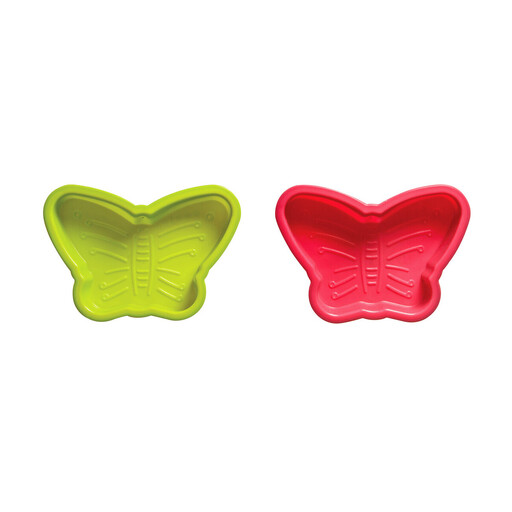
Why This Fits Their Persona: Two lightweight butterfly moulds give beginners a simple way to make themed cakes, chocolates, jellies and frozen treats without investing in several separate tools.
The product information clearly states its 230°C limit, dishwasher suitability and need for stable placement, helping buyers avoid guessing about everyday use.
Food-grade silicone; two colour-coded moulds; oven, microwave, freezer and dishwasher compatible according to the listing.
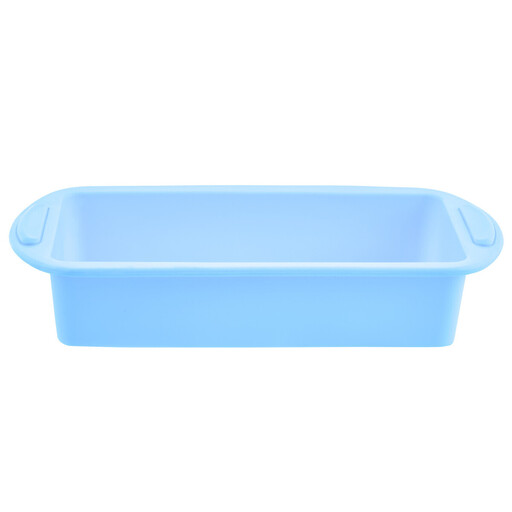
Why This Fits Their Persona: Its rectangular format suits bakers who regularly prepare loaf cakes, breads and pound cakes and want convenient handling.
The 230°C maximum temperature and oven-only warning set a clear boundary, while the integrated handles address the problem of carrying flexible filled moulds.
Food-grade platinum silicone; integrated handles; 31cm rectangular shape; flexible release design.
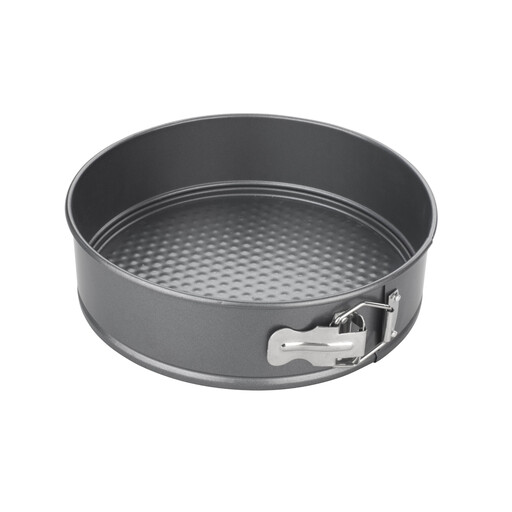
Why This Fits Their Persona: Regular bakers making cheesecakes, pies, quiches and celebration cakes may value a reusable 23cm springform format with a removable base.
The spring mechanism and loose base address difficult release, while the stated dishwasher, fridge and freezer compatibility supports regular preparation and storage.
Carbon steel construction; Goldflon non-stick interior; removable base; 23cm diameter; dishwasher, fridge and freezer safe according to the listing.
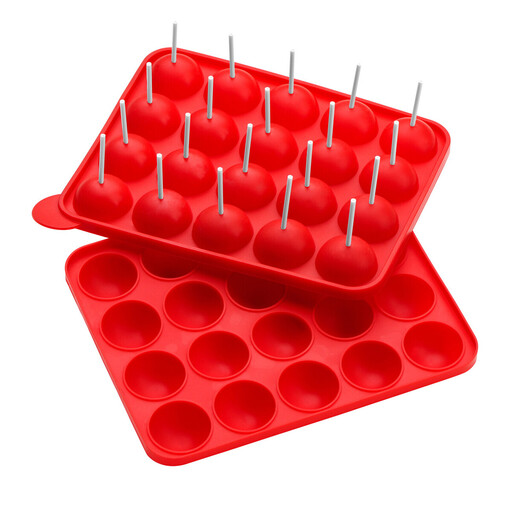
Why This Fits Their Persona: Families and party bakers can prepare up to 20 cake pops and serve them using the included 40 polypropylene sticks.
The listing identifies the mould material, temperature limit and storage options, reducing uncertainty around oven, microwave, fridge and freezer use.
Non-stick silicone; 20-cavity capacity; 40 included sticks; suitable for oven and microwave use according to the product information.
We have compiled a complete, real-time list of products that fully satisfy these strict selection criteria and UK safety regulations.
A reliable tin becomes more versatile with the right accessories. A pastry cutter or biscuit cutter set can produce consistent biscuits, scones and pie decorations. The Tala reversible set includes six sizes from 48mm to 98mm, with straight and fluted cutting edges.
For seasonal baking, a gingerbread mould or stainless-steel Christmas biscuit cutter set can help create themed treats. Avoid using sharp metal tools on silicone moulds or coated tins, as they may damage the surface.
Before each use:
Many are, but suitability depends on the product specification. Check the maximum temperature, usually stated in Celsius, and whether the mould is intended for oven use. Silicone should not be placed directly on a hob or open flame unless the manufacturer specifically permits it.
A springform tin can be practical for cheesecakes, quiches and delicate cakes because the side ring opens after cooling. It is particularly useful when turning a cake upside down could damage its surface. Check that the clip closes securely and follow the care instructions for the coating.
Avoid metal utensils and abrasive cleaners, do not exceed the stated heat limit, and store moulds without sharp objects pressing against them. For silicone, keeping the mould flat where instructed can help it retain its shape. Allow hot tins to cool before washing or handling.