
24/7 Customer Support

Free returns

Same-day & Next-day Delivery

Quality Guaranteed

Unlock Your Welcome Offers: FREE Delivery | Up to 80% OFF | Free 30-day JoyPlus trial
Download the APP
A reliable baking tray is the unsung hero of the kitchen, essential for everything from crispy roast potatoes to perfectly chewy cookies. Yet, many of us have experienced the frustration of a new tray that buckles dramatically in the heat or a non-stick surface that starts peeling after only a few uses. These common issues not only ruin your cooking but also mean you're replacing your bakeware far too often.
As the Joybuy Product Recommendation Officer, my role is to help you navigate the market and identify the features that genuinely matter. Before you buy another oven tray, let’s look at the most common pitfalls and how to sidestep them.
By understanding a few key parameters, you can easily find a tray that performs reliably for years, whether you're a daily baker or an occasional host.
Choosing the right oven tray comes down to three main factors: the material it's made from, the quality of its surface and a design that suits your cooking style.
The material of a baking tray is the single most important factor in its durability and performance.
A good non-stick baking tray can make cooking and cleaning significantly easier, but the quality varies hugely.
The shape and depth of a tray determine its function.
Based on these criteria, we've matched some excellent options to different types of cooks.
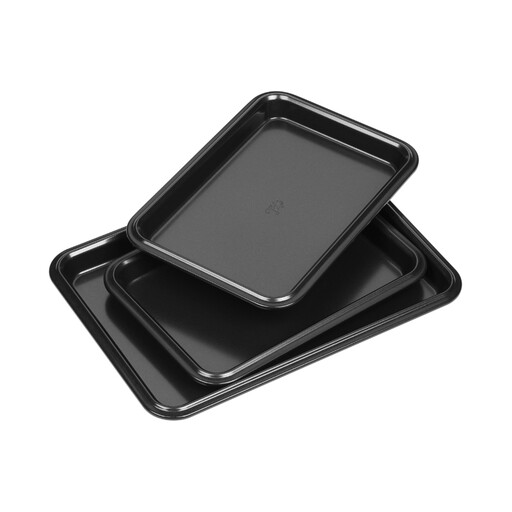
Why This Fits Their Persona: For someone who bakes regularly, durability is non-negotiable. This set provides a versatile range of sizes for different tasks, from a small batch of cookies to a family-sized traybake, making it a true kitchen workhorse.
It directly counters the warping and fragile coating pitfalls. The 1.0mm commercial-weight carbon steel construction provides exceptional rigidity, while the superior double-layer non-stick coating is designed for longevity and resilience.
The heavy-gauge build ensures even heat distribution for consistent baking results. It is also dishwasher safe and comes with a 10-year guarantee, reflecting its build quality.
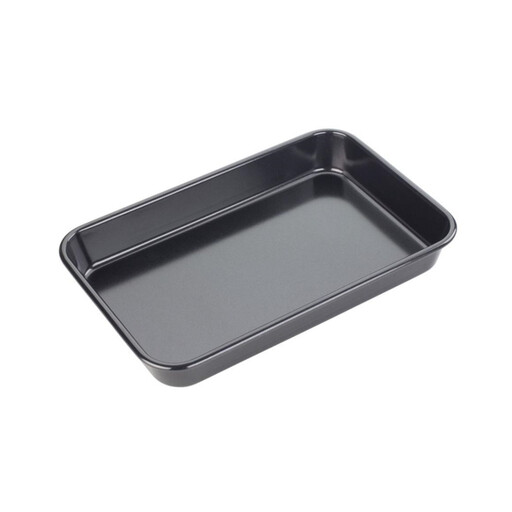
Why This Fits Their Persona: This isn't just a flat tray; it's a purpose-built roasting tin. It's for the person who takes their roast dinner seriously and wants to easily collect all the flavourful juices for a proper gravy.
Its robust, heavy-weight carbon steel construction is designed to handle the high, sustained heat of roasting without warping. The design is functional, not just a basic tray, avoiding the "one-size-fits-none" issue by being specifically for roasting.
The clever pouring lip is a standout feature, allowing you to drain fat or pour out meat juices for gravy without making a mess. It also features the durable Whitford Eclipse non-stick coating.
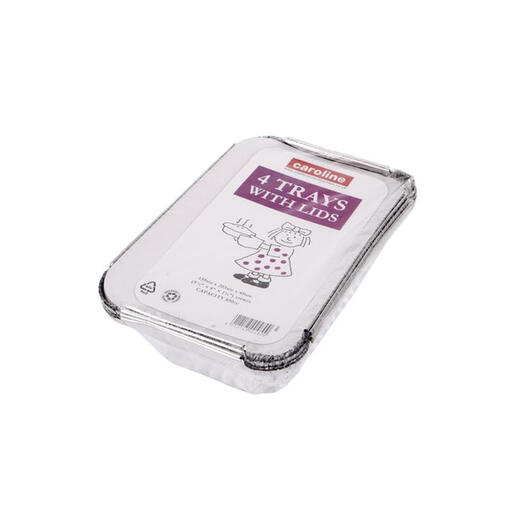
Why This Fits Their Persona: For anyone hosting an event, running a food stall, or doing a big weekly meal prep, convenience is paramount. These trays remove the hassle of washing up and make storing, stacking and transporting food simple and hygienic.
These trays are designed for convenience, not lifelong durability. They sidestep the warping and coating traps because their value lies in being ovenable, freezable and ultimately recyclable, saving immense time and effort.
The included lids are a major benefit, allowing you to go from oven to fridge to transport without needing extra containers or cling film. The 30oz capacity is ideal for generous individual portions or side dishes.
We have compiled a complete, real-time list of products that fully satisfy these strict selection criteria and UK safety regulations.
Warping is almost always caused by a tray that is too thin to withstand rapid temperature changes. To prevent this, invest in a heavy duty baking tray made from thick-gauge carbon steel or aluminised steel (look for 0.8mm or thicker). Additionally, avoid placing a cold or frozen tray directly into a very hot oven, as the thermal shock can cause even sturdy trays to buckle.
While the terms are often used interchangeably, there is a technical difference. A baking tray (or oven tray) has a rim around all four sides, making it ideal for containing liquids or loose items like roasted vegetables. A baking sheet has at least one flat, rimless edge, which allows for better air circulation and makes it easy to slide baked goods like biscuits directly onto a cooling rack.