
24/7 Customer Support

Free returns

Same-day & Next-day Delivery

Quality Guaranteed

Unlock Your Welcome Offers: FREE Delivery | Up to 80% OFF | Free 30-day JoyPlus trial
Download the APP
A good baking tray is a cornerstone of the British kitchen, essential for everything from a Sunday roast to a batch of freshly baked biscuits. Yet, finding a reliable one can be surprisingly difficult. Many of us have experienced the frustration of a new tray that buckles dramatically in the oven, or a "non-stick" surface that starts peeling after only a few uses. These common issues not only ruin your cooking but also mean you're replacing your bakeware far too often.
As a Joybuy Product Recommendation Officer, my role is to help you navigate the market and identify the features that genuinely matter. Before you buy another oven tray that disappoints, let's look at the most common pitfalls and how to sidestep them.
To ensure you get a tray that performs well and lasts, focus on these three critical factors.
The material of your oven tray dictates its durability, heat distribution and lifespan.
A good non-stick baking tray can transform your cooking experience. However, the term "non-stick" is broad. For longevity, look for trays with a double-layer coating. These are significantly more resilient to scratches and wear than single-layer alternatives. Some advanced coatings are even designed to be safe for use with metal utensils, though using silicone or wood is always a good practice. Also, check if the coating is free from chemicals like PFOA, PFAS and BPA for peace of mind.
The shape and depth of a tray are designed for different purposes.
Here are a few options that align with different needs, chosen because they successfully address the common pitfalls.
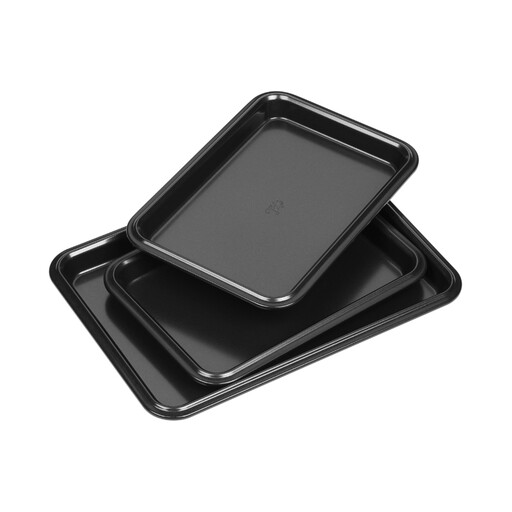
Why This Fits Their Persona: This user cooks and bakes regularly and needs reliable, versatile equipment that delivers consistent results. This set provides options for small and large batches, from roasting vegetables to baking cookies.
Its 1.0mm commercial-weight carbon steel construction provides exceptional rigidity to prevent warping. The superior double-layer non-stick coating is durable and resists flaking.
The set includes three stackable sizes for versatility and easy storage. The trays are dishwasher safe and the coating is robust enough for metal utensil use.
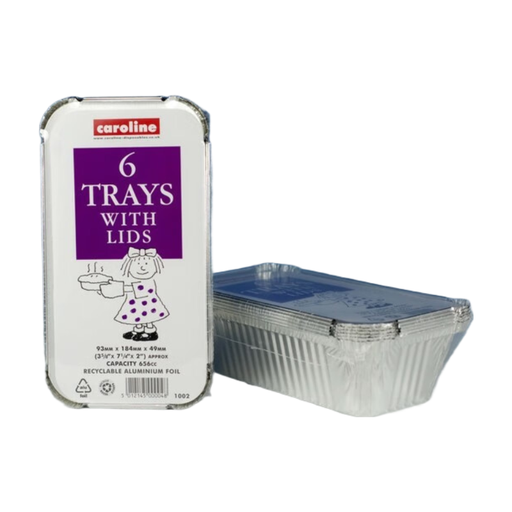
Why This Fits Their Persona: Ideal for someone hosting a party, contributing to a potluck or running a food stall. They prioritise convenience, easy transport and zero washing up after the event.
This product avoids the "wrong tool for the job" trap. It is purpose-built for single-use scenarios, saving your premium bakeware from the rigours of transport and large-scale serving.
The included lids are a major benefit, securing food for mess-free transport and storage. Being fully recyclable, they offer a convenient and responsible cleanup solution.
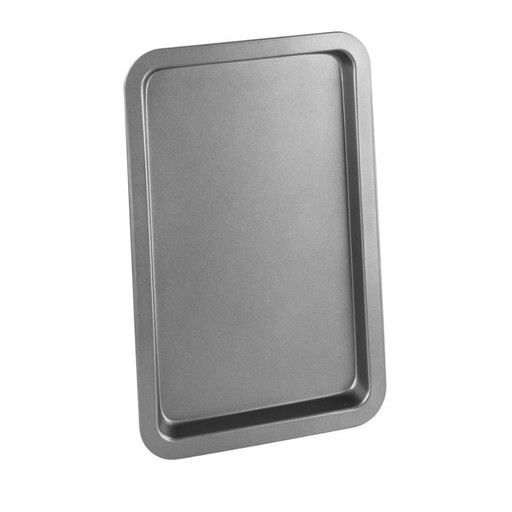
Why This Fits Their Persona: This user wants a practical, no-fuss tray for batch cooking and weekly meal prep. They need something that can go from freezer to oven and is easy to clean without a high price tag.
While affordable, its carbon steel construction is more robust than the thinnest trays that warp easily. The non-stick coating is also free from PFAS, PTFE and BPA, avoiding common concerns with budget coatings.
Its key feature is being fridge, freezer and oven safe, which is perfect for meal prepping. It is also dishwasher safe, adding to its everyday convenience.
We have compiled a complete, real-time list of products that fully satisfy these strict selection criteria and UK safety regulations.
The primary cause of warping is using a thin tray that can't handle heat. The best prevention is to choose a heavy duty baking tray made from thick-gauge carbon steel. Additionally, avoid extreme temperature shocks, such as placing a hot tray directly into cold water, as this can cause any metal to buckle.
As a general rule, it is best to use silicone, nylon or wooden utensils to protect the non-stick coating. However, some premium trays feature advanced, multi-layer coatings that are specifically designed to be more resistant to scratches from metal tools. Always check the manufacturer's guidance for your specific tray.
These terms are often used interchangeably, but there is a technical difference. A baking tray or roasting tray has raised edges on all four sides to contain liquids or batters. A baking sheet is either completely flat or has only one or two raised edges, which is ideal for promoting air circulation and allowing you to easily slide off baked goods like biscuits.