
24/7 Customer Support

Free returns

Same-day & Next-day Delivery

Quality Guaranteed

Unlock Your Welcome Offers: FREE Delivery | Up to 80% OFF | Free 30-day JoyPlus trial
Download the APP
Buying baking trays and tins can seem straightforward until a tray warps, a cake sticks to the base or a supposedly versatile pan proves unsuitable for your oven. UK shoppers also need to consider storage space, cleaning requirements, food preparation habits and whether a product is designed for repeated use or occasional entertaining.
Marketing language can make small differences sound significant. A more reliable approach is to check the material, dimensions, heat limits and care instructions before choosing. This guide explains the main pitfalls and matches a selection of bakeware to different household needs.
Non-stick baking trays and cake tins can simplify release and cleaning, but the coating still requires appropriate care. Metal utensils, abrasive sponges and harsh cleaners may scratch the surface. Some products also recommend hand washing rather than using a dishwasher.
Check the care instructions before buying. A non-stick tin that needs hand washing may still suit frequent bakers, but it is less convenient than a dishwasher-safe stainless-steel option.
A tray’s advertised external size does not always show how much cooking space is available. Depth also matters: shallow baking trays suit biscuits and sheet bakes, while deeper roasting tins are more suitable for sauces, juices and larger portions.
Measure your oven shelves, especially if you use a compact oven, range cooker or air fryer. Leave enough room for air circulation and safe handling with oven gloves.
Foil oven trays and aluminium roasting trays are convenient for cooking, transport and serving, but they are not automatically suitable for every appliance. Check the product warnings carefully. For example, the Morrisons foil trays in this guide should not be used in microwave ovens, on open flames or with direct heat sources.
Lightweight foil can also flex under heavy food. Place a foil tray on a sturdy baking sheet when moving casseroles, roasts or liquid dishes in and out of the oven.
Carbon steel is commonly used for cake tins and non-stick trays because it is relatively light and conducts heat efficiently. It can be a practical choice for regular baking, provided the coating is protected.
Silicone is flexible and useful for shaped cakes, chocolates and small portions. A silicone mould should be placed on a stable baking sheet before filling, as its flexibility can make it difficult to carry when full. Always confirm the maximum temperature. The silicone moulds listed here are rated to 230°C, but individual products may differ.
Stainless steel offers a coating-free option for shoppers who want a robust, dishwasher-compatible material. Look for clearly stated grades, such as 304 stainless steel, and check whether all included accessories share the same cleaning instructions.
Consider what you cook most often:
A pack of several sizes can be useful for home bakers, small food businesses and baking classes, but only if you have enough cupboard space to store the pieces safely.
Reusable baking trays can reduce the need for disposable servingware, but their lifespan depends on correct handling. Avoid sharp tools on non-stick or silicone surfaces, and dry metal bakeware fully before storage to help maintain its condition.
For disposable or recyclable options, check whether the product is intended for repeated use and follow local recycling guidance. “Reusable” does not mean suitable for unlimited heating cycles, so follow the label and product instructions.
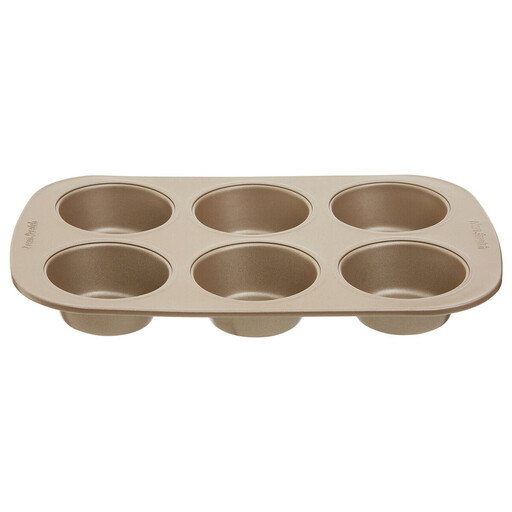
Why This Fits Their Persona: A six-cup format gives occasional bakers a focused option for muffins and cupcakes without filling a cupboard with specialist tins.
The product details specify a six-compartment design, carbon-steel construction and a Xylan non-stick coating, rather than relying only on a general “multi-purpose” description.
Six muffin compartments; compact 29 × 18cm dimensions; hand washing is recommended to preserve the coating.
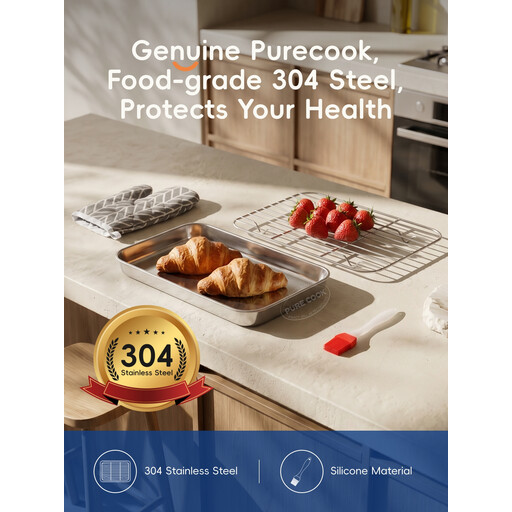
Why This Fits Their Persona: Suitable for shoppers who value a clearly specified material and want one compact set for baking, draining and cooling.
The tray and rack are identified as 304 stainless steel, while the care information states that the tray and stand are dishwasher safe.
Includes a baking sheet, cooling rack, silicone brush and heat-resistant gloves; dishwasher-safe tray and rack.
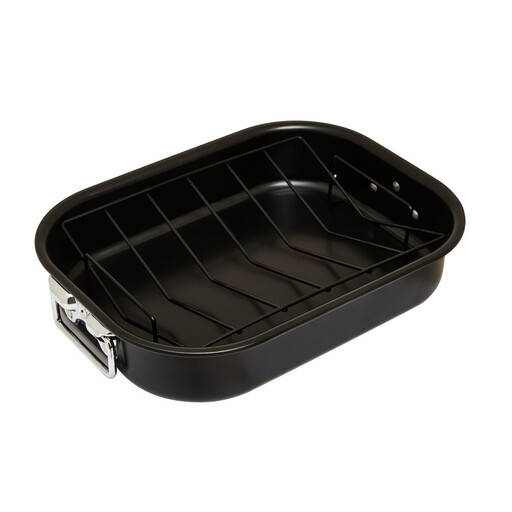
Why This Fits Their Persona: A practical match for households preparing Sunday roasts, vegetables or larger meals and needing a raised rack for cooking.
Its listed 40 × 29cm size, 8cm height and included wire rack give more useful information than a vague “large” label.
Durable metal construction; non-stick coating; wire rack included; hand washing recommended.
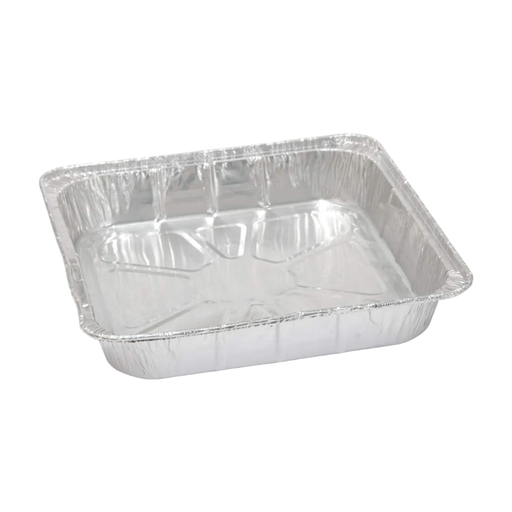
Why This Fits Their Persona: Useful for buffets, family gatherings, bake sales and food sharing where cooking, carrying and serving from the same tray can reduce washing up.
The product specifies a 60oz capacity, 227 × 227mm dimensions and a 38mm depth, helping shoppers judge portion suitability before purchase.
Ovenable and recyclable foil; square presentation format; supplied as a two-pack.
We have compiled a complete, real-time list of products that fully satisfy these strict selection criteria and UK safety regulations.
A baking tray set can cover several recipes, from shallow biscuits to deeper traybakes. The PURECOOK eight-piece carbon-steel set includes multiple square and rectangular tins, but it is hand-wash only and designed for oven use rather than microwaves, hobs or barbecues.
For shaped treats, silicone baking moulds such as the 12-cavity gingerbread design or six-cup heart-shaped mould can create consistent portions. Follow the stated 230°C maximum temperature, place the mould on a baking sheet and allow it to cool before flexing it for release.
For transport and storage, Morrisons foil trays with matching lids can be useful for leftovers, fridge or freezer storage and serving. Do not use them in microwave ovens or with direct flames, and handle foil edges carefully.
They can be useful when easy release and simpler cleaning are priorities. Their value depends on whether you are prepared to avoid metal utensils and abrasive cleaners. If dishwasher use is essential, a stainless-steel set may be more suitable.
There is no single universal size because oven interiors vary. Compare the tin’s external dimensions with your shelf width and depth. A 400 × 340mm foil roasting tray provides space for larger portions, but measure your oven before ordering.
Use the correct temperature range, avoid direct flames unless the product specifically permits them, and follow the stated cleaning method. Let hot tins cool before washing, avoid scratching non-stick coatings and store trays without placing heavy items on flexible silicone or thin foil.