
24/7 Customer Support

Free returns

Same-day & Next-day Delivery

Quality Guaranteed

Unlock Your Welcome Offers: FREE Delivery | Up to 80% OFF | Free 30-day JoyPlus trial
Download the APP
Buying baking trays and tins can seem straightforward until a tray warps, a cake sticks to its tin or the dimensions do not fit your oven shelf. UK home cooks, families, caterers and small food businesses often face the same problem: product descriptions highlight finishes and coatings, while practical details such as depth, cleaning instructions and heat limits receive less attention.
Before choosing an oven baking tray, roasting tin or baking mould, look beyond appearance. The right option depends on what you cook, how often you use it and whether you need reusable or disposable baking trays.
A non-stick cake tin can make releasing cakes easier, but the coating still needs appropriate care. Metal utensils, abrasive sponges and dishwasher cycles can damage some surfaces. Always check whether the product is hand-wash only and whether the manufacturer advises using baking paper or a light layer of grease.
A removable base or spring mechanism can also help with release, but it does not remove the need to cool the bake fully before taking it out.
A rectangular baking tray may measure 40cm across but have limited usable space because of sloping sides or handles. Depth is equally important. A shallow tray may suit biscuits, while a deeper roasting tin is more suitable for sauces, juices and layered dishes.
Check your oven shelf width, internal depth and clearance from the top heating element. Also consider storage space, especially if you are buying a bakeware set with several large pieces.
Foil trays are convenient for parties, catering and reducing washing up, but they are lighter than rigid metal bakeware. Support them with a baking sheet when carrying hot or liquid food. Do not place foil directly on an open flame or heating element, and follow the temperature and recycling guidance supplied with the product.
“Recyclable” does not mean every local council accepts foil in the same way. Clean and recycle it according to your local collection rules.
For products used with food, check the packaging or listing for relevant food-contact information. Do not assume a decorative finish or a “professional” description confirms a particular safety certification.
Match the tin to the recipe and the oven rather than selecting by appearance. A six-cup muffin tray is useful for smaller batches, while a larger tray may be more efficient for family cooking or catering.
Useful measurements to compare include:
For example, the Caroline Foil Oven Roasting Tray measures 400 × 340mm with a 45mm depth and comes as a two-tray pack. The Caroline Square Foil Tray measures 227 × 227 × 38mm with a stated 60oz capacity, making it a more compact option for serving or reheating.
Check the maximum temperature, whether the item is suitable for an oven only, and whether it can go into a freezer, microwave or dishwasher. These uses are not interchangeable.
A silicone mould rated to 230°C should not be used on a hob or open flame. A non-stick carbon-steel tin may be oven-safe but hand-wash only. For any product, use oven gloves, place flexible moulds on a stable tray and allow hot bakeware to cool before cleaning or demoulding.
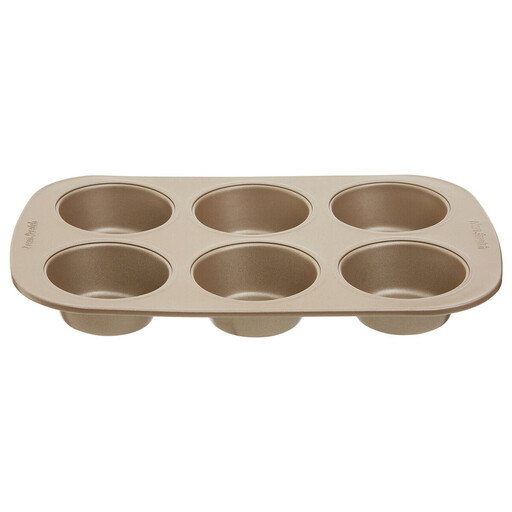
Why This Fits Their Persona: A six-compartment format gives new bakers a manageable way to make muffins or cupcakes without buying a large collection of tins.
The listing states that the Xylan non-stick coating needs hand washing and protection from metal utensils, making the care requirement clear rather than implying maintenance-free use.
Six cups, carbon-steel construction and a stated BPA-free design.
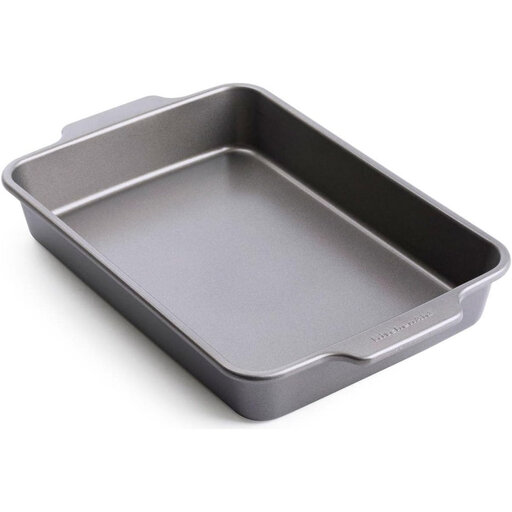
Why This Fits Their Persona: Suitable for frequent home baking when a rigid, coating-free pan with integrated handles is preferred.
Its specification states that it has no non-stick coating, so buyers can plan to grease or line the pan instead of relying on an unspecified release surface.
Aluminised steel, 0.8mm thickness, wide handles, scratch-resistant surface and dishwasher-safe specification.
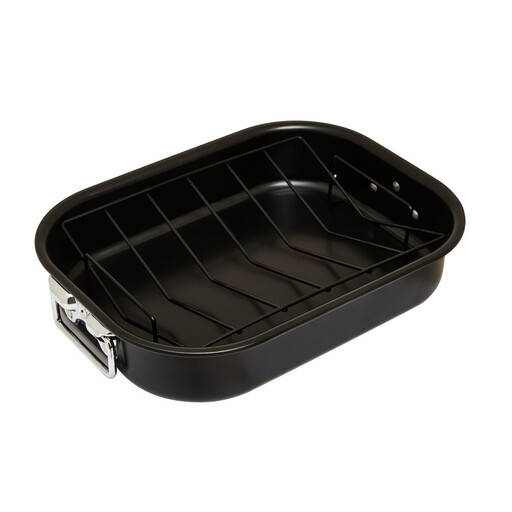
Why This Fits Their Persona: Designed for regular roast dinners, batch cooking and larger family portions where a rack is useful.
The dimensions are stated as 40 × 29cm, and the included wire rack is specified, helping buyers distinguish it from a shallow tray with no elevation.
Durable metal construction, non-stick coating and a removable wire rack for roasting.
We have compiled a complete, real-time list of products that fully satisfy these strict selection criteria and UK safety regulations.
Avoid putting a very hot tray under cold water, as sudden temperature changes can stress the material. Use the tray within its stated temperature range, avoid placing it directly on a hob and select a rigid construction for frequent high-temperature use.
No. Check the stated maximum temperature and use restrictions. For example, products rated to 230°C should not exceed that limit and should not be used on a hob or open flame. Place a flexible mould on a firm oven baking tray before filling and moving it.
They may reduce washing up, but repeated use can make reusable metal or stainless-steel bakeware more practical. Foil trays are particularly suitable for events, catering, food transport and occasional batch cooking. Compare pack quantity, rigidity, recycling instructions and the type of food you usually prepare before deciding.