Off-centre ballet viewer
You regularly sit well to one side of the screen. Screen gain and viewing angle matter because the picture needs to remain acceptably bright from your seat, not just from the centre of the room.


Choose the screen and projector together, starting with how the screen looks from your side seat. ProjectorCentral explains that higher-gain screens tend to have a narrower bright viewing cone; once the screen suits your seating position, choose a projector for the room’s light, the recordings you watch and the available mounting position.
You regularly sit well to one side of the screen. Screen gain and viewing angle matter because the picture needs to remain acceptably bright from your seat, not just from the centre of the room.
You usually watch recordings in a darkened room and care about costume colour, stage lighting and fine image detail. Compare the projector’s displayed resolution and relevant colour information alongside the screen.
Your projector has to fit around furniture, mounting limits or changing room light. Throw distance, image alignment and operating noise may affect the choice as much as picture specifications.
For ballet recordings viewed from a side seat, assess the screen from that seat before comparing projector specifications. Then decide whether picture detail or fitting the setup into the room is your next priority.
| Concern | What to check | Who this matters to |
|---|---|---|
| Side-seat brightness | Measure the seat’s angle from the screen centre; compare screen gain and documented viewing-angle information for the intended material. | If I sit off-centre for most performances, I want the picture to remain bright enough from my seat, even if that means less peak brightness straight ahead. Around 42% of consumers put side-seat screen performance first. |
| Colour and stage detail | Check displayed resolution, colour or calibration information and the picture mode you would use with your recordings. | In a dark room, I would rather see costume detail and changes in stage lighting clearly than choose by the brightest advertised mode. For around 33% of consumers, colour and detail are the primary concern. |
| Room and installation fit | Measure throw distance and planned image size; check the exact model’s alignment options and operating noise. | If furniture limits where I can put the projector, I need an image that fits the screen without an awkward mounting position. Room and installation fit comes first for around 25% of consumers. |
ProjectorCentral explains that lower-gain screens generally have wider half-gain viewing angles than high-gain screens. Extra brightness towards the centre may therefore come with a more noticeable drop at an oblique seat.
Compare screen materials using the seat that matters most, rather than judging brightness only from directly in front of the screen.
A projector can accept or decode a 4K source while displaying it at a lower resolution. That distinction matters when you want to see fine detail in costumes or scenery.
Check the displayed or native resolution separately from the supported input formats.
In its review of the BenQ W2720i, ProjectorCentral measured 1,595 ANSI lumens in a more usable picture mode and described a strong green bias in Bright mode. Those results concern that model and those modes, not every projector.
Consider the mode you would actually watch, the room light and the planned image size when assessing brightness claims.
Built-in network and streaming features make the exact model’s update support relevant to long-term use.
Check its stated security-update period, how updates are installed and whether the streaming functions you need require a separate device.
These examples show different projector features worth comparing after you have considered the screen. The specifications and limitations below concern the named models, not every projector from each brand.
The W2720i is a reference point for a dark-room setup where colour presentation is a priority.
The EH-TW7100 offers features to examine when the projector’s mounting position is constrained.
The X100-4K is relevant when operating noise and lens adjustment are important to the installation.
These Joybuy projector options relate to watching ballet recordings at home. For either one, choose the screen around your actual side-seat position and check whether the planned image size and room light suit the projector.
 No image available
Consider this model if you want a projector for 1080P recordings and need help aligning the picture in a flexible home setup.
The product name specifies native 1080P, Android, WiFi 6, autofocus and keystone correction. Its “4K supported” wording does not mean 4K image output.
Check the brightness figure for this exact variant before deciding on image size or room lighting, and assess the intended screen from your side seat.
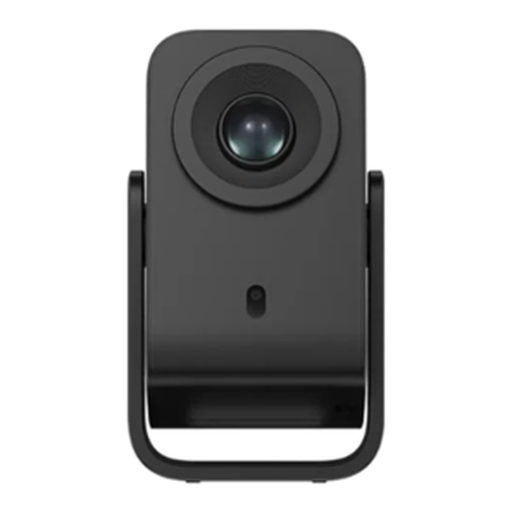 No image available
Consider this portable model if you want a flexible place to watch recordings and 1080P FHD is the resolution stated for the projector.
The product name also says “4K supported”; check displayed resolution rather than treating input support as 4K image output.
Before choosing an image size, check visibility under your room lighting and whether the intended screen remains suitable from your side seat.
Not necessarily: start by assessing the screen from that seat. ProjectorCentral explains that higher screen gain tends to narrow the bright viewing cone, so changing projector alone may not address an off-centre brightness drop.
A wide-angle claim is a starting point, not a substitute for checking your seat position. Compare the screen material and gain, and look for viewing-angle information you can relate to the angle between your seat and the screen centre.
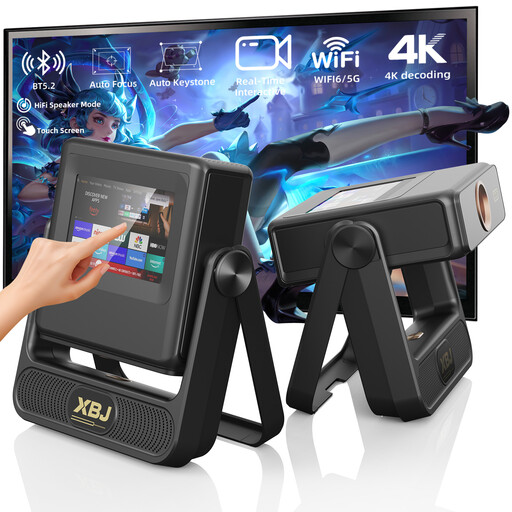
No: input compatibility and displayed resolution are different specifications. For example, a Joybuy XBJ portable-projector listing describes 4K decoding alongside native 720P resolution; check the exact model’s displayed or native resolution before buying.
Compare brightness in a picture mode you would use for the recording, rather than relying on the largest advertised figure alone. Room light, image size and screen material also affect what you see, while ANSI, ISO and LED-lumen figures should not be treated as interchangeable.
If it connects to a network, check the exact model’s security-update period and update process. Also confirm whether its built-in streaming features cover the services you use or whether you will need a separate streaming device.