Solo smoothie drinkers with limited space
If you normally make one banana smoothie, a blend-in-cup format can let you drink from the same vessel and clear the shared worktop quickly. Check where the cup, blade and base will go while they dry.


For one banana smoothie at a time, start with a compact personal blender if blending in the drinking cup will help you clear the shared worktop and sink promptly. Choose a jug blender when you regularly make several portions, or a multi-function machine when you will also use its food-preparation tools. Check the exact model’s usable capacity, cleaning instructions and power arrangement before buying; extra vessels and attachments also need storage space.
If you normally make one banana smoothie, a blend-in-cup format can let you drink from the same vessel and clear the shared worktop quickly. Check where the cup, blade and base will go while they dry.
If several people want smoothies together, the jug blender’s working capacity matters more than having the smallest appliance. Kenwood lists a 1.5L working liquid capacity for the BLP41.A0CT, a figure worth comparing with the portions you actually prepare.
If you will also use food-processing functions, a machine with personal and multi-serve vessels may suit your routine. Joybuy lists both a 700 ml cup and a 2.1L jug for the Ninja BN800UK; allow space to store and wash its additional components.
Choose the format around your usual number of portions, then check how its parts fit your shared space and cleaning routine.
Choose when: You usually make one smoothie and want to blend in a drinking cup.
Allow for: A smaller cup may mean repeat batches when others want a drink too.
Choose when: You regularly prepare several servings together or want manual speed controls.
Allow for: The jug and base need shared storage and drying space.
Choose when: Smoothies are only one of the food-preparation jobs the household will use it for.
Allow for: Additional vessels and tools add to what you must store and clean.
| Concern | What to check | Who this matters to |
|---|---|---|
| One serving and quick clean-up | Check usable cup capacity, whether a drinking lid is included and which detachable parts can be washed in a dishwasher. | If I make one smoothie, I want to clear the cup and blade rather than leave a jug at the shared sink; around 40% of consumers put single-serving convenience and clean-up first. |
| Shared batches and texture control | Compare working liquid capacity, not just jug size, and check the available speed and pulse controls. | When several flatmates want smoothies together, I would rather make multiple portions at once than repeat small batches; around 30% of consumers prioritise shared-batch capacity and texture control. |
| Disruption and safe use | Ask for model-specific sound information if noise is decisive. For a mains model, check its UK plug and fuse, placement and cleaning instructions. | I need to blend considerately around flatmates and keep electrical equipment clear of sink splashes; around 30% of consumers place low-disruption, safe shared-kitchen use first. |
Motor power alone does not tell you how loud a blender will sound in a shared kitchen. Do not choose between models on wattage as though it were a comparable sound measurement.
If disturbance could decide the purchase, ask for sound information for the exact model and consider when you will be able to blend.
Dishwasher-safe cups or blades do not make the electrical base dishwasher-safe. Mixing up those instructions can damage the appliance and create an electrical hazard.
Follow the model’s care instructions for detachable parts. Unplug the base and wipe it separately; do not immerse it.
Batch capacity is useful when several drinks are made together, but a jug also needs room to be stored, washed and dried.
Base the choice on the number of portions you usually make, rather than a batch you might make only occasionally.
A blender for use on UK mains power needs an appropriate plug and safe-use instructions. Electrical Safety First advises checking for a standard UK three-pin plug with a fuse.
Buy from a reputable retailer or manufacturer, check the appliance and plug before use, and keep the purchase details so you can register it for recall contact.
Its 600 Series is a personal-blender option for a routine single smoothie.
Its jug and hand-blender models offer different ways to prepare drinks and other foods.
The BN800UK combines personal-blender, jug-blender and food-processor vessels for households that will use those functions.
This portable personal blender is a cup-based option for making one smoothie and clearing the shared worktop afterwards. Check its charging arrangement and cleaning instructions against your routine.
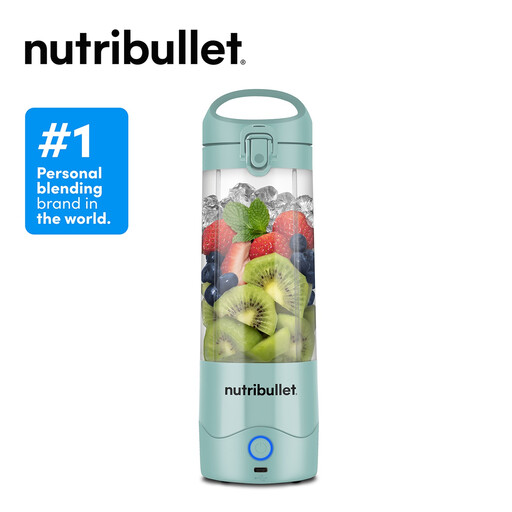 No image available
A cup-based option when you usually prepare one smoothie and want to avoid using a separate jug.
The product name specifies a 475ml cup, to-go lid and USB-C charging cable. Check whether a suitable charging adapter is included if you need one, and follow the model’s instructions for washing its detachable parts.
Choose the format and capacity for your usual portions before judging a blender by its motor power. If you plan to add ice, frozen fruit, nuts or seeds, check that the exact model’s instructions permit those ingredients rather than assuming its wattage settles the question.
For one regular smoothie drinker, a personal blender with a drinking cup can avoid decanting into another vessel. Check which parts are suitable for your washing method, and leave room to dry and store them without occupying a shared worktop or sink.
Unplug a mains blender before cleaning and follow its instructions for the cup, blade and base separately. Keep the electrical base out of water, check which detachable parts are dishwasher-safe, and stop using an appliance that is damaged, sparks, smokes or trips a circuit breaker.