
24/7 Customer Support

Free returns

Same-day & Next-day Delivery

Quality Guaranteed

Unlock Your Welcome Offers: FREE Delivery | Up to 80% OFF | Free 30-day JoyPlus trial
Download the APP
A barbecue grill can become a regular part of family meals, or an awkward appliance that takes up space after a few uses. The difference usually comes down to matching the grill to your cooking habits rather than choosing by appearance or headline wattage.
Before buying, consider where you will cook, how many people you usually serve, how much cleaning you tolerate and whether you want an electric, gas or charcoal cooking experience.
A large-looking barbecue may have limited usable cooking space because of deep lids, side shelves or bulky frames. Check the actual cooking surface, not just the total product dimensions. A 50 × 36 cm grill area, for example, gives a more useful indication of how much food can be cooked at once than the width of the trolley.
For indoor appliances, plate dimensions matter just as much. A compact electric contact grill may suit one or two people, while a 28 × 22 cm plate is more practical for family portions.
Wattage or burner output indicates potential heating power, but it does not tell you everything about cooking results. Heat distribution, plate contact, lid design and temperature control also affect usability.
An 800W electric contact grill may be suitable for toasties, panini and smaller meals, while a 2000W model is more appropriate when rapid heating and larger portions are priorities. For a gas BBQ, burner configuration and cooking-area size are more useful comparison points than a general claim about “high heat”.
Non-stick surfaces can simplify cleaning, but they still require suitable utensils and careful handling. Detachable plates, grease trays and accessible surfaces reduce the effort after cooking. Outdoor models need additional storage consideration: a gas BBQ or charcoal barbecue should be protected from damp conditions and kept in a suitable, ventilated location.
Also check whether the grill requires assembly, where the gas cylinder will be stored and whether the appliance can fit through doors or into a shed.
An indoor grill or electric contact grill should be used on a stable, heat-resistant worktop with suitable clearance. Never use a gas BBQ or charcoal BBQ indoors, in a tent or in an enclosed area. Gas and charcoal models require good outdoor ventilation and careful handling of fuel, heat and smoke.
For flats, kitchens and rainy-day cooking, an electric grill is generally the more practical format. Garden entertainers may prefer the cooking space and atmosphere of an outdoor barbecue.
Use your usual meal size as the starting point:
A flat-opening contact grill can also work as a tabletop grill, providing more flexibility than a fixed clamshell design.
Electric models list power in watts and usually use a plug-in thermostat or fixed heating system. Gas BBQs use burners, ignition and a hose or regulator, while charcoal models require lighting, airflow control and more time for heat preparation.
Look for features that match your routine:
Always follow the supplied instructions, keep hot surfaces away from children and use heat-resistant gloves where the manufacturer advises.

Why This Fits Their Persona: A compact choice for UK kitchens, quick breakfasts and smaller households wanting one appliance for grilling, sandwiches and panini.
Its stated 22.5 × 14 cm plates make the usable area clear, while double-sided heating avoids relying on appearance alone.
800W output, food-grade non-stick coating and grill, sandwich maker and panini press functions.
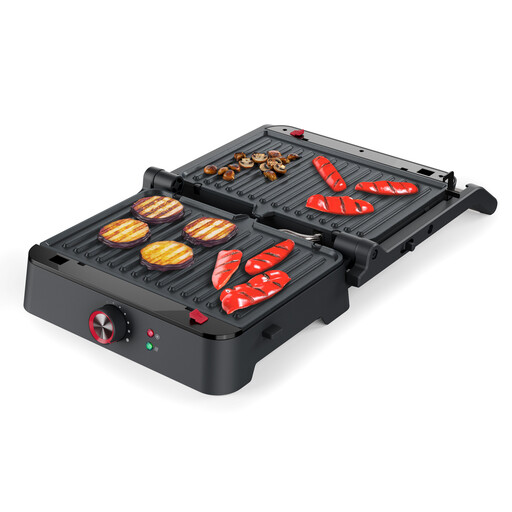
Why This Fits Their Persona: Suits cooks who want adjustable control, a flat table-grill option and simpler post-meal maintenance.
The 27.5 × 18 cm cooking area is specified, and its 180° opening avoids the limitation of a contact grill that can only cook from above.
1800W power, adjustable thermostat, detachable non-stick plates and a stated 2-year warranty.
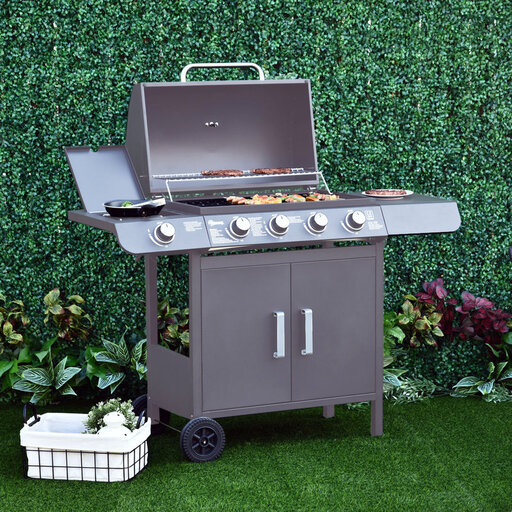
Why This Fits Their Persona: Designed for garden entertainers and households that need multiple cooking zones for larger outdoor meals.
Its four main burners, side burner and stated 125 × 51 cm overall size provide clearer information than a vague “party-size” label.
Includes a lid thermometer, storage areas, wheels, gas hose and regulator; assembly is required.
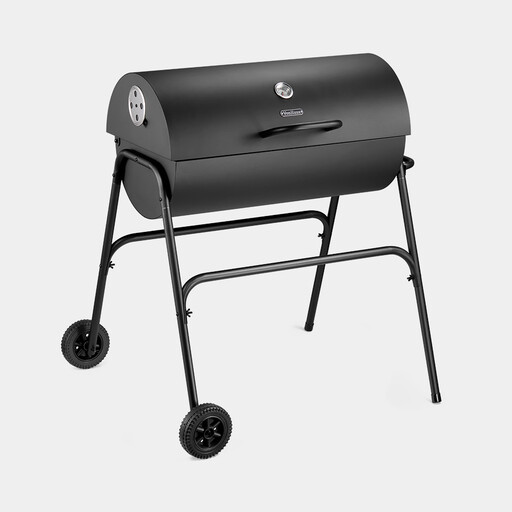
Why This Fits Their Persona: A garden-focused charcoal BBQ for cooks interested in grilling, warming food and experimenting with smoker-style preparation.
The built-in temperature gauge and adjustable ventilation offer practical control rather than relying only on a “smoker” description.
Charcoal grill and wood-smoker functionality, warming rack, wheels and a lid gauge displaying temperatures up to 430°C.
Choose an electric contact grill when convenience, indoor use and quick meals matter most. A sandwich maker or panini press is particularly practical for breakfasts and lunches, while a larger flat-opening model can handle vegetables and meat.
Choose a gas BBQ for quicker outdoor start-up, adjustable burners and larger cooking zones. A two-burner model can suit everyday garden meals; a 4+1 burner format provides more separation for different foods.
Choose a charcoal BBQ when smoky flavour, slower preparation and outdoor cooking are central to the experience. A model with a warming rack or smoker function adds flexibility, but charcoal requires more preparation and careful ash management.
We have compiled a complete, real-time list of products that fully satisfy these strict selection criteria and UK safety regulations.
Yes, if the product is designed for indoor use and placed on a stable, heat-resistant surface with ventilation around it. Do not use outdoor gas or charcoal appliances indoors, in garages or in enclosed areas.
Running cost depends on fuel prices, cooking frequency, heat-up time and the amount of fuel used. Gas typically offers more immediate control, while charcoal also involves lighting fuel and disposal of ash. Compare the complete routine rather than fuel price alone.
Lifespan depends on construction, weather exposure, cleaning and storage. Allow electric grills to cool before cleaning, protect outdoor appliances from rain and inspect gas hoses, regulators, burners and cooking surfaces regularly. Stop using any grill that shows damage and follow the manufacturer’s maintenance guidance.