
24/7 Customer Support

Free returns

Same-day & Next-day Delivery

Quality Guaranteed

Unlock Your Welcome Offers: FREE Delivery | Up to 80% OFF | Free 30-day JoyPlus trial
Download the APP
Creating espresso-based drinks at home can be rewarding, but buying the wrong equipment or plant-based drink can quickly become expensive. A barista coffee machine may look impressive on a worktop yet offer limited control, while a large multipack of oat drink may be poor value if it does not suit your taste or storage space.
This guide explains the main buying pitfalls, the specifications worth checking and which barista coffee essentials suit different household needs.
A specification such as “15-bar pump” sounds impressive, but the pump’s maximum rating does not tell you everything about the coffee produced. Practical results also depend on temperature stability, grind consistency, dose, tamping and the machine’s extraction design.
Look for features such as PID temperature control, a pressure gauge, adjustable grind settings or a clearly stated brewing pressure. These are more useful indicators of control than a large pressure number alone.
Standard oat drinks, coconut drinks and other vegan coffee milk products can behave differently when heated. Some separate in acidic espresso, while others produce larger bubbles rather than smooth microfoam.
A barista-style formula generally includes a balance of fat, stabilisers or acidity regulators designed for hot drinks. However, it is still important to check allergens, added sugars, storage instructions and flavour profile. A coconut drink may add a noticeable tropical note, whereas oat drink usually has a milder cereal flavour.
A glossy milk frothing pitcher may look suitable for latte art but still have a blunt spout, uncomfortable handle or a capacity that is impractical for your drinks. Material and shape matter more than colour.
For regular steaming, choose food-contact stainless steel, a manageable capacity and a spout that supports controlled pouring. A pitcher that is too large can make it harder to texture a small quantity of milk; one that is too small may overflow as the liquid expands.
When comparing a home espresso machine, consider the following:
A capsule machine may be more suitable if speed and simplicity matter more than grinding and tamping. Check capsule compatibility carefully, especially if you already use a particular pod system.
For plant-based milk for coffee, compare:
A milk frothing pitcher around 350–500 ml is practical for one or two drinks. Stainless steel allows you to feel the temperature through the jug while steaming, although the exterior can become hot. A latte art pitcher with a narrow, precise spout can help with controlled pouring, but technique remains important.
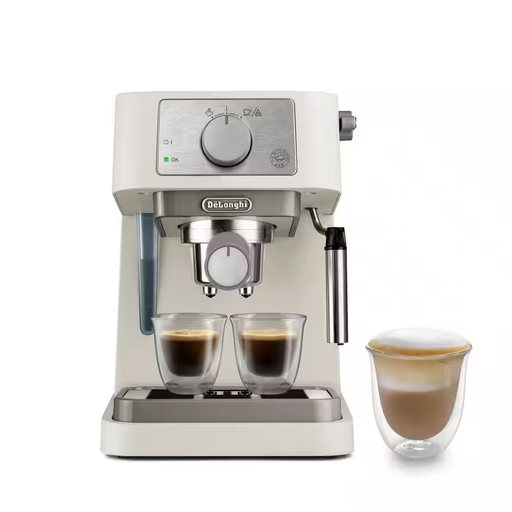
Why This Fits Their Persona: A compact option for UK flats, first-time home baristas and shoppers who want manual espresso without an integrated grinder.
Its compact design avoids paying for features you may not use, while compatibility with ground espresso and ESE pods provides two preparation routes.
15-bar pump, manual stainless-steel steam wand, 1-litre water tank and removable components.
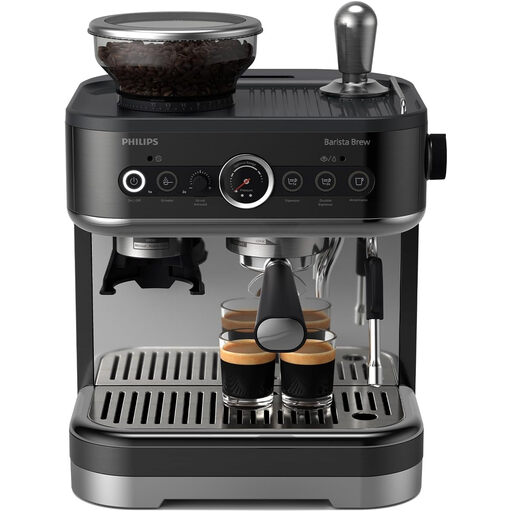
Why This Fits Their Persona: Suited to coffee drinkers who want fresh grinding, hands-on preparation and controls for espresso, Americanos and milk-based recipes.
The built-in pressure gauge and PID temperature control provide practical feedback instead of relying only on headline pump figures.
Integrated conical burr grinder, 58mm portafilter, calibrated tamper and powerful steam wand.
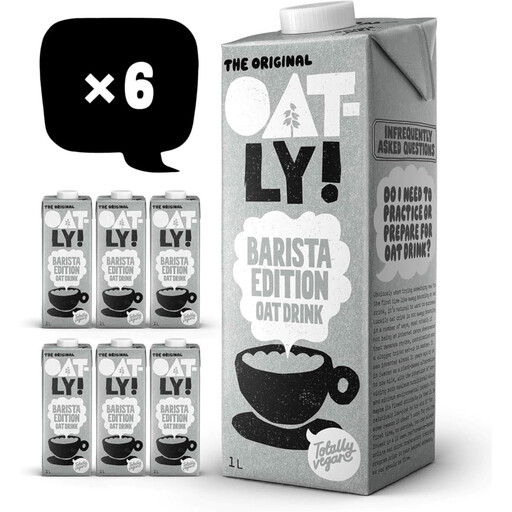
Why This Fits Their Persona: A practical choice for households making frequent lattes, cappuccinos or iced coffee and wanting multiple long-life cartons available.
The barista-style formula is intended for steaming and frothing, while UHT packaging helps with cupboard storage before opening.
Plant-based oat drink with added calcium and vitamins; once opened, refrigerate and follow the pack’s usage guidance.
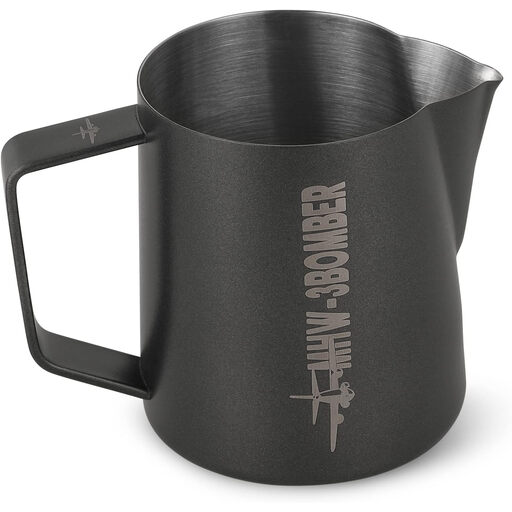
Why This Fits Their Persona: Designed for home users practising controlled pouring for flat whites, cappuccinos and latte art patterns.
Its stated 500ml capacity and shaped spout are more relevant to pouring control than decorative finishes alone. Hand washing is recommended to protect the matt surface.
304 stainless-steel construction, ergonomic handle and dual curved flow channels in the spout.
We have compiled a complete, real-time list of products that fully satisfy these strict selection criteria and UK safety regulations.
A reliable setup may also include:
Parents shopping for barista-themed pretend play can consider the wooden coffee machine set with cups, pods and accessories. The set is listed for children aged 3+, with smooth materials and EN71-1-2-3 safety standard information. It is a toy rather than functional home barista equipment, so keep play items separate from real hot drinks and machines.
At minimum, choose an espresso machine or compatible pod machine, suitable coffee, a milk frothing pitcher if making milk drinks and cleaning supplies. An integrated grinder can reduce the number of separate purchases, while a capsule machine simplifies preparation.
It can be convenient because grinding and dosing are integrated, but it still needs regular emptying, rinsing and descaling according to the manufacturer’s instructions. A semi-automatic machine usually requires more hands-on cleaning around the portafilter and steam wand.
Storage varies by product. Several listed drinks advise refrigeration after opening and consumption within five to seven days. Always check the carton, shake well before use and do not freeze unless the packaging specifically permits it.