
24/7 Customer Support

Free returns

Same-day & Next-day Delivery

Quality Guaranteed

Unlock Your Welcome Offers: FREE Delivery | Up to 80% OFF | Free 30-day JoyPlus trial
Download the APP
Tired of the daily expense and variable quality of high-street coffee? Bringing the café experience into your kitchen is a rewarding step for any coffee lover. However, the market for home espresso machines can be overwhelming. With so many features and technical terms, it’s difficult to know where to invest your money for genuine quality.
This guide is designed to help you navigate the options. As the Joybuy Product Recommendation Officer, my role is to provide clear, practical advice, helping you understand the key features that contribute to a superb cup of coffee. We will look at some of our top recommendations for 2026, focusing on the hands-on, rewarding experience of a semi-automatic espresso machine.
Choosing the right machine comes down to understanding a few core components that directly impact the quality of your espresso. Here are three key areas to consider.
A true bean to cup coffee machine grinds fresh beans immediately before brewing, which is fundamental for preserving the coffee's delicate aromas and flavours. Many high-quality models come with an espresso machine with grinder built-in. This offers convenience and a smaller footprint on your worktop. The alternative is a separate grinder, which can offer more specialised control but requires an additional purchase and more space. For most home baristas, an integrated, adjustable conical burr grinder is an excellent starting point.
Consistency is the secret to great espresso. A feature to look for is a PID controller. An espresso machine with PID (Proportional-Integral-Derivative) is essentially a digital thermostat that keeps the water temperature extremely stable throughout the brewing process. Fluctuations of just one or two degrees can significantly alter the taste of your shot, turning it from rich and balanced to sour or bitter. A PID provides the control needed to pull consistently delicious shots, time after time.
If you enjoy lattes, cappuccinos or flat whites, the quality of your coffee machine with steam wand is non-negotiable. A powerful steam wand injects steam into milk, creating a fine, velvety microfoam. This is not only essential for pouring latte art but also gives milk-based drinks their signature silky texture and sweetness. A machine capable of producing this is often referred to as a latte art machine, and it's a key feature that separates basic models from a true speciality coffee machine UK enthusiasts will appreciate.
Here are a few semi-automatic espresso machines that offer the features and control to help you elevate your home coffee brewing.
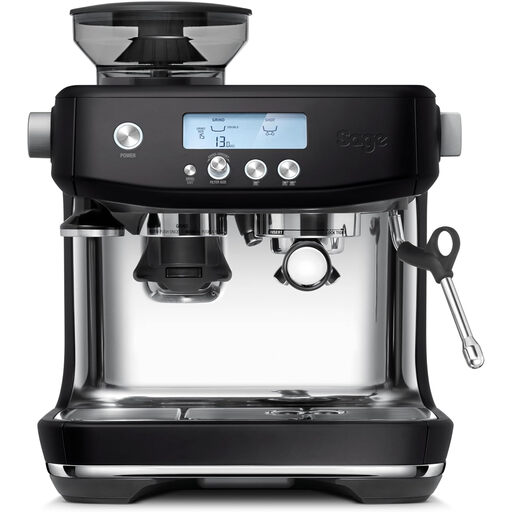
Why It Stands Out: The Sage Barista Pro is known for its speed and user-friendly design. The ThermoJet heating system reaches the optimum extraction temperature in just three seconds, minimising your wait time. According to Sage's internal benchmark testing, this system also uses up to 32% less energy annually compared to a standard Thermoblock system.
Pros:
Who is it for? This is a strong choice for the aspiring home barista who values both performance and convenience. Its quick start-up and clear interface make it less intimidating than more traditional machines, without compromising on the quality of the final drink.
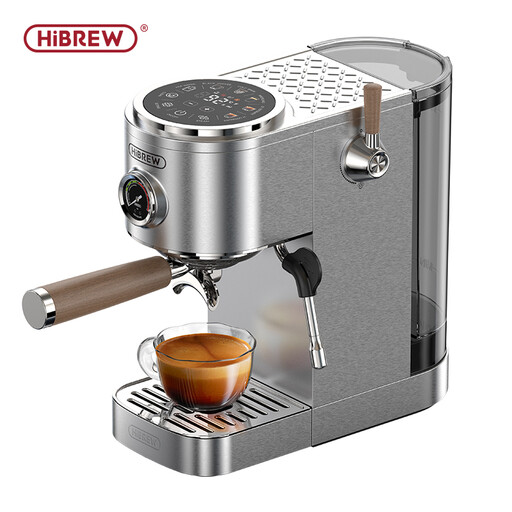
Why It Stands Out: The HiBREW H13 brings a significant feature from commercial cafés into the home: a dual-boiler system. This allows you to pull an espresso shot and steam milk simultaneously, drastically speeding up your workflow when making milk-based drinks. It also features a commercial-standard 58mm portafilter, which promotes a more even extraction.
Pros:
Who is it for? This machine is ideal for the coffee enthusiast who frequently makes lattes or cappuccinos and wants to streamline their morning routine. The dual-boiler and 58mm group head are features that will appeal to those looking to closely replicate a professional barista's workflow.
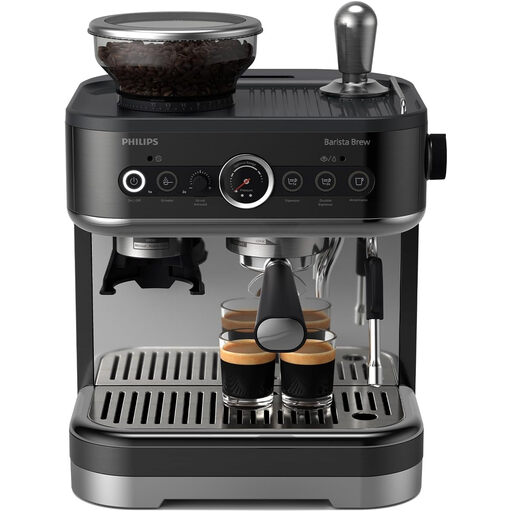
Why It Stands Out: The Philips Barista Brew is built to guide the user through the art of espresso making. It combines key performance features like an integrated grinder and PID temperature control with a built-in pressure gauge. This gauge provides instant visual feedback, helping you understand how your grind size and tamp pressure are affecting the extraction, which is an invaluable learning tool.
Pros:
Who is it for? This semi-automatic espresso machine is well-suited for those who are serious about learning the craft of espresso. The pressure gauge offers a hands-on educational experience, making it easier to diagnose and improve your shots.
While a home espresso machine with manual controls offers the most rewarding experience for enthusiasts, some users may prefer the convenience of a one-touch solution. If you're looking for a machine that handles everything from grinding to frothing with the press of a button, you may be interested in a different style of machine.
Explore our curated selection of automatic espresso coffee machines to find a model that better suits a busy lifestyle.
A semi-automatic machine, like the ones featured here, gives you control over the brewing process. You will typically grind and tamp the coffee yourself and decide when to start and stop the extraction. A fully automatic machine automates the entire process; you simply press a button, and the machine grinds the beans, tamps the coffee, pulls the shot and often froths the milk for you.
If you are passionate about coffee and currently spend a significant amount at cafés, investing in a quality home machine can be very worthwhile. It not only offers potential long-term savings but also provides the satisfaction of crafting a drink to your exact preferences, using beans from your favourite roasters.
While many machines advertise high pump pressures like 15 or 20 bars, the ideal pressure for extracting espresso is actually around 9 bars at the group head. High-quality machines use the higher-rated pumps to ensure that a consistent 9 bars of pressure can be delivered to the coffee puck. Features like an Over-Pressure Valve (OPV) help regulate this for a more balanced extraction.