
24/7 Customer Support

Free returns

Same-day & Next-day Delivery

Quality Guaranteed

Unlock Your Welcome Offers: FREE Delivery | Up to 80% OFF | Free 30-day JoyPlus trial
Download the APP
The daily ritual of a perfectly crafted coffee is one of life’s simple pleasures. For many, this means a trip to a local café, but the desire to replicate that rich espresso, velvety latte or frothy cappuccino at home is growing. Stepping up from a pod system or filter machine can feel daunting. With terms like 'pump pressure', 'dual boiler' and 'portafilter' to navigate, choosing the right barista coffee machine can be confusing.
This guide is designed to cut through the clutter. We will walk you through the key features to consider and present a selection of machines that cater to different needs and skill levels, from the aspiring home barista to the seasoned coffee enthusiast.
Before diving into specific models, understanding a few core concepts will help you make a more informed decision.
You will often see machines advertised with 15 or 20 bars of pressure. This figure refers to the maximum pressure the pump can generate. For a true espresso, the water needs to be forced through the finely-ground coffee at a consistent pressure, with the industry standard being around 9 bars at the group head. A machine with a higher-rated pump (e.g., 15-bar) has ample power to maintain this optimal pressure consistently, which is crucial for extracting a rich, flavourful shot with a stable crema.
The boiler is the component that heats the water. The type of system a machine uses directly impacts your workflow, especially if you enjoy milk-based drinks.
This is a fundamental choice that defines your coffee-making experience.
Here are our recommendations, selected to suit a range of preferences for home coffee making.

Why It Stands Out: The HiBREW H7A is built for the enthusiast who wants to multitask. Its dual boiler and dual pump system means there is no waiting time between brewing espresso and steaming milk. The clear LCD touch screen provides at-a-glance information and allows for customisation of extraction temperature and shot volume, giving you a high degree of control.
Pros:
Who is it for? The home barista who frequently makes lattes or cappuccinos and values the efficiency of a professional-style workflow. It's also a solid option for small offices or businesses where speed is important.
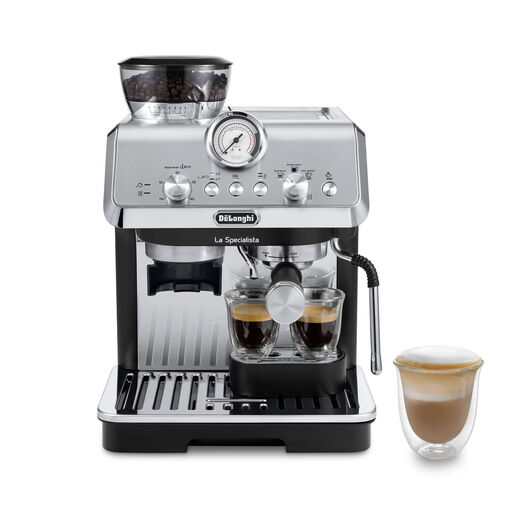
Why It Stands Out: The La Specialista Arte bridges the gap between convenience and craft. It’s a bean to cup coffee machine that doesn't sacrifice manual control. With an integrated grinder offering eight settings and a complete barista kit (including a tamper and dosing funnel), it provides everything you need to start honing your skills straight out of the box.
Pros:
Who is it for? The aspiring barista who wants an all-in-one package. It’s perfect for those who want to learn the art of espresso making without the guesswork of matching a separate grinder and machine.
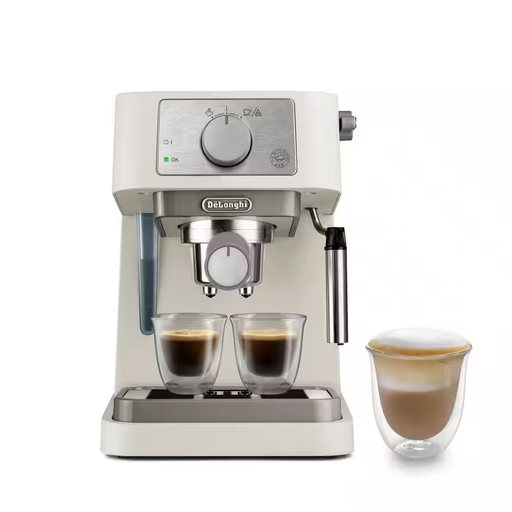
Why It Stands Out: The De'Longhi Stilosa proves that you don't need a large machine to make great coffee. Its compact and stylish design fits easily into any kitchen, making it a great starting point for an espresso machine for home use. The simple controls and manual steam wand provide all the essential functions needed to pull a proper espresso shot and create frothed milk for classic coffee drinks.
Pros:
Who is it for? Beginners looking for their first manual espresso machine or anyone with limited space who still wants the ability to make authentic espresso-based drinks.
Our selection covers a range of needs, but the world of coffee is vast. If you're looking for different features, such as fully automatic operation or other design styles, there are many more options to consider.
Explore our full range of digital coffee machines to find the perfect fit for your kitchen and coffee preferences.
A standard coffee maker, like a drip or filter machine, brews coffee by passing hot water over coffee grounds. A barista-style espresso machine uses high pressure (typically 9 bars or more) to force a small amount of near-boiling water through finely-ground coffee to produce a concentrated shot of espresso. This process is what creates the rich flavour and signature crema that forms the base for drinks like lattes and cappuccinos.
Not necessarily. While a pump rated for 15-20 bars is a sign of a capable machine, the crucial factor is the ability to deliver a steady 9 bars of pressure at the point of extraction. The higher rating simply ensures the machine has more than enough power to achieve and maintain this ideal pressure without strain, leading to more consistent results.
A built-in grinder, found in a bean to cup coffee machine, offers convenience and guarantees your coffee is ground just moments before brewing, which is key for freshness. However, a separate grinder often provides more control and a wider range of grind settings, which is a priority for enthusiasts who enjoy experimenting with different beans and brew methods. The choice depends on whether you prioritise convenience or ultimate control.