
24/7 Customer Support

Free returns

Same-day & Next-day Delivery

Quality Guaranteed

Unlock Your Welcome Offers: FREE Delivery | Up to 80% OFF | Free 30-day JoyPlus trial
Download the APP
Choosing Barking Heads dog food can feel more complicated than expected. There are dry recipes, wet meals, puppy food, senior formulas, grain-free options and weight-control products, often with similar-looking packaging and persuasive claims.
The right choice should depend on your dog’s life stage, body condition, activity level, known sensitivities and feeding routine, rather than the most attractive front-of-pack message.
“Natural dog food UK” is a useful search term, but it is not, by itself, a nutritional standard. A recipe can contain recognisable ingredients and still be unsuitable for a particular dog if it does not provide the correct balance of nutrients.
Look for a food labelled as complete, rather than complementary. A complete and balanced dog food should be suitable as the main part of the diet when fed according to the manufacturer’s guidance. Always check the packaging, because formulations and feeding recommendations can change.
Barking Heads grain-free dog food may suit owners who specifically prefer recipes without grains, but grain-free is not automatically better for every dog. Some grain-free recipes use potatoes, peas or other carbohydrate sources instead.
If your dog has a suspected food allergy, recurring digestive problems or a medically diagnosed condition, speak to your vet before making a decision. Avoid selecting food solely because “grain-free” appears prominently on the label.
Wet food contains a high proportion of water, so its crude protein and fat percentages will usually look lower than those of dry food. For example, Barking Heads wet recipes listed here contain around 76–79% moisture, while dry recipes have much less moisture.
This does not make one format automatically superior. Dry food is convenient to measure and store, while wet food can add moisture and variety. If mixing both, reduce the quantity of each food so your dog does not receive excessive calories.
Start with age. Barking Heads puppy food is designed for growing dogs, while adult recipes generally target maintenance nutrition. Barking Heads senior dog food is intended for older dogs, with the Golden Years dry recipe and wet Golden Years option specified for mature dogs.
Check the wording on the pack carefully:
The first ingredients provide useful context, but percentages and the full list matter more than marketing phrases such as “premium” or “quality”.
Barking Heads chicken dog food includes recipes based on free-run or fresh deboned chicken. Lamb options include 50% lamb, comprising freshly prepared and dried lamb in the listed dry formula. Salmon recipes use salmon alongside other ingredients, including chicken in the Barking Heads Wet Pooched Salmon recipe.
If you are looking for a limited-ingredient diet, check every ingredient. A recipe that highlights lamb or salmon may still contain oils, broth or other animal-derived ingredients.
Weight management depends on total calorie intake, treats, exercise and portion control. The listed Barking Heads dry recipes provide approximately 343–370 kcal per 100g, depending on the formula. The Fat Dog Slim chicken dry food lists 9.5% crude fat, compared with 12% for the lamb recipe and 14% for the standard chicken recipe.
These figures are useful for comparison, but they are not a substitute for the feeding guide or veterinary advice. Weigh dry food with kitchen scales, monitor body condition and adjust portions gradually.
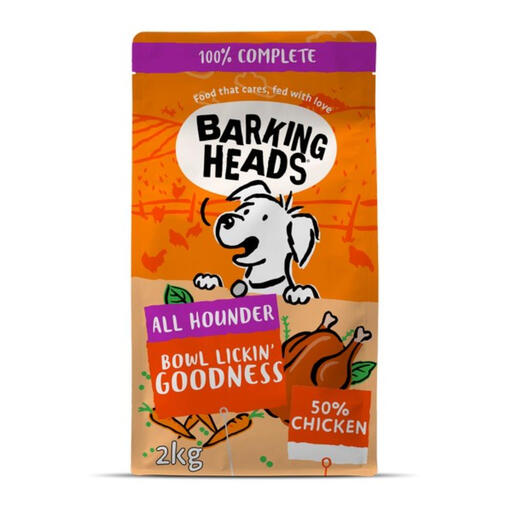
Why This Fits Their Persona: A practical starting point for adult-dog owners who want a dry staple in a manageable 2kg pack before committing to a larger bag.
Its listed analysis gives clear protein, fat, fibre and energy figures, making portion comparison more straightforward than relying on front-of-pack wording.
55% chicken is listed, alongside brown rice, oats and vegetables; the recipe contains added glucosamine, MSM and chondroitin.
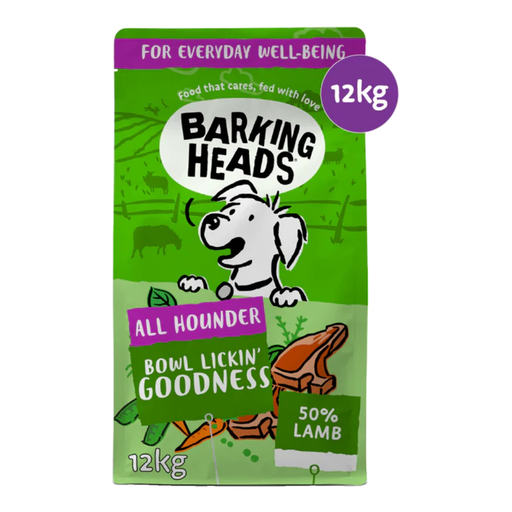
Why This Fits Their Persona: Suitable for owners with an adult dog already settled on lamb and enough dry-food storage space for a larger household pack.
The ingredient and analytical details are visible, including 24% crude protein, 12% crude fat and 356 kcal per 100g.
The listed recipe contains 50% grass-fed lamb, rice, oats, peas, linseed and added prebiotics.
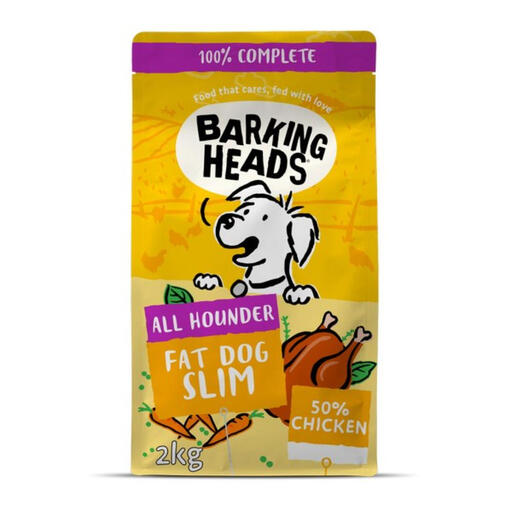
Why This Fits Their Persona: Designed for owners managing an adult dog’s weight through measured portions, regular activity and a reduced-fat recipe.
It provides specific figures rather than only saying “light”: 9.5% crude fat, 4% crude fibre and 343 kcal per 100g are listed.
The recipe includes chicken, trout, brown rice, peas, carrots and listed L-carnitine, with a 2kg pack size.
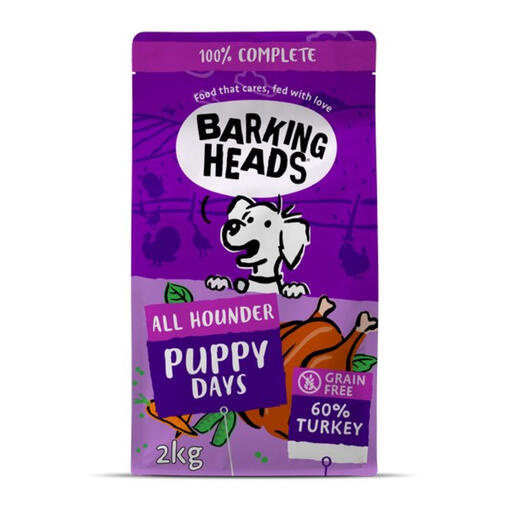
Why This Fits Their Persona: A dry puppy recipe for owners who want a clearly labelled growth-focused food that is easy to portion during training and daily routines.
It is specified for puppies and provides feeding guidance by puppy size, while the 2kg pack allows owners to monitor acceptance before buying more.
The grain-free recipe lists 60% turkey, salmon oil, calcium, glucosamine and chondroitin, with 385 kcal per 100g.
Choose Barking Heads dry dog food if storage, measuring and feeding convenience are priorities. Reseal the bag and keep it in a cool, dry place. Wet formats, including Barking Heads dog food pouches and 10 × 300g packs, can offer variety and a softer texture.
Once opened, refrigerate wet food and follow the stated use-by guidance. Several listed recipes recommend using opened portions within three days, while the variety pack specifies 24 hours. Introduce any new food gradually over approximately five to seven days where the label advises it.
We have compiled a complete, real-time list of products that fully satisfy these strict selection criteria and UK safety regulations.
Several listed dry and wet recipes are described as complete and balanced, but check the current product label before feeding. Confirm that the recipe is suitable for your dog’s life stage and intended as a complete food rather than a topper.
Mix a small amount of the new food with the existing recipe, increasing it gradually over five to seven days. Slow the change if your dog shows digestive upset and seek veterinary advice if symptoms persist.
The Fat Dog Slim dry and wet recipes are positioned for weight control. Compare their feeding guidance and fat content with your dog’s current diet, measure portions accurately and ask your vet to confirm a healthy target weight before making a substantial calorie reduction.