For basil pesto, start with a food-processor bowl and knife blade if controlled chopping is your priority: Kenwood GB’s pesto method uses that arrangement for basil, garlic, nuts and oil. A jug blender with pulse control is worth considering if you also make larger blends, but check that it suits your usual pesto portion. In a shared kitchen, the parts you must wash and store—and how everyone will clean them—matter alongside the blending controls.
Who is this for?
Small-batch pesto makers
If you make pesto for one or a few meals, vessel size and control over chopping matter more than a large stated capacity. Kenwood GB’s pesto method uses a food-processor knife blade, while the controls and workable quantity still need checking for the model you choose.
Shared-kitchen clean-up prioritists
If several people use the appliance, look at which food-contact parts can be removed and washed, how many attachments need putting away and where they will fit. nutribullet UK describes removable, top-rack dishwasher-safe parts for the magic bullet Kitchen Express, excluding its motor base.
Allergen-aware household sharers
If someone sharing the kitchen has a diagnosed food allergy, agree how equipment used for pesto will be handled before buying. Kenwood GB’s pesto recipe includes nuts and Parmesan; the NHS identifies tree nuts and milk among common allergenic foods.
What matters when choosing?
Choose the processing format and vessel size around your usual portion, then check how its food-contact parts will be cleaned and shared. A large capacity alone does not establish that a blender suits a small batch: nutribullet UK specifies a 500ml minimum fill line for its Power Core blender.
| Concern |
What to check |
Who this matters to |
| Texture control |
Check for pulse control, a chopping-capable blade or bowl, and a vessel suited to your usual portion. |
If I want discernible pieces of basil and nuts rather than a uniformly blended sauce, I need to stop processing at the texture I prefer. Around 45% of consumers put that control first. |
| Cleaning and storage |
Identify which removable parts are dishwasher safe and count the bowls, lids and attachments you will need to wash and store. |
When cupboard space and the sink are shared, I want to clear the appliance away promptly after use; around 33% of consumers make easy handover their primary concern. |
| Allergen-aware sharing |
Check whether food-contact parts can be accessed for cleaning and whether separate containers or accessories would suit an agreed household routine. |
If someone else must avoid an ingredient in my pesto, I need an arrangement we can both follow before the appliance is shared. For around 22% of consumers, managing that separation comes first. |
Buying pitfalls
-
Choosing by wattage alone
Motor output does not tell you whether a blender has the bowl, blade and controls you want for pesto. Kenwood GB’s published method uses a food-processor knife blade to chop and combine the ingredients.
Check the supplied processing tools, pulse control and vessel size before comparing motor figures.
-
Overlooking a minimum-fill line
A large jug may not suit a small portion. nutribullet UK advises that mixtures in its Power Core blender reach the 500ml minimum fill line.
If you usually make one small jar, check the exact model’s minimum operating quantity rather than relying on its maximum capacity.
-
Treating dishwasher-safe parts as the whole sharing plan
Dishwasher suitability does not, by itself, establish that an agreed cleaning routine addresses a particular allergy. Food Standards Agency guidance for food operations treats equipment cleaning and prevention of allergen cross-contamination as important controls.
Agree who will clean the vessel, lid and accessible blade surfaces. Where a household member has a diagnosed allergy, follow that person’s clinical management plan when deciding whether equipment or accessories should be kept separate.
-
Assuming a processor is simpler to put away
A processor may provide the chopping tools you want while also bringing extra discs, lids or bowls into a shared cupboard. Kenwood GB lists in-bowl storage for its MultiPro Compact FDP31.170GY, but storage arrangements vary by model.
Compare the components you would actually use and where each one would be kept.
Brands to consider for these formats
Kenwood
Relevant if a food processor, rather than a smoothie-led blender, fits your pesto-making routine. Kenwood GB publishes a pesto method using a processor bowl and knife blade.
- Kenwood GB lists an 800W motor, 2.1L bowl, two speeds plus pulse and in-bowl storage for the MultiPro Compact FDP31.170GY.
- The bowl’s stated capacity does not establish how the model handles every very small batch; check the quantity you normally make.
nutribullet / magic bullet
Relevant if you are weighing a compact processor-and-blender combination against a jug blender. nutribullet UK lists an 830ml work bowl for the magic bullet Kitchen Express and a 1.5L jug for the magic bullet Blender.
- nutribullet UK describes the Kitchen Express’s removable parts, apart from the motor base, as top-rack dishwasher safe; it lists high, low and pulse controls for the magic bullet Blender.
- For the larger Power Core blender, nutribullet UK specifies a 500ml minimum fill line, which matters if your usual pesto portion is smaller.
Joybuy product choices
These food-processor combinations and jug blenders offer different starting points for making pesto in a shared kitchen. Compare the processing vessel, controls and cleaning instructions against your usual portion and sharing arrangements.
 No image available
Nutribullet Magic Bullet Kitchen Express, 830ml
Consider its processing bowl if you want to chop ingredients in a compact processor-and-blender combination. nutribullet UK describes an 830ml work bowl and says the removable parts, excluding the motor base, are top-rack dishwasher safe.
If short bursts or very small portions are important to you, check the controls and minimum workable quantity for this model before buying.
View on Joybuy
 No image available
DAEWOO 2-in-1 Food Processor and Blender, 2L Bowl
Consider this processor-and-blender format if you want a processing bowl as well as a blender. Its product title specifies a 2L bowl and 750W motor; check the supplied blade and controls against the pesto texture you want.
For a small portion or shared clean-up, check the minimum workable quantity and the cleaning instructions for each food-contact part.
View on Joybuy
 No image available
Kenwood MultiPro OneTouch FDM73.850SS, 3L, 13 Accessories
This food processor and blender is worth considering if you also want attachments for other preparation tasks. Its product title lists a 3L capacity, 1000W motor, variable speed, pulse control and integrated weighing.
Check the minimum workable pesto quantity and the cleaning instructions for the parts you expect to use. Thirteen listed accessories also need space for storage.
View on Joybuy
 No image available
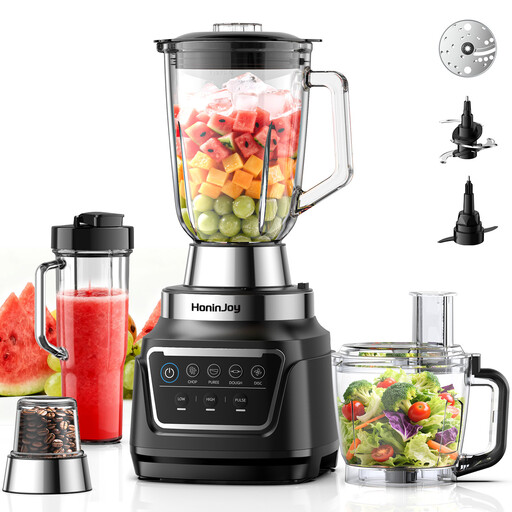
HoninJoy All-in-One Blender and Food Processor, 10-in-1
Consider the combined blender-and-processor format if you want chopping as well as blending in one appliance. Its product title lists chopping among its functions.
Check whether its controls allow the texture adjustments you want, what quantity it can process and which supplied parts can be washed in a dishwasher.
View on Joybuy
 No image available
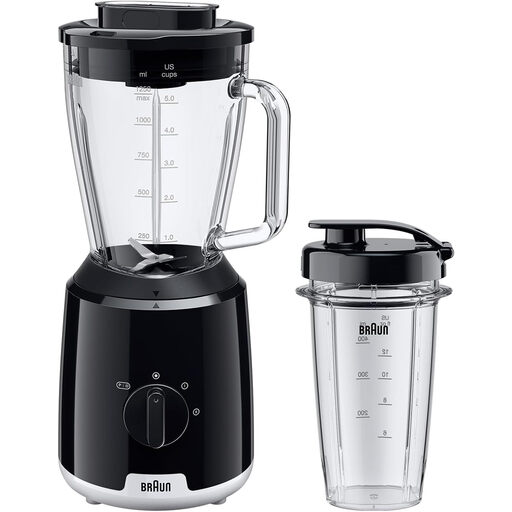
Braun Powerblend 1 JB1051BK, 1.5L Glass Jug
Consider a jug blender if pesto is only one of the sauces or drinks you plan to make. This model’s product title specifies a 1.5L glass jug, 600W motor, two speeds and a smoothie-to-go bottle.
If you usually make a small, thick portion of pesto, check the minimum workable quantity and whether the available controls give you the texture adjustment you need.
View on Joybuy
Common questions
Should I use a food processor or a jug blender for basil pesto?
A food processor is the more directly supported starting point if controlled chopping is your main aim: Kenwood GB’s pesto method uses a processor bowl and knife blade for basil, garlic, nuts and oil. A jug blender may fit better if you also make larger blends, provided its controls and workable quantity suit your pesto portion.
How do I choose the right vessel size for pesto?
Match the vessel to the amount you normally make, checking its minimum operating quantity as well as its stated capacity. For instance, nutribullet UK specifies a 500ml minimum fill line for the 2.1L Power Core blender, so its maximum capacity alone would not answer a small-batch buyer’s question.
How should we share a blender after making pesto with nuts or cheese?
Agree a cleaning and sharing routine before the next person uses it, including how permitted food-contact parts will be dismantled and washed. Kenwood GB’s pesto recipe includes nuts and Parmesan, and Food Standards Agency guidance for food operations highlights cleaning and allergen cross-contamination controls. In a household where someone has a diagnosed allergy, use that person’s clinical management plan to decide whether separate equipment or accessories are appropriate.


