
24/7 Customer Support

Free returns

Same-day & Next-day Delivery

Quality Guaranteed

Unlock Your Welcome Offers: FREE Delivery | Up to 80% OFF | Free 30-day JoyPlus trial
Download the APP
A jar of basil pesto can turn pasta, pizza, sandwiches or a salad into a quick meal, but the products on the shelf are not interchangeable. Some are classic green pesto recipes with cheese and nuts, while others are tomato-based sauces, spicy variations or dairy-free alternatives.
The main buying challenge is matching the recipe to how you cook. A small jar may suit one or two pasta portions, whereas a larger format may be more practical for family meals. Ingredient proportions, allergens and storage instructions also vary considerably.
The green colour does not indicate dietary suitability. Classic basil pesto commonly includes hard cheeses, milk and cashew nuts, while some spicy recipes may contain anchovy sauce. For example, Filippo Berio Classic Pesto lists cashew nuts and cheese, and the hot chilli version contains fish.
If you follow a vegetarian or vegan diet, check the full ingredient list rather than relying on the front label. A vegan pesto may use tofu, vegetables or alternative oils instead of cheese.
Red pesto and sun-dried tomato pesto are generally thicker and more concentrated than standard tomato-and-basil pasta sauces. They may contain cheese, nuts, oil and capers, producing a richer texture and stronger savoury flavour.
A tomato-and-basil sauce, such as a 660g cooking jar, is usually designed to be used more generously over pasta or as a pizza base. Pesto is often stirred through cooked food after heating, although the instructions on the packaging should always take priority.
Oil-based sauces are not automatically long-lasting once opened. Several 190g pesto jars specify refrigeration and consumption within two weeks. Other recipes have shorter periods: Mutti Red Pesto advises using the product within five days, while Mr Organic Italian Organic Sundried Tomato Pesto advises consumption within three days.
Only buy a large jar if you are likely to use it within the stated period. Otherwise, a smaller pesto jar 190g or single-serving pasta pot may help reduce waste.
Choose the type of pesto according to the meal:
“Made in Italy” is an objective origin statement, but it does not by itself guarantee that a recipe follows a traditional regional formula. Compare the ingredients and the percentage of basil or tomatoes for a clearer indication of what you are buying.
UK food labels must identify regulated allergens, but recipes and manufacturing details can change. Look for highlighted ingredients such as milk, cashew nuts, almonds, pine nuts, soya, wheat, fish and sulphites. “May contain” statements are also important for people with allergies.
For example, Filippo Berio Classic Pesto contains cashew nuts and milk. Sacla Italia Sun-Dried Tomato Pesto contains cashew nuts, milk and sulphites. Mr Organic’s dairy-free recipe contains soya and may contain traces of nuts, celery and peanuts.
Always check the physical packaging before consumption, particularly if buying for children or someone with a diagnosed allergy.
A 190g jar is a convenient size for occasional use, but the number of portions depends on how generously you apply the sauce. Compare per 100g nutrition information, especially fat and salt, rather than judging the whole jar as one serving.
Also check whether the product is ambient, refrigerated or frozen before opening. Once opened, follow the manufacturer’s instructions precisely. Keep chilled products below the stated temperature, use clean utensils and do not consume a jar if its seal is damaged or the product looks or smells unusual.
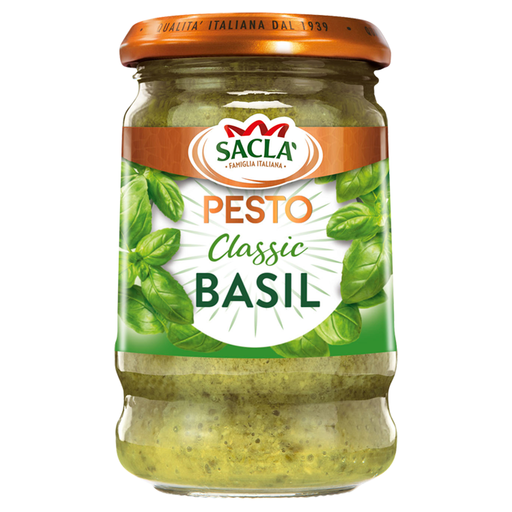
Why This Fits Their Persona: A practical 190g format for shoppers wanting a familiar green pesto for pasta, pizza or garlic bread without committing to a large jar.
The ingredient list clearly identifies basil at 45.5% and specifies the nut and milk allergens, avoiding vague “Italian-style” labelling.
Contains Italian cheeses, cashew nuts and pine nuts; refrigerate and use within two weeks after opening.
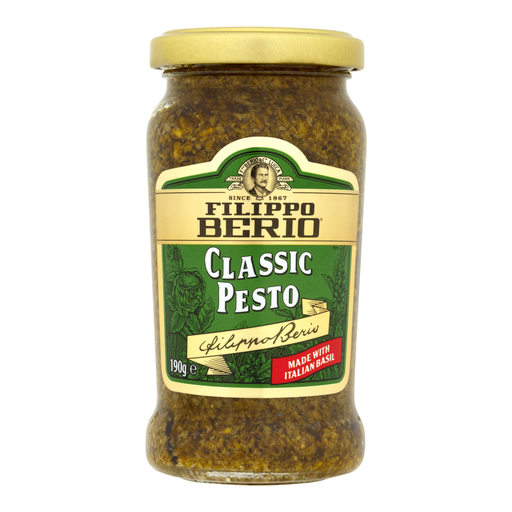
Why This Fits Their Persona: Suits home cooks looking for a basil-led recipe with Italian basil, Parmigiano Reggiano, Pecorino Romano and extra virgin olive oil.
The listed recipe makes the cheese, cashew nut and pine nut content visible, so shoppers can assess flavour expectations and allergens before purchase.
Made in Italy; lists Italian basil at 46% and provides 190g of sauce for several meals or uses.
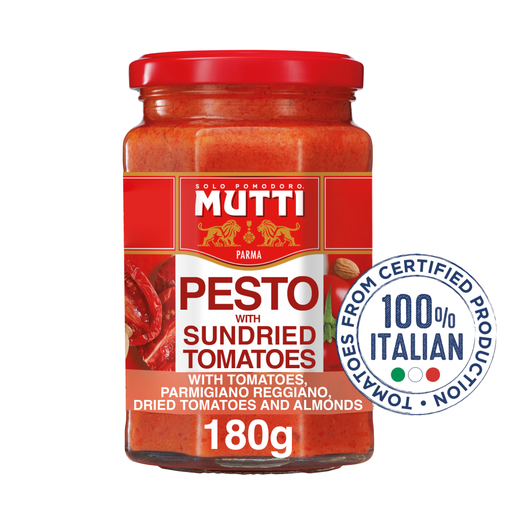
Why This Fits Their Persona: A versatile choice for cooks who want sun-dried tomato pesto for pasta, ciabatta, grilled food, salads or mozzarella.
It is clearly positioned as red pesto, with tomato purée at 59.5% and dried tomatoes at 3.5%, rather than being mistaken for a standard green pesto.
Made in Italy; contains Parmigiano Reggiano P.D.O., almonds, capers and olive oil. Refrigerate and use within five days after opening.
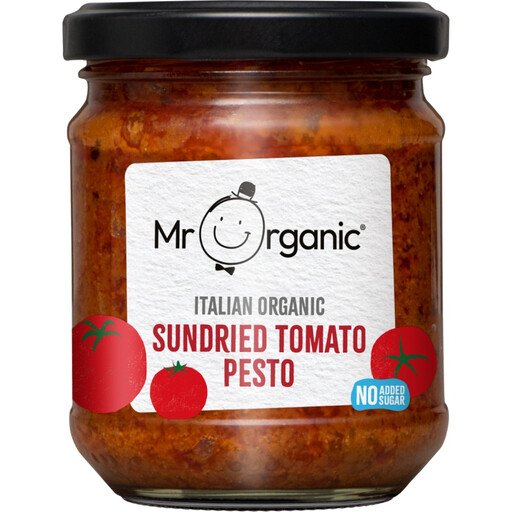
Why This Fits Their Persona: Designed for shoppers seeking an organic, plant-based alternative for pasta, sandwiches and salads.
The recipe contains no listed dairy or cheese and identifies soya clearly, helping vegan shoppers avoid assuming that all tomato pesto is dairy-free.
Suitable for vegans; contains 28% rehydrated sun-dried tomatoes and ingredients from organic agriculture.
We have compiled a complete, real-time list of products that fully satisfy these strict selection criteria and UK safety regulations.
For a quick weekday meal, stir pesto through hot pasta and add a small amount of pasta water to create a smoother coating. Green pesto can also be spread over pizza dough, spooned onto garlic bread or mixed into a sandwich filling.
Red pesto works well with roasted vegetables, baked pasta and toasted ciabatta. A hot chilli pesto can be used sparingly as an antipasti dip or stirred into a seafood dressing. If you are serving pesto at a gathering, keep opened products chilled according to the label and avoid leaving them at room temperature for extended periods.
Some products are suitable for vegetarians, but not all. Check for cheese ingredients, animal-derived rennet and fish-based additions such as anchovy sauce. A product’s vegetarian suitability should be confirmed on its current packaging.
The storage instructions differ by product, and many jars only specify refrigeration after opening. If freezing is not stated on the label, transfer a small portion to a suitable freezer container and follow food-safety guidance. Texture may change after thawing because pesto contains oil and other blended ingredients.
There is no single required amount because taste and pasta quantity vary. Start with a modest spoonful per portion, stir through hot pasta and adjust with pasta water. Check the nutrition panel and serving guidance if provided, particularly when monitoring salt or fat intake.