Regular multi-tray batch cooks
If you prepare several portions at once, the useful question is how your baking trays fit across the available shelves, not just how large the cavity sounds.


Choose a built-in fan oven if one cavity fits your trays and kitchen housing; consider a double oven or freestanding cooker when separate cooking spaces matter more. Check shelf spacing, tray fit and installation requirements before relying on a capacity figure or a stated multi-level cooking feature.
If you prepare several portions at once, the useful question is how your baking trays fit across the available shelves, not just how large the cavity sounds.
If you need to work within a built-in oven space, check the housing and electrical connection before deciding whether one fan cavity is enough.
Cheese, oil or crumbs from fillings can leave residue. Compare the cleaning method and the surfaces it covers as well as the oven's cooking functions.
For batches of stuffed mushrooms, settle the number of trays and separate dishes you need to cook before comparing oven functions. Each format still needs to fit the kitchen and its installation requirements.
Choose it when: One cavity can hold your planned batch within the available oven housing.
Trade-off: A single cavity cannot cook a second dish at a different temperature at the same time.
Choose it when: You need a separate cavity for another part of the meal.
Trade-off: It needs suitable housing; a second cavity does not, by itself, establish how many mushroom trays fit at one temperature.
Choose it when: A cooker with separate oven spaces suits both your cooking routine and kitchen layout.
Trade-off: Check the full footprint and the exact model's fuel and electrical requirements, particularly for a wide dual-fuel range.
| Concern | What to check | Who this matters to |
|---|---|---|
| Practical tray capacity | Measure your shallow trays and compare shelf positions and clearance in the exact oven. | I need several trays to fit without crowding adjacent shelves. Around 50% of consumers would put practical batch capacity first. |
| Multi-shelf cooking | Check the exact model's fan mode and stated multi-level use; allow for the recipe and oven manual when checking doneness. | When cooking on more than one level, I want to keep track of browning across the batch. For around 38% of consumers, cooking consistency would be the primary concern. |
| Cleaning after fillings | Compare the cleaning system, which surfaces it covers and its operating instructions. | After repeated batches with cheese, oil or crumbs, I want a cleanup routine I can manage. Around 12% of consumers would make that their first priority. |
Cavity volume does not tell you whether your baking trays fit or how much clearance remains between occupied shelves.
Measure your widest tray and check the exact oven's shelf layout and supplied accessories before deciding how many trays you can use together.
Electrical Safety First distinguishes ovens that use a plug from those that require hardwiring. The wrong assumption can disrupt installation or create an overload risk.
Check the model's loading and installation instructions against your property's electrical provision, and use a qualified electrician where required.
Catalytic surfaces, steam-assisted cleaning and pyrolytic cleaning work differently and may not cover the same parts of a cavity.
Check the covered surfaces, cycle instructions and how shelves and trays must be handled. Follow the manufacturer's guidance when cleaning spills.
Oven capacity does not replace safe handling of leftovers. The Food Standards Agency describes reheating as cooking again, rather than merely warming food.
Plan portions so leftovers need reheating only once, and reheat them thoroughly, taking particular care with fillings that contain higher-risk ingredients.
Beko UK lists the BBXIF243 as a 60 cm built-in fan oven with a 72 L cavity.
Bosch Home UK lists both the HBG7341B1B built-in single oven and the MBA533BB3B built-in double oven.
AEG UK lists the GA5PB50FAB as a 71 L built-in oven with true fan cooking, SteamBake and pyrolytic self-cleaning.
Rangemaster describes its 900 mm-wide Estate 90 Dual Fuel cooker as having a 79 L fan oven and a tall fan oven with four shelves.
These choices cover built-in double ovens and freestanding cookers with separate oven spaces. Compare their format and installation needs with the trays and cooking tasks you have in mind.
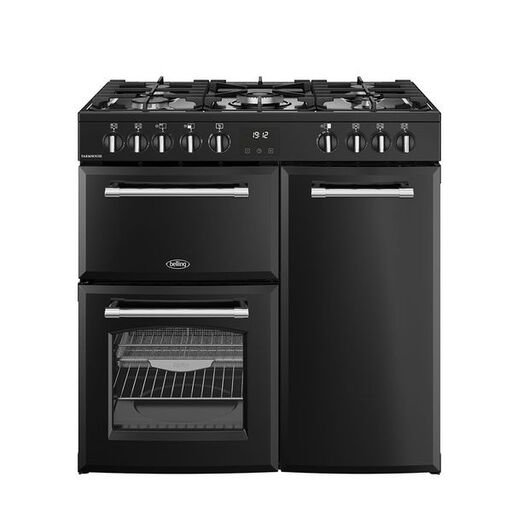 Image unavailable
Consider this format if you have space for a 90 cm cooker and want separate cooking spaces for a larger session.
Check that your trays fit the intended shelves and that the kitchen has suitable gas and electrical connections.
 Image unavailable
A built-in double oven suits a session in which the mushrooms and another dish need separate cavities.
Bosch Home UK gives this model dimensions of 888 × 594 × 550 mm and describes 3D Hotair use on up to three levels in the main oven. Confirm the housing, electrical connection and fit of your trays.
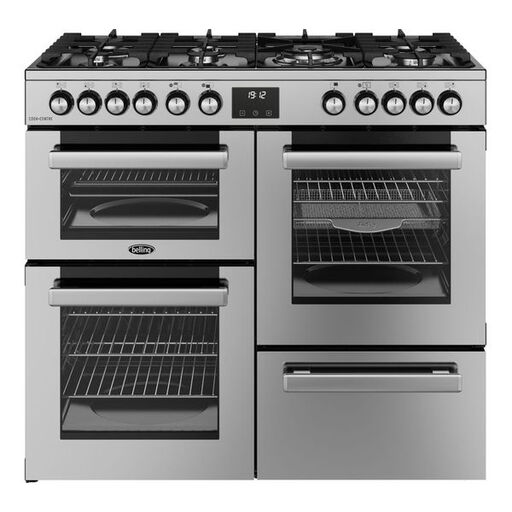 Image unavailable
This wide freestanding format is worth considering when separate cooking spaces matter and a 100 cm cooker fits your kitchen.
Check shelf positions and tray clearance for the batches you plan, along with the gas and electrical installation instructions.
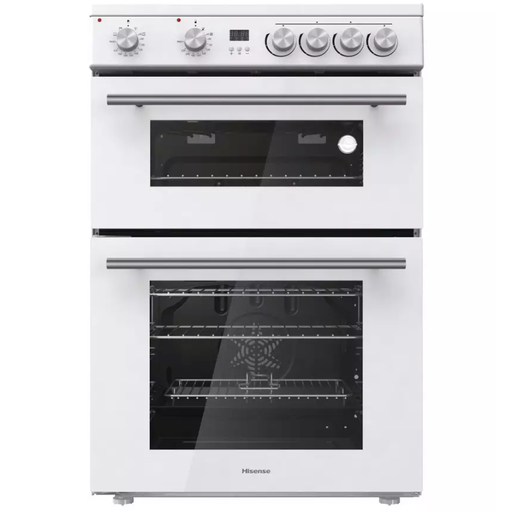 Image unavailable
Its freestanding double-oven format may suit a cook who wants another cavity without choosing a wide range cooker.
The product name specifies a ceramic hob. Check shelf layout, baking-tray fit and the electrical installation requirements before buying.
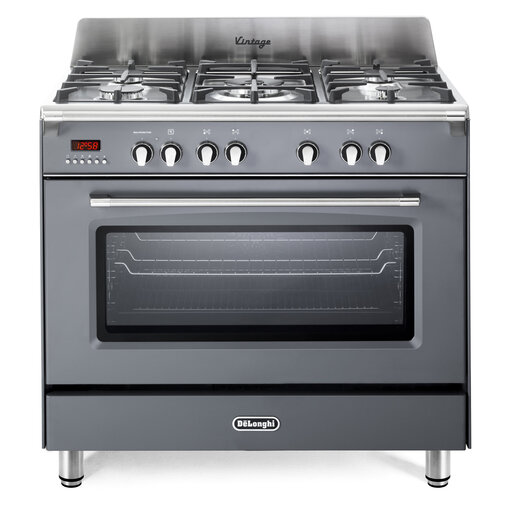 Image unavailable
Consider this range-cooker format if separate cooking spaces would help you organise a batch session and a 90 cm appliance fits.
Confirm the main-oven capacity before comparing it with other models, as the listed figures differ. Check shelf spacing, tray fit and the gas and electrical installation requirements too.
A fan oven is a sensible format to consider if you plan to use more than one shelf. Manufacturers describe fan circulation as supporting even heat distribution, but that does not guarantee identical results on every tray; check doneness and follow your recipe and oven manual.
No: a litre figure describes cavity volume, not your trays' dimensions or the clearance between shelves. Compare your trays with the exact model's internal layout and supplied accessories.
Not necessarily. Electrical Safety First says some ovens use a plug while others require hardwiring, so check the exact model's connection and loading against the property before arranging installation.
Plan to reheat leftovers only once. The Food Standards Agency says reheating means cooking again, not simply warming food; reheat thoroughly and take particular care if the filling contains higher-risk ingredients.