For one large lentil cottage pie, or several dishes that can share a temperature, start with a full-size built-in fan oven and check whether its shelves fit your dishes. Consider a double oven if you regularly need separate temperatures or timings. Whichever format you choose, confirm the exact cabinet fit and electrical connection before ordering.
Who needs which oven?
Regular batch-cookers
If you prepare several portions or dishes in one session, look closely at usable cavity space, shelf positions and the cooking modes available for more than one shelf. A litre figure alone will not tell you whether your pie dish and accompanying trays fit together.
Two-temperature meal planners
If the pie often cooks alongside a dish needing another temperature or finish time, separate oven cavities may be more useful than one large cavity. Check the space in each cavity, not just the oven’s combined capacity.
Low-maintenance kitchen upgraders
If repeated baking makes clean-up a priority, compare the cleaning system on the exact oven. Catalytic surfaces, steam-assisted cleaning and pyrolytic cycles have different instructions and are not interchangeable features.
What matters when choosing?
Decide whether your dishes need one shared temperature or separate cavities, then check the space, cooking modes and installation requirements of the exact model.
Built-in single fan oven
Choose it when: Your batch is one large pie or several dishes that can cook at the same temperature.
Bear in mind: One cavity cannot run two temperatures independently.
Built-in or built-under double oven
Choose it when: The pie regularly shares batch day with a dish needing another temperature or timing.
Bear in mind: Each cavity has its own usable space, and built-in and built-under models require different housing arrangements.
| Concern | What to check | Who this matters to |
|---|
| Batch space |
Check usable cavity dimensions, shelf positions and whether your pie dish and other trays fit with room for airflow. |
If I want to bake a large pie alongside other food, fitting the dishes into fewer cooking sessions matters more than the quoted litre figure alone; around 31% of consumers put batch space first. |
| Cooking across shelves |
Look for a specified multi-level fan mode, and compare model-specific assessments of heat distribution where available. |
When my pie shares the oven with other dishes, I want predictable cooking across the occupied shelves; around 31% of consumers primarily care about that consistency. |
| Cabinet and connection |
Compare the installation instructions with your cabinet opening and check the electrical load and connection type. |
Replacing an existing oven only works for me if the new one fits the housing and can be connected appropriately; for around 23% of consumers, installation compatibility comes first. |
| Cleaning and energy information |
Identify the exact cleaning system and its instructions; compare energy labels and product information sheets for similarly configured ovens. |
After repeated batches, I want a cleaning routine I can manage and clear information for comparing ovens; around 15% of consumers make those considerations their primary concern. |
Mistakes to avoid
-
Assuming every 60 cm oven fits the same cabinet
An appliance’s outside dimensions do not establish the required cabinet opening, clearances or fixing arrangement. A built-under double oven also needs a different housing check from an eye-level built-in model.
Compare the exact installation instructions with your cabinet measurements before ordering.
-
Treating plug-in and hard-wired models alike
Connection requirements can differ within a brand’s range: Bosch specifies a GB plug for the HHF113BR0B, but no plug and electrician connection for the HQA534BB3B.
Check the full model identifier, electrical load and connection instructions against your existing arrangement.
A model requiring a different connection may also require electrical installation work.
-
Assuming a feature label applies to every model
Multi-level heating, added steam and cleaning systems vary by oven. A fan label by itself does not establish how a particular model cooks across occupied shelves.
Check the specified heating modes and cleaning instructions for the model and variant you intend to buy.
-
Using energy class as a complete running-cost forecast
An energy label supports a standardised comparison, but it cannot describe how often you preheat, how many batches you cook or which modes you use.
Compare the label and product information sheet for similarly sized, similarly configured ovens alongside the format your cooking routine needs.
Relevant brands for reference
Bosch
Relevant built-in models include ovens with 3D Hotair and model-specific steam or cleaning features.
- Bosch Home UK describes 3D Hotair on the HQA534BB3B as distributing heat across up to three levels.
- Check the exact model’s connection instructions: the cited HQA534BB3B and HHF113BR0B have different plug specifications.
Beko
The BBXIF243 is a full-size single-fan option to examine when cavity space and cleaning features matter.
- Beko UK specifies a 72 L cavity, True Fan Cooking, a catalytic back wall and SimplySteam cleaning for the BBXIF243.
- Those features are specific to that model; its airflow description is not an independent measure of temperature accuracy.
AEG
Selected built-in models combine multi-level cooking with a specified cleaning system.
- AEG specifies a 72 L cavity, Multilevel Cooking and pyrolytic cleaning for the OU5PB40XK.
- Capacity and cleaning systems differ across AEG models, so check the model-specific instructions.
Neff
Relevant models include ovens with CircoTherm multi-level cooking; other convenience features depend on the model.
- Neff UK says CircoTherm on the B1GCC0AN0B permits baking on up to three levels.
- Do not assume that a CircoTherm model also includes steam, integrated cleaning or another model’s door design.
Joybuy ovens to consider
These options cover a built-in single oven and built-in or built-under double ovens. Choose the cavity arrangement for your batch routine before checking each model’s cabinet and electrical requirements.
 No image available
Bosch Series 4 MBA533BB3B Electric Double Oven – Black
Consider the double-oven format if the pie and another dish need separate cooking schedules.
Check the eye-level housing dimensions and the stated hard-wired connection against the installation instructions.
View on Joybuy
 No image available
Bosch HHF113BA0B Series 2 Built-in Single Electric Oven – Black
Consider this single-oven format when the pie and accompanying dishes can share a temperature; its one cavity cannot run two temperatures independently.
Check usable shelf space, the cabinet opening and the stated hard-wired connection before ordering.
View on Joybuy
 No image available
Belling BEL BI903MFC 90 cm Built-in Double Multifunction Oven – Black/Stainless Steel
The double-oven format is worth considering if a side dish needs a separate cooking schedule from the pie.
The 90 cm designation does not establish cabinet fit; check the housing dimensions, clearances and stated hard-wired connection.
View on Joybuy
 No image available
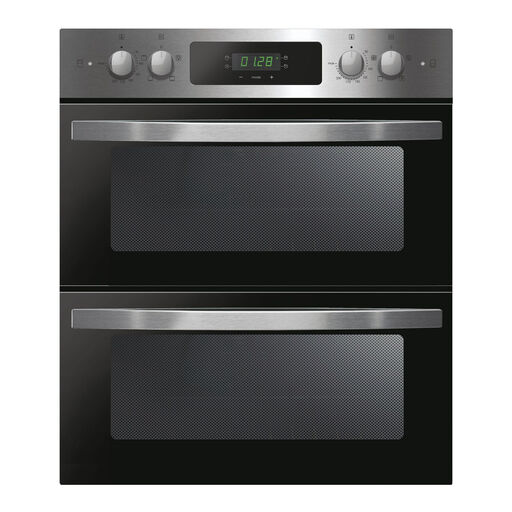
Candy FCI7D405X Built-under Electric Double Oven – Stainless Steel
If your kitchen has compatible under-worktop housing, the two-cavity format offers a way to schedule the pie alongside another dish.
Confirm both cavity sizes, supplied accessories, cabinet opening and electrical connection for this model.
View on Joybuy
 No image available
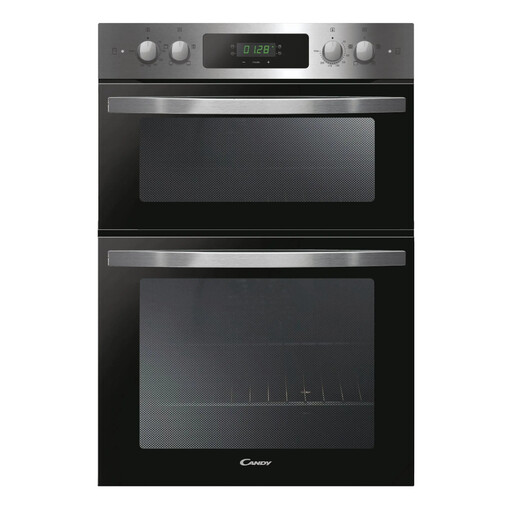
Candy FCI9D405X Built-in Electric Double Oven – Stainless Steel
Consider the built-in double format when batch dishes need separate cooking timings or temperatures.
Check the usable space in both cavities, the cabinet cut-out and the stated hard-wiring requirements before choosing it.
View on Joybuy
Common questions
Is a single oven enough for batch-cooking lentil cottage pie?
A full-size single fan oven is a sensible starting point if you mainly bake one large pie or dishes that can share a temperature. Check the actual cavity layout and shelf space; choose a double oven instead if separate temperatures or independent timings are a regular need.
Do all built-in ovens come with a plug?
No: the connection depends on the exact model. Bosch specifies a GB plug for the HHF113BR0B, while the HQA534BB3B has no plug and is specified for electrical connection by an electrician. Check your chosen model’s instructions and existing installation rather than assuming another model has the same connection.
What energy information should I compare when buying an oven?
For domestic ovens within the relevant scope, UK government energy-information guidance calls for an energy label at the point of sale and an accompanying product information sheet. Compare those documents for similarly configured models, but do not use the energy class alone to predict consumption for your own batch-cooking routine.
Which cleaning system suits repeated cottage-pie baking?
Choose by the cleaning work you are prepared to do and the instructions for the exact oven, rather than assuming one system suits everyone. The cited AEG model has pyrolytic cleaning, while the cited Beko model has a catalytic back wall and SimplySteam; check each model’s cleaning procedure and compatible accessories before buying.


