Regular tray-batch cooks
If you roast enough squash for several meals, focus on whether your trays fit at usable shelf positions and how the exact oven circulates heat between them.


Choose a built-in fan-assisted single oven if your main task is roasting several trays of squash in one cavity; check that your trays fit, the shelf positions are usable and the oven fits your cabinet. A double oven makes more sense when another dish regularly needs a separate temperature or cooking time, but its second cavity does not enlarge the main roasting space. Check the exact model’s electrical requirements before ordering.
If you roast enough squash for several meals, focus on whether your trays fit at usable shelf positions and how the exact oven circulates heat between them.
If squash roasts while you cook another part of the meal, consider whether separate cavities would be more useful than one larger, uninterrupted roasting space.
If the oven must fit existing cabinetry, check the appliance and housing dimensions before settling on cooking features. Electrical Safety First also advises checking the connection requirements of the particular oven.
For consumers choosing an oven chiefly to batch-roast squash wedges, start with the need that most affects a typical cooking session: heat across trays, space for one batch, a separate dish or day-to-day upkeep.
| Concern | What to check | Who this matters to |
|---|---|---|
| Browning across trays | Compare usable shelf positions and the exact model’s multi-level fan setting. Look for independent heat-distribution results where available. | If I roast several trays together, I want heat to reach them consistently without assuming they will brown identically. Roughly 36% of consumers put browning across trays first. |
| Usable batch space | Measure your roasting trays, then check cavity and housing dimensions; litres alone do not establish tray fit. | I want my usual squash batch to fit into one session, not merely a large capacity figure on the label. For around 29% of consumers, usable batch space is the primary concern. |
| Separate cooking zones | For a double oven, check the main fan cavity’s size and which functions each cavity provides. | When another dish needs a different temperature or timing, I need somewhere to cook it while the squash roasts. About 21% of consumers prioritise separate cooking zones. |
| Cleaning and routine use | Compare the exact cleaning method and manual instructions; check the energy label without assuming a saving for every cooking session. | Frequent batches leave me with trays and an oven to clean, so manageable upkeep matters more than an extra cooking zone. Cleaning and routine use come first for roughly 14% of consumers. |
A capacity figure cannot tell you whether your trays fit side by side or at different shelf levels. A double oven also divides its space between cavities.
Measure your existing trays and cabinet opening, then compare them with the exact oven’s cavity and installation dimensions.
Which? assesses heat distribution and control accuracy when testing ovens. A manufacturer’s multi-level cooking claim describes a particular model, not a guarantee that every tray will brown alike.
Check independent results for the model where available, alongside its stated fan functions and shelf arrangement.
Electrical Safety First notes that some ovens use a plug while others require hardwiring into a dedicated circuit. A mismatch can delay installation.
Read the chosen model’s installation instructions and ask a qualified electrician about the existing connection if its suitability is unclear.
Accessories and cleaning instructions vary by oven. Beko’s BBXDF21000 manual instructs users to remove baking paper that extends beyond the accessory.
Follow your selected oven’s instructions for trays, paper, liners and cleaning cycles.
Relevant if you are comparing built-in single ovens for cooking on several levels.
Relevant if a built-in double oven could let you roast squash while cooking another dish separately.
Relevant if you are comparing single-cavity space and manufacturer-stated multi-level cooking features.
These built-in single and double ovens offer two ways to plan squash batches: one main roasting cavity, or a second cavity for another dish. Choose by tray fit and kitchen installation requirements rather than oven format alone.
 No image available
Consider this double-oven format if squash and another dish regularly need separate cooking spaces.
Check that the main cavity fits your trays and that the housing accommodates the appliance. Confirm the stated hardwired connection requirements before ordering.
 No image available
The double-oven layout is worth considering when a second dish needs its own cooking space during a squash batch.
This model is described for eye-level installation. Check tray fit, housing dimensions and the stated hardwired connection requirements.
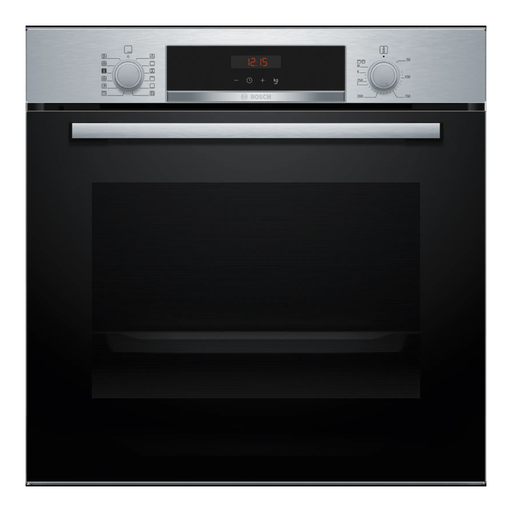 No image available
A single cavity suits a batch cooked together at one temperature; the pyrolytic feature may also matter if cleaning is a priority.
Check your tray dimensions against the usable shelf spacing and confirm the hardwired installation requirements.
 No image available
Consider this single-oven format when squash batches do not usually need a second oven temperature at the same time.
Confirm that your trays fit at usable shelf positions, and check the housing and hardwired connection requirements.
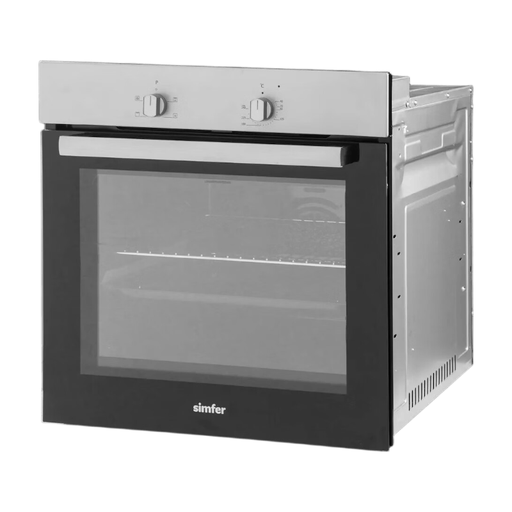 No image available
The fan-assisted single cavity is relevant if you roast squash as one batch rather than cooking another dish at a separate temperature.
The Simfer FO60S is described as a 56 L oven with four cooking functions. Its stated 60 cm format conflicts with listed appliance dimensions, so confirm the actual size, installation requirements and tray fit before ordering.
A fan-assisted oven is a relevant choice to compare for multi-tray roasting, but its fan setting alone does not guarantee identical browning on every shelf. Check the exact model’s usable shelf positions and look for independent heat-distribution results where available.
Choose a single oven when one roasting cavity meets your usual batch needs; consider a double oven if another dish often needs a different temperature or timing. For a double oven, check the main cavity rather than relying on the combined capacity figure.
That depends on the oven’s specified connection and your existing circuit. Electrical Safety First notes that some ovens use a plug while others require hardwiring into a dedicated circuit; consult a qualified electrician if the installation requirements are unclear.
Compare the cleaning method on the exact oven, then follow its manual for trays, liners, baking paper and cleaning cycles. A cleaning feature does not replace those accessory instructions.
No particular saving is assured for every batch: cooking time, oven size and the dishes being prepared all matter. Energy Saving Trust includes batch cooking and saving leftovers among its kitchen energy-saving tips, so plan compatible dishes together where that suits your meals.