
24/7 Customer Support

Free returns

Same-day & Next-day Delivery

Quality Guaranteed

Unlock Your Welcome Offers: FREE Delivery | Up to 80% OFF | Free 30-day JoyPlus trial
Download the APP
For older adults, people recovering from surgery, pregnant women and anyone with reduced mobility, a bathroom grab bar can make standing, stepping into a bath or moving around a shower feel more manageable. However, choosing the wrong design can create a false sense of security.
The main issue is that not every bathroom safety rail is designed to take body weight. Some are intended only for balance assistance, while others require permanent wall fixing. Before buying, look beyond phrases such as “heavy duty” and check the fitting method, surface compatibility and stated load limit.
Suction grab bars are attractive because they are removable and do not require drilling. However, suction cups depend on an airtight, smooth and non-porous surface. They are generally unsuitable for uneven tiles, painted walls, wallpaper, plasterboard or porous materials.
The product information for the TAILI models states that they are intended for balance assistance, not for placing full body weight on the rail. This distinction matters. A suction rail may help someone steady themselves, but it should not be treated as a replacement for a professionally installed support rail when lifting or transferring the body.
A wall-mounted grab bar can offer a more permanent solution, but its performance depends on the wall construction and suitable fixings. A rail fitted to a solid wall is not automatically suitable for every plasterboard, tiled or partitioned surface.
Check the manufacturer’s installation instructions and, where necessary, ask a qualified installer to assess the wall. The Croydex stainless steel grab bar is specified to support up to 100kg when mounted on a solid wall, so the stated capacity is directly linked to correct installation.
A polished finish may complement a bathroom, but appearance should not be the deciding factor. Look for a diameter that can be held comfortably, a surface that remains manageable when wet and a length suited to the user’s movement.
A short rail may work beside a toilet or basin, while a longer shower handle may be more useful when entering or exiting a bath. Also check whether the user needs a vertical, horizontal or angled grip. Positioning should support the actual movement rather than simply fill an empty wall space.
Choose between a wall-mounted grab bar and a removable design according to the property and the user’s needs.
A removable bathroom safety rail can be practical in rented accommodation or when support is needed during short-term recovery. It is less suitable where the user needs to pull themselves up or transfer significant weight.
For suction grab bars, the surface should be smooth, airtight and non-porous. Suitable examples listed for the TAILI rails include glass, stainless steel, acrylic, marble and sufficiently large, smooth bathroom tiles. The instructions advise avoiding uneven tiles, unfinished marble, wallpaper, plasterboard and porous or painted surfaces.
Measure the tile layout as well. The TAILI product information specifies suitability for tiles measuring 4 × 4 inches or larger, which is approximately 10 × 10cm.
Do not compare load ratings without checking the installation conditions. A stated capacity is meaningful only when the product is fitted and used as instructed.
Important details include:
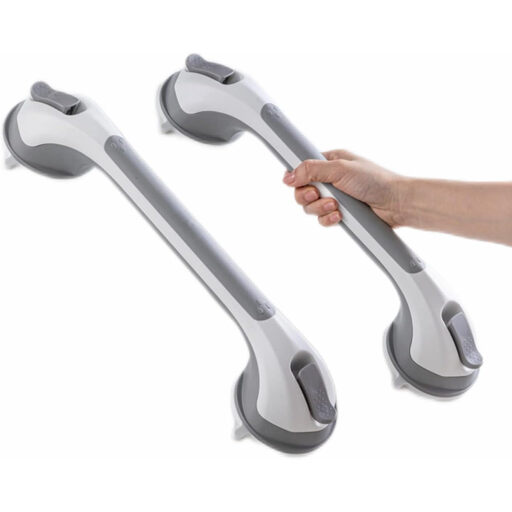
Why This Fits Their Persona: A two-pack offers flexible placement around a bath, shower, toilet or kitchen without drilling, which may suit renters or households arranging temporary support.
The instructions clearly identify compatible surfaces and state that the bars are for balance assistance rather than full body weight.
Two suction bars, locking latches, anti-slip strip and reusable, no-drill installation on suitable surfaces.
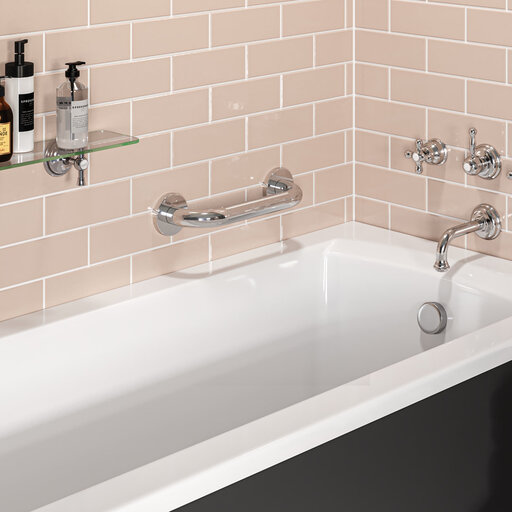
Why This Fits Their Persona: This fixed rail suits buyers seeking a lasting bathroom fitting with a polished chrome appearance for a coordinated UK bathroom.
Its stated 100kg capacity is conditional on mounting to a solid wall, helping buyers connect the specification with correct installation.
Stainless steel construction, corrosion-resistant finish, 32mm anti-slip rail and concealed fixings.
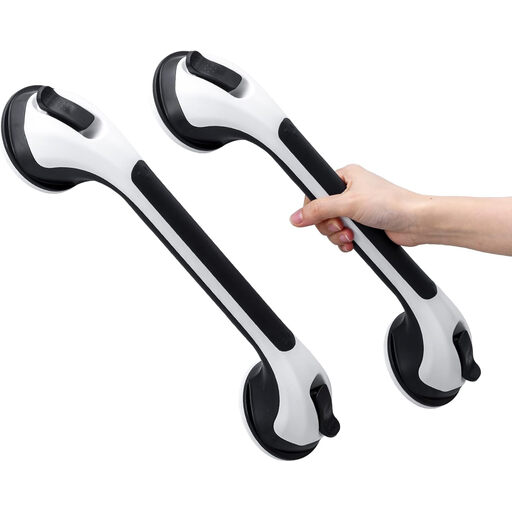
Why This Fits Their Persona: The two-bar format can help create separate handholds around a bath or shower for users who need support at more than one point.
Its warnings specify suitable surfaces, latch checks and the need to inspect for loosening, rather than presenting suction as a universal fixing method.
Two locking-latch suction bars, waterproof plastic construction and a stated 240lb capacity per bar for balance-assistance use.
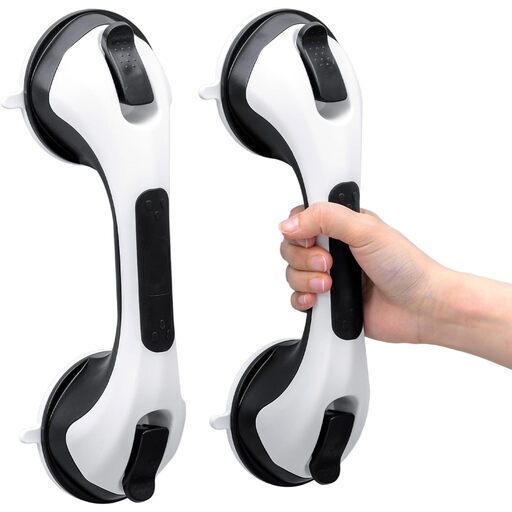
Why This Fits Their Persona: The 12-inch format and removable installation can suit temporary support needs during recovery, provided the bathroom surface is compatible.
The product guidance explains where it must not be installed and recommends checking the suction before every use.
12-inch handrails, anti-slip grip strip, curved finger-support design and installation without screws, glue or tools.
Before using shower grab bars or bath grab rails:
We have compiled a complete, real-time list of products that fully satisfy these strict selection criteria and UK safety regulations.
They can provide balance assistance when installed on a suitable smooth, non-porous and airtight surface. They should not be used to support full body weight, pull up from a seated position or complete a transfer. Check the latch and suction condition before each use.
A permanent stainless steel rail may remain suitable for an extended period when correctly installed and kept free from corrosion or damage. Removable suction bars need more frequent inspection because suction performance can change with dirt, wear, temperature and surface conditions. Replace any rail or component showing cracks, movement or deterioration.
A wall-mounted grab bar may require professional fitting, particularly on tiled, plasterboard or uncertain wall structures. Suction models do not require drilling, but correct surface preparation and regular safety checks remain essential. If the user depends on the rail for weight-bearing support, seek an appropriate permanently fixed solution rather than relying on a no-drill grab bar.