
24/7 Customer Support

Free returns

Same-day & Next-day Delivery

Quality Guaranteed

Unlock Your Welcome Offers: FREE Delivery | Up to 80% OFF | Free 30-day JoyPlus trial
Download the APP
By the Joybuy Product Recommendation Officer
Choosing bathroom safety aids is not simply about finding the lowest price or the product with the most features. For older adults, disabled users, people recovering from injury or surgery and carers, the correct dimensions, stability and weight rating can make a significant difference to everyday bathroom use.
However, product listings can make comparison difficult. A shower seat may look supportive but fail to fit the shower enclosure, while a bath step with a textured surface may still be unsuitable if it is too narrow for the user’s stance. This guide explains the main pitfalls and the specifications worth checking before you buy.
A compact shower stool may be convenient in a small UK bathroom, but a narrow seat can be uncomfortable or difficult to use. Check the full dimensions, including width, depth and height range. Also measure the shower floor, door opening and available space beside the seat.
A shower seat with backrest generally requires more room than a simple stool. Armrests can improve support when sitting down or standing up, but they also increase the overall width.
A textured seat or bath step can improve grip, but stability also depends on the floor surface, water, installation and user movement. Look for slip-resistant rubber feet, a broad base and clear instructions for use. Do not place a bathroom mobility aid on loose mats, uneven flooring or surfaces not recommended by the manufacturer.
A non-slip finish is a product feature, not a guarantee against every slip or transfer incident.
A stated user capacity is important, but it is only one part of safe selection. Check whether the weight limit applies to the user alone, whether the seat is suitable for the intended shower or bath and whether the frame is correctly assembled and adjusted.
For users who need substantial assistance with transfers, ask an occupational therapist, physiotherapist or other appropriately qualified professional for individual guidance. Product information should not replace a personal assessment.
A height-adjustable shower chair should allow the user to place their feet securely on the floor while keeping a comfortable sitting position. Adjustable legs are useful where household members have different heights or where shower trays vary in depth.
Measure:
For example, the Croydex Assistive Shower Seat with Back & Arm Rests adjusts from 425–525mm, while the Croydex Assistive Adjustable Shower Seat adjusts from 475–510mm.
A basic foldable shower stool may suit someone who wants occasional seating and easy storage. A shower stool with arms offers handholds that may make controlled sitting and standing more manageable. A shower seat with backrest can provide additional upper-body contact for users who prefer a more supported seated position.
Look for:
Avoid paying extra for features that cannot be used safely in the available space.
Aluminium frames are commonly selected for bathroom use because they are lightweight and resistant to rust when properly maintained. Plastic seats are generally straightforward to wipe clean, but inspect joins, drainage openings and adjustment points regularly.
Always compare the stated capacity with the user’s weight and allow for movement during sitting or standing. The products below specify capacities of either 100kg or 190kg. These figures should be treated as maximum limits, not target operating weights.
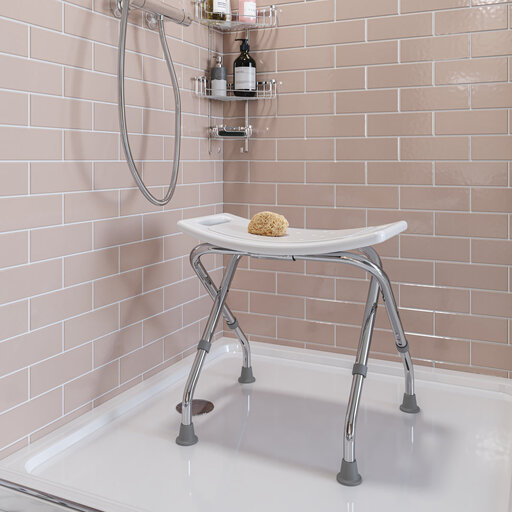
Why This Fits Their Persona: A practical choice for someone starting to use bathroom seating in a UK home, particularly where storage space is limited and the seat may not be needed permanently.
Its height-adjustable aluminium legs and slip-resistant rubber feet address the common problems of poor fit and uncertain footing. It is also foldable for storage.
Height adjusts from 475–510mm; built-in handholds; lightweight 2.25kg design; suitable for users up to 100kg.
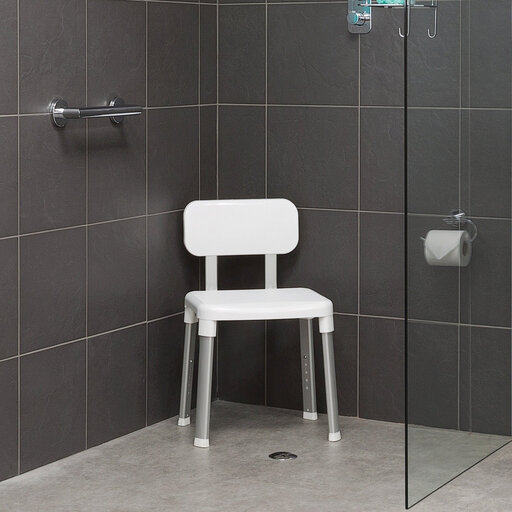
Why This Fits Their Persona: Suitable for users who prioritise a larger seated area and more built-in support for regular shower use, provided the enclosure has sufficient room.
The listing provides a defined seat size, height range and user capacity, helping buyers compare it with their bathroom before ordering rather than relying on photographs.
Integrated back and arm rests; 340 × 420mm sitting area; height adjusts from 425–525mm; rust-free aluminium and polypropylene construction.
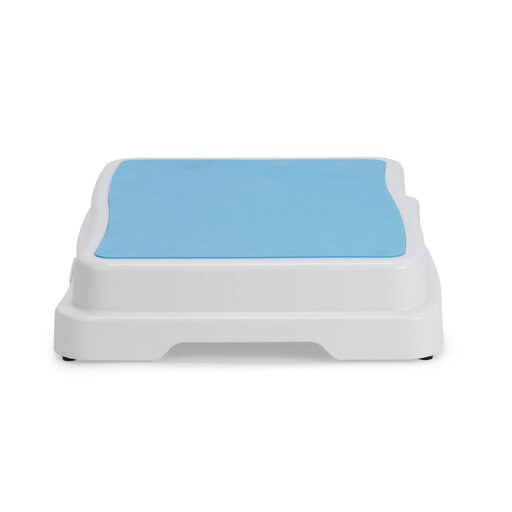
Why This Fits Their Persona: Designed for users who need a raised, more stable platform when stepping into or out of a bath, rather than seated support inside a shower.
Its large platform and complete textured top address the risks of choosing a small step with limited standing space. Confirm that the step height works with the bath and the user’s movement pattern.
Extra-large 406 × 502mm platform; 102mm height; stated capacity up to 190kg; textured plastic top.
Before using new bath safety equipment:
There is no universal lifespan for a shower stool or bath step. Frequency of use, cleaning products, moisture and storage conditions all affect service life. Replace any item that shows structural damage, even if it has not reached a particular age.
We have compiled a complete, real-time list of products that fully satisfy these strict selection criteria and UK safety regulations.
A shower chair is generally more suitable when a user wants a backrest, arm support or a larger sitting position. A shower stool may be more appropriate where space is restricted or occasional seating is required. Compare the dimensions and support features with the user’s needs rather than choosing by name alone.
Portable options such as an adjustable shower seat, foldable shower stool or non-slip bath step can provide additional support without permanent installation. They still need correct positioning, regular inspection and enough clear floor space. Loose bath mats should not be used underneath a seat or step unless the product instructions specifically allow it.
Prices vary according to materials, adjustment ranges, armrests, backrests and storage features. A lower-priced item may be suitable if its dimensions, capacity and construction match the user’s requirements. Avoid choosing solely on cost: replacing an unsuitable product can be more expensive than comparing the specifications carefully before purchase.