
24/7 全天候客户支持

免费退货

当日/次日达

品质保障

开启新人专享福利: 全场免邮 | 低至 2 折 | 免费试用 30 天 JoyPlus 会员
下载 Joybuy
As a Joybuy Product Recommendation Officer, my role is to help you navigate the crowded market of health gadgets. When it comes to bathroom scales, the sheer number of options can be overwhelming. Many promise a revolutionary approach to health tracking, but not all deliver on their claims. Before you invest, it's crucial to understand the common pitfalls that lead to buyer's remorse.
Many people find their new scales are frustratingly inconsistent, or they end up paying a premium for features they never use. Let's look at the frequent issues to avoid:
smart scales that measure dozens of body metrics. However, many of these are complex estimations derived from a few core measurements. You might be paying extra for a body composition analyser that provides data points that are difficult to interpret or not consistently accurate without clinical-grade equipment.bluetooth bathroom scale is only as useful as its companion app. Many users find themselves stuck with poorly designed apps that are difficult to sync, are no longer supported by the manufacturer or have unclear data privacy policies.To make a confident choice, focus on the fundamental features that determine a scale's performance and longevity. These are the non-negotiable aspects to scrutinise.
The core of any digital scales is its sensor system. Look for models that specify the use of high-precision sensors, often made from materials like manganese steel, which offer better stability. Pay attention to the measurement increment, typically 0.1kg or 0.05kg. A smaller increment (0.05kg) is useful for detecting minor changes, which can be motivating for those on a strict health plan. However, consistency is more important than granularity; the scale should show the same weight in repeated measurements.
A scale's physical design is crucial for accuracy. A platform made from tempered safety glass is not only durable and hygienic but also provides a solid, unyielding surface. The base is equally important. Check for non-slip feet that create a stable foundation, especially on tile or laminate flooring. A larger platform can also offer greater comfort and stability during use. Always place your weighing scales on a hard, flat surface—never on carpet—to ensure an accurate reading.
For those interested in more than just weight, a body fat scale or BMI scale can be a valuable tool. These devices use a technology called Bio-electrical Impedance Analysis (BIA), which sends a harmless, low-level electrical current through your body. The resistance (impedance) it encounters is used to estimate metrics like body fat, muscle mass and body water.
smart scales have four electrodes on the platform where your feet stand. This measures impedance through the lower body and estimates the rest.While these metrics are estimations and not a substitute for a medical assessment, they are excellent for tracking trends and changes in your body composition over time.
To help you find a match for your specific needs, we've identified a few models that align with different user profiles, each effectively addressing the common pitfalls.
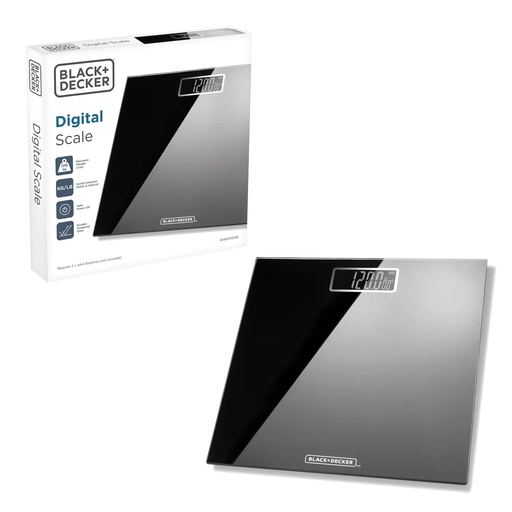
Why This Fits Their Persona: Ideal for individuals or families who need a simple, reliable tool for tracking weight without the complexity of apps or extra metrics. It's a classic, no-fuss solution for daily check-ins.
It sidesteps the "smart feature overload" by focusing entirely on accurate weight measurement. Its high-precision sensors and stable base help counter the "precision illusion" on less-than-perfect floors.
Features step-on activation for instant readings and a large, clear LCD display. The durable tempered glass platform is both hygienic and easy to clean.
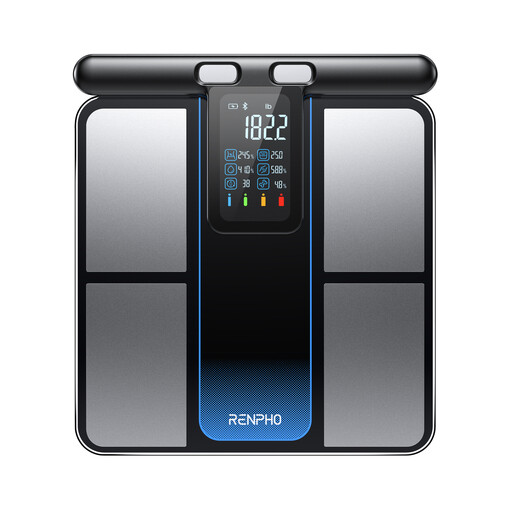
Why This Fits Their Persona: Built for the fitness enthusiast or tech-savvy user who wants to track detailed body composition metrics and integrate them with their wider digital health ecosystem, like Apple Health or Google Fit.
It addresses the "smart overload" pitfall by using a more advanced 8-electrode BIA system, including a handle, for more comprehensive upper and lower body analysis, providing more substance to its metrics.
Offers advanced BIA for detailed body composition analysis and seamless Bluetooth connectivity to the well-regarded Renpho Health app, which syncs with major fitness platforms.
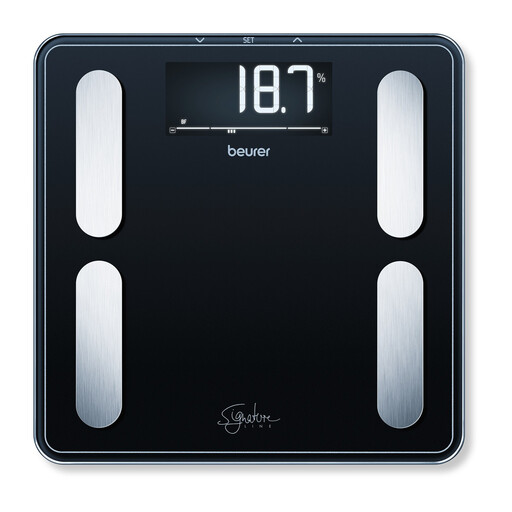
Why This Fits Their Persona: Excellent for households where multiple people want to track their health. It stores individual profiles directly on the device, making it easy for everyone to monitor their own progress without confusion.
This scale solves the connectivity and app-sharing problem by offering a generous memory for up to 10 users. It automatically recognises who is on the scale, keeping everyone's data separate and private.
Provides multi-metric analysis (weight, body fat, water, muscle percentage) and features a large, illuminated XL display that is easy for anyone in the family to read.
We have compiled a complete, real-time list of products that fully satisfy these strict selection criteria and UK safety regulations.
For the most consistent results, always place your scales on a hard, flat and level surface. Avoid carpets, rugs or uneven tiles. Weigh yourself at the same time each day, under similar conditions (e.g., before breakfast), and stand still with your weight distributed evenly on both feet until the reading is stable.
Body fat scales using BIA provide an estimation, not a medical-grade measurement. Their accuracy can be influenced by factors like hydration levels, recent exercise and meal times. While the absolute number may differ from a clinical test, they are very useful for tracking trends. If your body fat percentage is consistently trending down over weeks, it's a good indicator that your health and fitness plan is working.
A standard digital scale measures and displays your weight. A smart scale also measures weight but includes BIA technology to estimate other body composition metrics. It then uses Bluetooth or Wi-Fi to sync this data to a smartphone app, allowing you to track your progress, view historical data and often connect with other health and fitness apps.