
24/7 Customer Support

Free returns

Same-day & Next-day Delivery

Quality Guaranteed

Unlock Your Welcome Offers: FREE Delivery | Up to 80% OFF | Free 30-day JoyPlus trial
Download the APP
A well-chosen bathroom storage cabinet can make a small UK bathroom easier to use, but attractive product photos do not always reveal the details that matter. A cabinet may look spacious online yet fail to fit around pipework, open into a narrow walkway or deteriorate if placed where it receives frequent splashes.
Before comparing styles, check how the cabinet will fit your room, what it is made from and how safely it must be installed. The following guide highlights common buying traps, essential specifications and suitable options for different household needs.
A cabinet’s width is not the only measurement that matters. You also need to check:
An under sink bathroom cabinet may appear suitable by width but still require cut-outs for waste pipes or have insufficient clearance around a pedestal. Measure the complete installation area, including obstructions, before ordering.
Many bathroom cupboards use MDF or particleboard. These materials can be practical for a bathroom when kept away from standing water and persistent splashing, but exposed edges and joints still need care.
Do not place a furniture-style cabinet directly beside a shower unless the listing specifically supports that environment. Wipe up spills promptly, keep the floor dry and avoid soaking the cabinet during cleaning.
A tall bathroom cabinet may offer substantial vertical capacity, but fixed shelves can make taller bottles difficult to store. Conversely, a bathroom cabinet with drawers can improve access to small toiletries but may provide less room for bulkier towels.
Look for a combination of shelves, drawers and cupboard compartments. An adjustable shelf bathroom cabinet is particularly useful when household storage needs change.
Write down the cabinet’s external width, depth and height rather than relying on a product image. For a slim or narrow bathroom cupboard, depth is often the most important measurement because even a few extra centimetres can affect movement around the room.
For an over toilet cabinet, confirm the minimum and maximum height around the cistern, flush mechanism and ceiling. Leave enough room to use the toilet comfortably and open the cabinet doors without hitting a wall or mirror.
MDF and particleboard are common furniture materials. Their suitability depends on construction, edge finishing, ventilation and placement. A white bathroom cabinet can brighten a compact room, but its finish does not automatically indicate resistance to moisture.
Choose a location away from direct shower spray where possible. Keep ventilation in mind, especially in bathrooms with condensation, and follow the care instructions supplied with the unit.
Check the stated static load for each shelf or drawer rather than only the overall cabinet capacity. Heavy bottles, cleaning products and folded towels can quickly add weight.
Tall or narrow units should be secured using the included anti-tip kit where supplied. Fixings must be suitable for your wall type, whether brick, block, plasterboard or another surface. Do not exceed the manufacturer’s stated load; for example, the Ochama under-sink model specifies a maximum static capacity of 80 lb (36.2 kg).
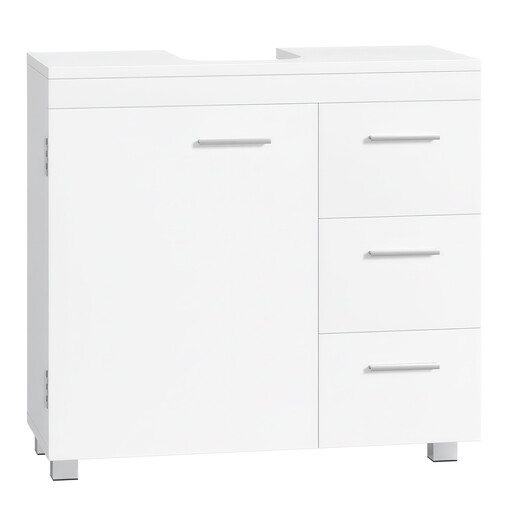
Why This Fits Their Persona: A practical choice for renters or first-time furnishers who want to use the space beneath a washbasin without buying a large freestanding unit. Its 30 x 70 x 63.8 cm size is suited to comparing against a measured basin area.
It combines drawers with two compartments behind a door, reducing reliance on one large, difficult-to-organise space. Check basin and pedestal clearance before purchase.
Three drawers, two cupboard compartments, an adjustable shelf, supplied anti-tip kit and stated 36.2 kg maximum static capacity.
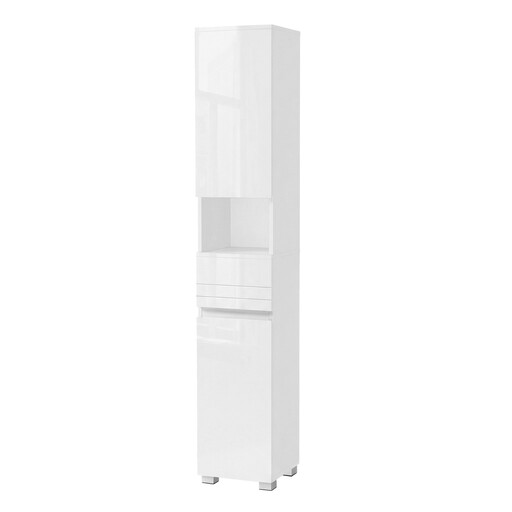
Why This Fits Their Persona: Suitable for households prioritising vertical storage and a coordinated white finish. Its 30 x 30 x 170 cm footprint can work in a narrow gap, provided there is sufficient ceiling and wall-fixing space.
Reversible doors and adjustable shelves help address awkward layouts and different bottle heights. Place it away from frequent splashes, as stated in the product notes.
Six storage compartments, adjustable shelves, reversible cabinet doors, drawers and an anti-tip kit.
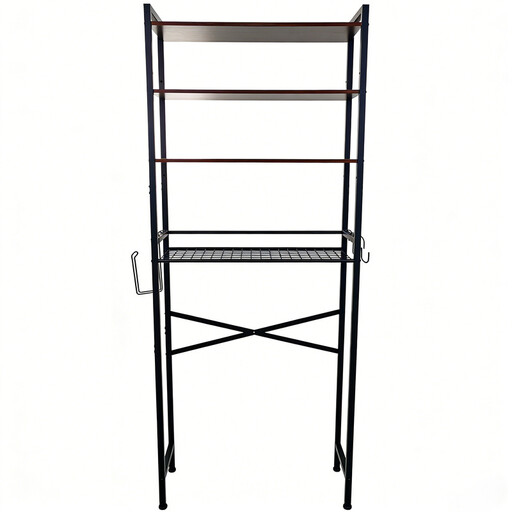
Why This Fits Their Persona: A relevant option for households with limited floor space that want to investigate storage above the toilet rather than occupying another section of the room. Review the live listing for dimensions and assembly information before ordering.
An over-toilet format uses vertical wall area, but careful measurement is essential around the cistern, flush controls and ceiling. Do not assume universal fit from the product name alone.
Uses otherwise-unused space above a toilet and is designed around a bathroom organiser format for toiletries or household supplies.
Before assembling a bathroom storage unit:
For rented homes, check your tenancy agreement before drilling into walls. A freestanding unit may still require anti-tip securing, so ask the landlord or managing agent about permitted fixings where necessary.
We have compiled a complete, real-time list of products that fully satisfy these strict selection criteria and UK safety regulations.
No. Basin width, pedestal shape, plumbing position and cabinet depth vary. Measure beneath the basin and check whether the unit is designed for pedestal or non-pedestal washbasins. Allow room for pipework and doors to open fully.
There is no universal lifespan. It depends on construction, installation, ventilation, loading and exposure to water. Keeping MDF or particleboard away from direct splashes, preventing overloading and tightening fittings periodically can help maintain its condition.
A freestanding bathroom cabinet has no electricity requirement, so it does not normally add to energy bills. Costs may include assembly, suitable wall fixings and replacement parts if components become damaged. Choose the correct size and layout initially to avoid buying additional storage later.