
24/7 Customer Support

Free returns

Same-day & Next-day Delivery

Quality Guaranteed

Unlock Your Welcome Offers: FREE Delivery | Up to 80% OFF | Free 30-day JoyPlus trial
Download the APP
Buying battery chargers sounds straightforward until you compare charging standards, connector types, output ratings and safety features. A charger suitable for AA batteries will not charge an electric vehicle, while a high-output USB-C power adapter may be unsuitable for a low-power accessory.
The main challenge is matching the charger to the device and the way you intend to use it. UK households may need one solution for rechargeable batteries, another for a car battery and a separate USB charger for phones, cameras or laptops.
A product described as a fast charger may offer a high maximum output, but your device determines how much power it can accept. A 67W car charger, for example, does not make every connected phone charge at 67W. Cable quality, charging protocol and the device’s own limits all affect the result.
For rechargeable cells, charging speed also depends on battery capacity, chemistry and the number of batteries inserted. Avoid choosing purely by a headline wattage or an estimated charging time.
“Universal” does not mean suitable for every battery. A universal battery charger for AAA, AA, C, D and 9V cells may support NiMH batteries only, rather than lithium-ion, alkaline or other chemistries. Similarly, a Type 2 EV charger is designed around a particular vehicle connection, while a car battery charger usually supports 12V lead-acid formats.
Check:
A short cable can make a charger awkward beside a bed, desk or vehicle. On the other hand, an unnecessarily long EV charging cable can be harder to store and manage. Portable products should also be checked for their intended environment. A charger described as water-resistant is not automatically suitable for permanent outdoor installation.
For household cells, check whether the charger supports NiMH rechargeable batteries and which sizes it accepts. A model supporting AAA, AA, C, D and 9V cells can reduce the need for separate chargers, but it still cannot recharge disposable primary batteries.
For a 12V intelligent battery charger, check the supported battery range in amp-hours. The EAFC HX-6A listing specifies a range of 4–100Ah and compatibility with several lead-acid formats, including AGM, GEL, SLA, wet and EFB batteries. This is more useful information than simply seeing “car charger” in a product title.
For USB products, consider the number of ports and the output available when several devices are connected. A USB-C power adapter may support 20W, while a multi-device charger may divide its available power between wireless pads and USB ports.
The Xiaomi 67W car charger has USB-A and USB-C outputs, but its listed combined output is up to 55W when both ports are used simultaneously. This type of detail helps avoid assuming that the maximum single-port figure applies to every connected device.
Useful protective features include over-current, over-voltage, short-circuit, reverse-polarity and over-temperature protection. For EV charging from a household socket, also check the plug type, cable rating, leakage protection, earth detection and operating instructions.
A portable EV charger with a UK three-pin plug is convenient for home or travel, but its 2.3kW maximum output and adjustable current should be considered alongside the condition and suitability of the socket. Do not use damaged cables, extension arrangements that are not approved for the load or equipment in wet conditions unless the instructions specifically permit it.
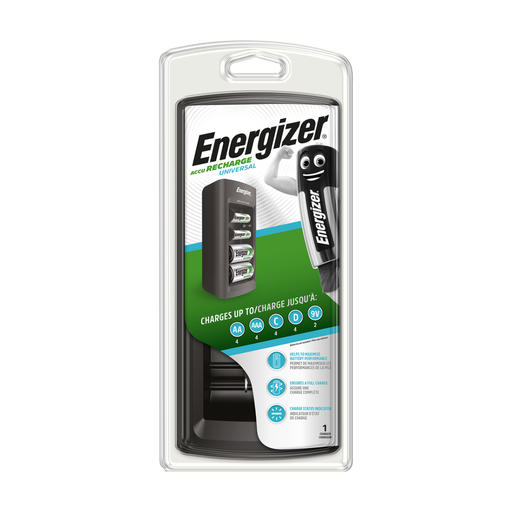
Why This Fits Their Persona: A practical choice for UK homes using different rechargeable battery sizes in remotes, toys, torches, cameras and gaming controllers.
The supported battery sizes and NiMH chemistry are clearly specified, helping prevent an unsuitable purchase. Safety features include automatic shut-off, primary battery detection and reverse-polarity protection.
Charges AAA, AA, C, D and 9V NiMH batteries in one desktop unit; LED or LCD status indication is available depending on the model.

Why This Fits Their Persona: Suits office workers, students and households wanting an organised charging point for phones, earbuds and other everyday devices.
The listing explains the charging layout rather than presenting it as a single unrestricted output. It provides three wireless positions and two USB-A ports, with device placement still important.
Supports up to 15W wireless charging for compatible phones and includes over-current, over-voltage, short-circuit and temperature protection.
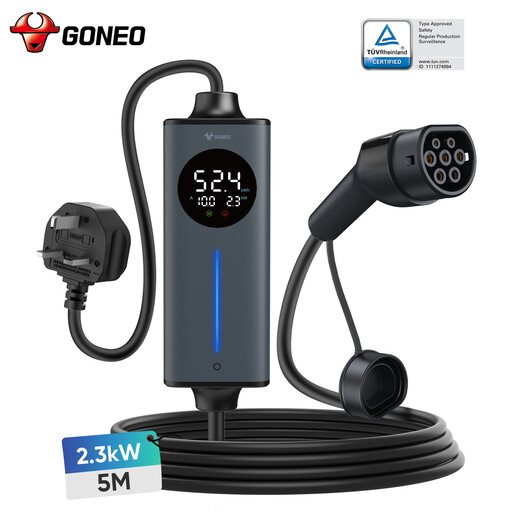
Why This Fits Their Persona: Designed for EV owners who need a portable EV charger UK households can use at home or take on journeys, subject to suitable socket and vehicle requirements.
The product specifies a UK three-pin plug, Type 2 connector, adjustable 10A current and a 2.3kW maximum output. Its five-metre cable length is stated rather than implied.
Includes delay charging, LED readings for voltage, current and temperature, plus leakage, earth, overheat, over-voltage, over-current and short-circuit protection.
We have compiled a complete, real-time list of products that fully satisfy these strict selection criteria and UK safety regulations.
Running cost depends on the charger’s power draw, charging duration and electricity tariff. A lower-power household charger used occasionally generally consumes less electricity than a high-output EV or vehicle charger. Delay charging can help some EV owners schedule charging around their tariff, but the saving depends on the supplier and tariff terms.
Only do so when the charger’s instructions permit it and the model provides suitable charge management. Features such as automatic shut-off, safety timers and temperature monitoring can reduce charging risks, but users should still avoid charging damaged, leaking or incompatible batteries.
Lifespan varies with build quality, storage, heat, moisture and frequency of use. Keep chargers dry and ventilated, avoid pulling cables and replace any unit showing cracked housing, exposed wiring, overheating or intermittent connections. For a car battery charger, check the supported voltage and battery type each time it is used rather than relying only on its appearance.