Making garlic or herb butter
An unsalted block lets you add salt separately when mixing butter with garlic or herbs. Check the recipe and the exact pack if its ingredients matter to your guests.


Choose an unsalted block for garlic or herb butter when you want to add salt separately, or a salted block when the butter itself should season bread or cooked sides. A spreadable blend suits serving straight from the fridge, but its formulation differs from a block; Anchor recommends its Original Block rather than its spreadable product for cooking. Keep chilled butter cold until needed, use clean serving utensils and check the pack for milk allergens and storage instructions.
An unsalted block lets you add salt separately when mixing butter with garlic or herbs. Check the recipe and the exact pack if its ingredients matter to your guests.
A salted block contributes seasoning to rolls, corn or cooked vegetables. For bread served soon after the butter leaves the fridge, a spreadable blend may be easier to use.
Plan how to keep refrigerated butter chilled and covered until serving. Use utensils that have not touched raw meat, and check the exact pack for milk-allergen information.
Decide whether the butter will go into a recipe or onto finished food, then check its formulation and how you will store and serve it.
| Priority | What to check | Your needs |
|---|---|---|
| Seasoning | Check whether the block is salted or unsalted. Read the pack’s salt figure per 100 g when following a recipe. | I’m making garlic butter and want to add salt separately. For butter served on cooked corn, I may prefer the seasoning already in a salted block. |
| Cooking or spreading | Check whether the product is a block or a spreadable blend, and read its ingredients. Anchor recommends its Original Block rather than its spreadable product for cooking. | For cooking or mixing into herb butter, I want a block. If guests will butter rolls straight from the fridge, ease of spreading matters more. |
| Chilled storage | Check the pack’s storage instructions and plan chilled transport. GOV.UK advises keeping a fridge between 0 and 5°C and keeping BBQ food covered and chilled until needed. | Butter will travel to an outdoor gathering, so I need somewhere to keep refrigerated food cold before serving. |
| Milk ingredients | Read the exact pack’s ingredient and allergen information. The Food Standards Agency identifies milk as a common ingredient in butter; keep serving utensils separate where an alternative is provided. | Someone at the table has a milk allergy, so I need an appropriately labelled alternative and separate utensils. |
A spreadable product can contain added oil and water, so its ingredients and intended use differ from those of a block. Anchor recommends its Original Block for cooking rather than its spreadable product.
Choose the format for the job: check a block for cooking or mixing, and a spreadable blend for serving on bread straight from the fridge.
Salted butter contributes seasoning before you add any other ingredients. This matters when mixing garlic butter or following a recipe with its own salt quantity.
Choose an unsalted block if you intend to add salt separately; otherwise, check the salted butter’s label and adjust the recipe deliberately.
Outdoor serving needs a plan for food that must be kept chilled. GOV.UK advises keeping BBQ food covered and chilled until needed.
Follow the pack’s storage instructions, keep refrigerated butter chilled during transport and bring out portions when they are needed. Use a clean serving knife.
The Food Standards Agency identifies milk as a common ingredient in butter. Shared knives can also transfer butter to food intended for someone avoiding milk.
Check the exact pack, select an appropriately labelled alternative for a guest with a milk allergy and give it separate serving utensils.
These product lines illustrate different block and spreadable choices; check the current pack for the formulation you intend to buy.
Lurpak offers an unsalted butter block and an unsalted spreadable product. Lurpak says the latter spreads straight from the fridge.
Anchor’s Original Block contains butter and salt. The manufacturer recommends that block, rather than its spreadable product, for cooking.
Kerrygold describes its Unsalted Butter 200g as suitable for cooking and baking.
Tesco British Unsalted Butter is a 250 g block; Tesco’s product listing states a minimum 82% milk fat.
Sainsbury's British Salted Butter is a 250 g block; its product listing states a minimum 80% milk fat.
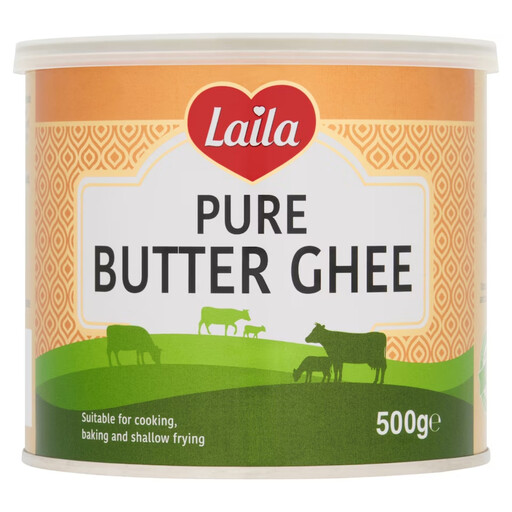
This Joybuy selection is ghee with stated cooking uses, rather than a salted or unsalted butter block or a spreadable blend. Choose it for those stated uses, not on the assumption that it will work the same way for garlic butter or cold serving.
 No image available
For BBQ preparation involving cooking or frying, the listing describes cooking, shallow frying and sautéing uses. This 500 g ghee is made from butter oil (milk), and the listing states 0 g salt per 100 g. Follow the pack’s storage and allergen instructions; check its use guidance before choosing it for basting, garlic butter or spreading on bread.
Choose an unsalted block if you want to add the salt yourself when mixing garlic butter. A salted block already contributes seasoning, so check its label and the recipe before adding more.
Check the particular product’s instructions rather than treating it as equivalent to a block. Anchor says its spreadable product contains butter, rapeseed oil and water, and recommends its regular Original Block for cooking.
Keep it chilled during transport and follow the pack’s storage instructions until serving. GOV.UK advises keeping a fridge between 0 and 5°C and keeping BBQ food covered and chilled until needed.
Use a clean knife and dish for the butter, and keep them separate from utensils used for raw meat. Food Standards Scotland includes avoiding cross-contamination in its barbecue food-safety advice.
No: ordinary dairy butter contains milk, which the Food Standards Agency identifies as a common butter ingredient. Check the exact label for an appropriately labelled alternative and use separate serving utensils.