Barbecue fillet buyers
You want a recognisable salmon portion on the grill, rather than fish mixed into a patty. M&S lists fresh salmon fillets separately from the soft, flaky tinned salmon it suggests for burgers and fishcakes.


Choose salmon fillets if you want an intact piece of fish as the centre of a barbecue meal; choose tinned salmon if you plan to mix the fish into burgers or fishcakes. For tins, check the bone warning, pack size and instructions for storing any leftovers. A skinless-and-boneless label can reduce preparation, but it does not guarantee that every small bone has been removed.
The dish you intend to serve is the useful starting point: an intact portion calls for a different format from salmon that will be mixed and shaped.
You want a recognisable salmon portion on the grill, rather than fish mixed into a patty. M&S lists fresh salmon fillets separately from the soft, flaky tinned salmon it suggests for burgers and fishcakes.
You plan to combine salmon with other ingredients and shape the mixture before cooking. M&S suggests tinned salmon for burgers and fishcakes, and Tesco Real Food uses it in a fishcake recipe.
You want salmon you can keep in the cupboard until it is needed for a mixed dish. Before choosing a tin, consider whether you are comfortable checking for bones or would prefer a skinless-and-boneless format.
For a barbecue meal, decide whether the salmon must remain an intact portion or will become part of a shaped dish; then choose the tin format, if needed.
| Concern | What to check | Who this matters to |
|---|---|---|
| An intact portion | Look for a fillet or steak, and follow its pack instructions for storage, preparation and cooking. | If I want salmon to appear as a whole portion on the barbecue, a tin will not give me that format. About 50% of consumers put an intact portion first. |
| Salmon for shaping | Choose a tin size that fits the recipe, and check whether the mixture calls for other ingredients to hold its shape. | When I am making salmon burgers or fishcakes, I need fish that I can mix and shape rather than serve as a fillet; about 30% of consumers make that their primary concern. |
| Bone and skin handling | Read the exact tin’s bone warning and any skinless-and-boneless wording; check the fish before serving. | I would rather spend less time sorting through the salmon, though I still need to watch for small bones. Reducing that handling comes first for about 20% of consumers. |
M&S describes tinned salmon as soft and flaky and suggests it for burgers and fishcakes. That is a different starting format from the fresh fillets it sells for an intact fish portion.
Choose a fillet when the fish itself needs to remain a recognisable portion; use a tin when you intend to mix and shape it.
John West and Sainsbury’s standard pink-salmon listings warn of bones. Marks & Spencer also warns that small bones may remain in its skinless-and-boneless red salmon.
Read the warning on the exact product and check the salmon before serving, even if the tin is labelled skinless and boneless.
Pack weights and formats vary: Tesco Groceries lists both a 170g skinless-and-boneless red salmon product and a 418g pink salmon product. The tin you need depends on the amount of salmon your recipe calls for.
Check the pack weight and compare the label’s nutrition figures on the same basis, such as per 100g drained, if those figures matter to your choice.
Opened-pack instructions differ. Sainsbury’s 212g pink salmon says to refrigerate leftovers and use them within one day; the John West 213g listing gives two days.
Transfer leftovers to a covered, non-metallic container, refrigerate them and follow the instructions on the tin you bought.
These ranges illustrate the tinned formats available for mixed salmon dishes; a brand’s presence here does not make its tins a substitute for an intact fillet.
John West has standard pink-salmon tins and smaller skinless-and-boneless formats in supermarket listings.
Princes has canned wild Pacific pink and red salmon formats, including a skinless-and-boneless red-salmon option in supermarket listings.
Tesco Groceries lists own-label pink and red tinned salmon in standard and skinless-and-boneless formats.
Sainsbury’s lists own-label Wild Pacific pink salmon in standard and skinless-and-boneless variants.
M&S lists both tinned salmon and, separately, fresh salmon fillets, making the format distinction useful when planning the dish.
These selections cover a frozen salmon portion for a grill-centred meal and tinned pink salmon for fishcakes or other shaped dishes. The frozen steaks need planning for thawing; the tins are not intact fillets.
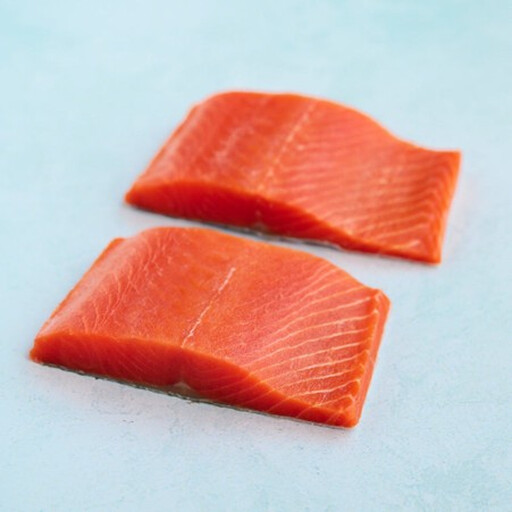 Image unavailable
For a meal that calls for a recognisable salmon portion rather than fish mixed into a patty. This pack contains fillet steaks and is frozen, not a chilled fresh-fillet option; allow time to thaw it according to the pack. Check its bone and cooking instructions before preparing it.
 Image unavailable
For fishcakes or another dish where the salmon will be mixed and shaped. This bundle contains four 213g tins and can be stored in the cupboard before opening. Check the tins’ bone and skin information and follow their instructions for any leftovers.
 Image unavailable
For a recipe that needs tinned salmon to mix into fishcakes or a similar shaped dish. This is one 213g tin, rather than the four-pack above, and is suitable for cupboard storage before opening. Check the can for bone and skin information and opened-pack storage instructions.
Not when you want an intact fillet-shaped main course. M&S lists fresh fillets separately and describes tinned salmon as soft and flaky for dishes such as burgers and fishcakes; choose a tin if you intend to make a shaped dish.
Do not treat the label as a guarantee. Marks & Spencer warns that small bones may remain in its skinless-and-boneless red salmon, so read the current pack and check the fish before serving.
Follow the instructions on your particular tin. Sainsbury’s 212g pink salmon calls for leftovers to be transferred to a non-metallic container, refrigerated and used within one day; the John West 213g listing gives two days for refrigerated leftovers in a covered non-metallic container.
Salmon is fish. Check the ingredient and allergen information on the exact product you are serving, particularly when preparing food for a guest with an allergy.