
24/7 Customer Support

Free returns

Same-day & Next-day Delivery

Quality Guaranteed

Unlock Your Welcome Offers: FREE Delivery | Up to 80% OFF | Free 30-day JoyPlus trial
Download the APP
A suitable BBQ seasoning can turn ordinary chicken, vegetables or tofu into a flavourful meal with very little preparation. However, the packet size, ingredient list and usage instructions can vary considerably between blends. A seasoning made for sprinkling over chips is not necessarily suitable as a marinade, while a product described as “mild” may still contain a substantial amount of salt.
This guide explains what to check before buying barbecue seasoning, jerk seasoning, meat seasoning or a dry rub seasoning, with practical options for UK home cooks.
Small 25g or 35g sachets can be useful for trying a flavour, but they may only cover one or two meals depending on the recommended serving. Larger jars, such as 100g or 280g options, usually suit regular barbecue users better. Compare the net weight and intended serving size, rather than judging value by the packet price alone.
Many BBQ blends contain salt and sugar near the top of the ingredients list. For example, some jerk and barbecue seasonings in this range list salt levels of over 20g per 100g, while one larger jerk product lists 40g per 100g. These products are designed to be used sparingly.
A spicy BBQ seasoning can also contain flavour enhancers or chilli extracts. Check the label if you prefer a simpler blend, need to control added salt or are cooking for people who dislike strong heat.
Heat level and allergen information are separate issues. Some mild jerk seasoning products contain celery, wheat or sulphites, while Korean BBQ seasoning commonly includes soya, wheat or sesame. UK food labels should highlight declared allergens, but always read the current packaging before purchase, particularly if cooking for someone with an allergy or intolerance.
A dry rub is convenient when you want a lightly coated crust. A wet marinade is more suitable when you want the seasoning to cling to ingredients or prepare food several hours ahead.
A chicken seasoning often includes garlic, onion, herbs and paprika. A steak seasoning may use black pepper, coriander, garlic and tomato notes. Jerk seasoning typically features allspice, thyme, chilli, nutmeg or ginger, making it suitable for chicken, pork, fish and vegetables.
For plant-based cooking, look for a vegan BBQ seasoning with no animal-derived ingredients and check whether the product is labelled vegetarian or vegan. The Nando’s rubs and Morrisons BBQ Seasoning listed below are described as suitable for vegetarians and vegans.
Before adding a product to your basket, check:
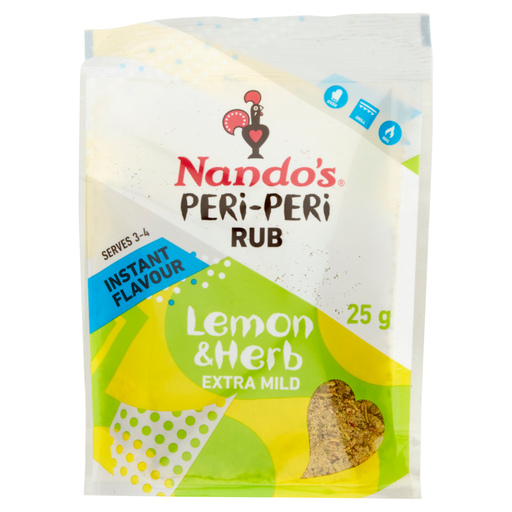
Why This Fits Their Persona: A compact option for UK shoppers who want to try a lemon and herb profile without committing to a large jar. It is suitable for oven, grill and barbecue cooking.
The 25g size makes the quantity clear and the extra-mild chilli rating helps avoid unexpectedly hot food.
Contains lemon powder, herbs, garlic and spices; described as suitable for vegetarians and vegans.

Why This Fits Their Persona: A 100g Caribbean-style blend for cooks seeking aromatic allspice, thyme, paprika and black pepper notes across several meals.
The ingredient list identifies the principal herbs and spices, while the 100g pack offers more usable quantity than a trial sachet.
Can be used as a dry rub or mixed with oil, soy sauce or citrus juice as a marinade; listed allergens: none.

Why This Fits Their Persona: Suitable for shoppers specifically looking for Korean BBQ seasoning in a ready-made format for ribs, pork dishes and stir-fries.
The 500g bottle makes the format clear and the instructions specify at least 30 minutes of marinating, helping you plan preparation time.
A thick hot and spicy marinade with red pepper paste and fruit extract; contains wheat and soya.

Why This Fits Their Persona: The larger 280g pack suits frequent barbecue cooking, batch preparation and households seasoning chicken, pork, seafood, tofu and vegetables.
The mild profile is stated clearly, while the allergen panel identifies celery, wheat and sulphites rather than leaving suitability unclear.
Large pack size and uses across grilling, baking, marinating and roasting; resealable storage is recommended after opening.
We have compiled a complete, real-time list of products that fully satisfy these strict selection criteria and UK safety regulations.
BBQ seasoning is a broad term for a blend of herbs, spices, salt and other flavouring ingredients. A dry rub is a specific application method: the powder is rubbed directly onto food before cooking. Some barbecue seasoning blends can also be mixed with oil or water to create a marinade.
Many products suggest between 15 and 30 minutes, while wet marinades can be left for several hours or overnight when the packaging permits. Always follow the instructions supplied with the product and keep raw meat refrigerated during marination.
Check the best-before information on the packaging. Dried blends generally need to be kept sealed and dry to preserve their aroma and texture. Discard any product with damaged packaging, an unusual smell, significant discolouration or signs of moisture contamination.