What matters when choosing?
Start with the amount of prepared drink you need, then compare nutrition at the stated dilution and check the label for everyone being served.
| Priority | What to check | Your needs |
|---|
| Prepared-drink sugars |
Read “of which sugars” for the drink as prepared, noting the serving size. Check fruit content alongside the no-added-sugar claim. |
I want to compare what will be in each glass, not just the wording on the bottle. Sainsbury’s lists 2.0g sugars per prepared 250ml serving for its 50%-fruit-juice Pink Grapefruit High Juice squash. |
| Jug yield |
Compare stated servings, serving sizes and mixing ratios. Tesco Groceries lists 70 servings at 1 part squash to 9 parts water for Robinsons Double Strength Orange, and 100 at 1 to 19 for Tesco Quadruple Strength Tropical. |
Several guests may refill their cups, so I need to plan the prepared volume rather than count bottles by size alone. The two stated serving counts use different glass sizes. |
| Ingredients and allergens |
Read the current ingredients and allergen declaration on the exact flavour and bottle. Check named sweeteners and whether sulphites are declared. |
For a shared jug, I need to know whether a guest avoids an ingredient. The Food Standards Agency notes that sulphites can occur in soft drinks. |
| Children’s drinks |
Follow product-specific age and dilution instructions. Marks & Spencer says its cited Orange Squash is not suitable for babies and advises extra water for older children. |
If young children are coming, I’ll keep their drinks separate from the adult jug and check the bottle before serving. NHS guidance recommends offering babies water from a cup with meals. |
Brand and range references
These product examples show different label details worth comparing; a brand name alone does not establish the ingredients or yield of another flavour.
Robinsons
Its cited orange squashes include single-strength and double-strength options.
- Tesco Groceries lists 70 servings and 1:9 dilution for Robinsons Double Strength Orange 1.75L.
- The cited single-strength orange squash uses a different, 1:4 dilution; follow the directions for the bottle you buy.
Tesco
Its cited Quadruple Strength Tropical squash is a concentrated option for making repeated jugs.
- Tesco Groceries states 100 servings from the 1.5L bottle at 1:19 dilution.
- Its stated glass is 300ml, so do not treat that serving count as identical to a product measured in 250ml glasses.
Sainsbury’s
The cited no-added-sugar Pink Grapefruit High Juice squash provides a fruit-led option.
- Sainsbury’s lists 50% fruit juice for this product.
- It also lists 2.0g sugars per prepared 250ml serving; check that figure if total sugars affect your choice.
M&S
The cited orange and pink grapefruit squashes provide different fruit-content information.
- Marks & Spencer describes its Orange Squash as double strength with 20% fruit and its Pink Grapefruit High Juice as containing 50% fruit juice.
- Marks & Spencer states that the cited Orange Squash is not suitable for babies and advises extra water for older children.
Waitrose
Waitrose lists Essential own-label squash in its no-added-sugar category alongside branded options.
- The own-label range offers another set of flavours to consider for a BBQ drinks table.
- Use the individual pack’s ingredients, nutrition and dilution directions when comparing a flavour with another product.
No-added-sugar squash options
These Joybuy squash options cover orange, blackcurrant and pineapple-and-passion-fruit drinks for a BBQ. Use each product’s current label to plan dilution and check ingredients before making a shared jug.
 No image available
Robinsons No Added Sugar Orange Squash 1L
For an orange squash jug, check the bottle’s dilution directions before estimating how much prepared drink this 1L bottle will make.
Read the current ingredients, allergen declaration and age guidance before serving guests.
View on Joybuy
 No image available
Ribena Concentrated Blackcurrant No Added Sugar 1.5L
If blackcurrant suits your drinks table, measure this concentrate according to its pack directions when preparing a jug.
Use the prepared-drink serving information for sugar comparisons, and check the current allergen declaration for guests.
View on Joybuy
 No image available
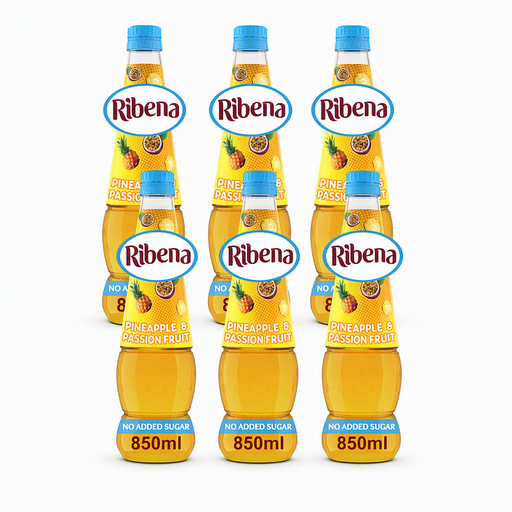
Ribena Pineapple and Passion Fruit No Added Sugar Squash 6 x 850ml
This six-bottle pack offers several containers for a gathering; work out the amount of prepared drink using the directions on each bottle.
Compare sugars on a prepared-drink basis rather than using concentrate figures, and check the current ingredients for guests.
View on Joybuy
Questions about serving squash
Does “no added sugar” mean there are no sugars in the drink?
No. Fruit ingredients can contribute sugars even when a squash is labelled no added sugar. Sainsbury’s lists 2.0g sugars per prepared 250ml serving for its no-added-sugar Pink Grapefruit High Juice squash, so check the nutrition figure for the diluted drink.
How do I estimate squash quantities for a BBQ?
Plan using prepared volume, stated servings and the bottle’s dilution directions rather than bottle size alone. Tesco Groceries lists 70 servings at 1:9 dilution for Robinsons Double Strength Orange and 100 at 1:19 for Tesco Quadruple Strength Tropical; their stated glass sizes differ.
Can babies or young children have no-added-sugar squash?
Do not assume a no-added-sugar label makes squash suitable for babies. Marks & Spencer says its cited Orange Squash is not suitable for babies and advises extra water for older children. NHS guidance recommends offering babies water from a cup with meals; follow the age guidance on the particular product.
What should I check for a guest who avoids sulphites?
Read the current ingredients and allergen declaration on the exact bottle before serving it. The Food Standards Agency notes that sulphites can occur in soft drinks, so the front-of-pack no-added-sugar claim is not enough for this check.
How should I prepare squash near a BBQ cooking area?
Use clean jugs and utensils, and keep drink preparation separate from raw-food handling. GOV.UK’s BBQ food safety guidance emphasises handwashing and avoiding cross-contamination; follow the squash bottle’s storage directions as well.


