For a BBQ, offer water as the main drink and consider no-added-sugar squash when guests want a flavoured alternative to sugary drinks; the NHS recommends both water and sugar-free, diet or no-added-sugar drinks in place of sugary squash. If fruit content matters more to you, compare individual high-juice and no-added-sugar products rather than treating those labels as interchangeable. Whichever squash you choose, check its prepared-drink nutrition, ingredients and dilution instructions before making a jug.
Who is this for?
Hosts making drinks for a group
If you plan to fill jugs or reusable bottles, check the servings stated on the pack and measure each concentrate according to its own dilution instructions. A bottle's size alone does not tell you how many prepared drinks it makes.
Guests choosing an alternative to sugary drinks
No-added-sugar squash offers a flavoured option alongside water. The NHS suggests sugar-free, diet or no-added-sugar drinks instead of sugary squash, but you should still compare the sugars listed for a prepared serving.
People checking ingredients for guests
Read the current label for sweeteners and allergens before serving. Several squash products described here list sulphites; the Food Standards Agency identifies sulphites as a possible risk for people with a sensitivity.
What should you check?
No-added-sugar squash
Choose it when: you want a flavoured alternative to sugary squash that guests can make by the glass or jug.
Bear in mind: products can contain sweeteners and naturally occurring sugars, and concentrate strengths require different amounts of water.
Fruit-forward or high-juice squash
Choose it when: stated fruit content or a particular flavour is central to your choice.
Bear in mind: a high-juice label does not tell you the sugars in a prepared drink or whether sugar has been added.
Water
Choose it when: you want a plain drink available throughout the gathering.
Bear in mind: guests who prefer a flavoured drink may appreciate squash as a separate option.
For squash, compare the drink as it will be served, then check whether the bottle suits your guest list and the number of drinks you plan to make.
| Priority |
What to check |
Your needs |
| Prepared-drink nutrition |
Read sugars and energy for the stated diluted serving, noting its volume. Check the ingredient list as well as any no-added-sugar claim. |
I'd like a flavoured alternative to sugary drinks, but I want to know what is in the glass I'm serving. |
| Dilution and servings |
Follow the bottle's concentrate-to-water ratio and check its declared serving count. For example, ASDA Groceries lists Robinsons Double Strength Orange at 1:9 and 70 servings, while Tesco lists its Quadruple Strength Apple & Blackcurrant at 1:19 and 100 servings. |
For a self-serve jug, I need a ratio that is easy to follow and enough prepared drinks for the group. |
| Ingredients and allergens |
Check the current pack for its sweeteners and allergen declaration. The Food Standards Agency identifies sulphur dioxide and sulphites as a possible risk for people with a sensitivity. |
If a guest has an ingredient restriction, I want to check the exact bottle before offering them a drink. |
| Fruit content |
Compare the stated fruit percentage with the prepared-drink sugars and dilution directions; these answer different questions. Marks & Spencer lists 20% fruit for its Orange Squash, but that figure alone does not describe the prepared drink's sugar content. |
Fruit content may influence which flavour I choose, without replacing a check of the nutrition label. |
Mistakes to avoid
-
Reading “no added sugar” as “sugar-free”
A no-added-sugar squash may still contain sugars from fruit ingredients or include sweeteners. The front label alone cannot tell you the sugars in a prepared glass.
Check the “of which sugars” figure for the drink at its stated dilution, then read the ingredients for any sweeteners you wish to avoid.
-
Using one dilution ratio for every bottle
Concentrates have different strengths. Tesco lists its Quadruple Strength Apple & Blackcurrant at one part squash to 19 parts water; ASDA Groceries lists Robinsons Double Strength Orange at one part to nine parts water.
Measure the first jug using the directions on the bottle you bought, and make those directions visible if guests will refill it.
Pouring more concentrate than directed uses the bottle faster and makes the served drink different from the label's diluted serving.
-
Overlooking sulphites on a mixed guest list
Several squash ingredient lists described here include sulphites. The Food Standards Agency identifies them as a possible risk for people with a sensitivity and notes a higher risk of reaction for people with asthma.
Ask about known ingredient restrictions before serving, keep the current bottle label available and check any alternative drink separately.
-
Assuming similarly sized bottles make the same number of drinks
Declared servings differ by product and concentration: ASDA Groceries lists 60 servings for its 1.5L Orange Squash, while Tesco lists 100 for its 1.5L Quadruple Strength Apple & Blackcurrant.
Use the serving count and dilution directions on the exact pack when planning drinks for a group.
Brand and range references
These examples show why the label of a specific squash matters more than assumptions about everything a brand sells.
Robinsons
Its no-added-sugar range includes concentrated squash for making individual drinks or jugs.
- ASDA Groceries lists the reviewed Double Strength Orange 1.75L bottle at 70 servings, with 3 kcal per prepared 250ml drink and a 1:9 dilution ratio.
- Those figures belong to that variant. Check the dilution and ingredients on any other Robinsons bottle separately.
Tesco
Its reviewed own-label Apple & Blackcurrant squash is a quadruple-strength, no-added-sugar option.
- Tesco lists 100 servings from the 1.5L bottle and 4 kcal with 0.6g sugars per prepared 300ml glass.
- Its stated dilution is 1:19; do not prepare it using directions from a double-strength bottle.
Asda
Its reviewed Orange Squash offers a no-added-sugar own-label option in a 1.5L bottle.
- ASDA Groceries lists 60 servings, a 1:9 dilution ratio and 4 kcal with under 0.5g sugars per prepared 250ml drink.
- The smaller Just Essentials Orange Squash has a different stated serving count, so check the format you are buying.
M&S
Its reviewed Orange Squash pairs a no-added-sugar claim with stated fruit content.
- Marks & Spencer lists 20% fruit and describes this Orange Squash as double strength.
- Check the current pack's ingredients and serving directions rather than using its fruit percentage as a prepared-drink nutrition figure.
Waitrose
Its squash range includes Essential no-added-sugar products and separate high-juice choices.
- The Waitrose & Partners range listing lets shoppers distinguish no-added-sugar and high-juice product lines.
- Compare the nutrition, ingredients and dilution of the individual variant; the range name does not establish those details.
Ribena
Its reviewed No Added Sugar Summer Fruits Squash is another concentrated fruit-flavoured option.
- Sainsbury's lists a dilution of one part squash to four parts water for the reviewed Summer Fruits bottle.
- Check the ingredients and directions of the particular Ribena flavour and pack; they should not be assumed from another variant.
Squash options on Joybuy
These no-added-sugar squash concentrates offer fruit flavours for guests who want a flavoured BBQ drink. Compare each pack's ingredients and mixing directions before making a shared jug.
 No image available
Ribena Blackcurrant No Added Sugar Concentrate 1.5L
The 1.5L concentrate is an option when making blackcurrant-flavoured drinks for a group. Check the current pack's dilution directions before filling a jug; the listed ingredients include sweeteners and sodium bisulphite, which matter when checking guests' restrictions.
Joybuy
 No image available
Robinsons No Added Sugar Orange Squash 1L
This 1L orange squash provides a no-added-sugar flavour option. Check this bottle's own mixing directions rather than applying the ratio of another Robinsons size or variant. Its listed ingredients include sweeteners and sulphites, and its product information says it is not suitable for children under 36 months.
Joybuy
 No image available
Ribena Pineapple and Passion Fruit No Added Sugar Squash 850ml
Choose this 850ml concentrate if pineapple and passion-fruit flavour appeals to your guests. Follow the current pack directions when diluting it. Its listed ingredients include aspartame, acesulfame K and sulphites, and the product information identifies a source of phenylalanine.
Joybuy
 No image available
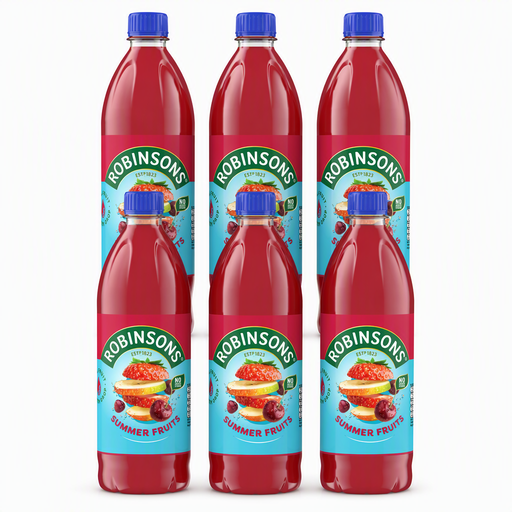
Robinsons No Added Sugar Summer Fruits Squash 6x1L
The six-pack of 1L bottles suits a gathering where several bottles may be needed. Check the label of this Summer Fruits variant for its dilution directions and prepared-drink sugars before mixing a jug. Its listed ingredients include sweeteners and sulphites, and the product information identifies a source of phenylalanine.
Joybuy
Common questions
Is no-added-sugar squash a useful BBQ drink option?
Yes, if you want a flavoured alternative to sugary squash and prepare it as directed. The NHS recommends water or sugar-free, diet or no-added-sugar drinks in place of sugary squash; keep plain water available too.
Does “no added sugar” mean there is no sugar in the drink?
No. A no-added-sugar product can contain naturally occurring sugars from fruit ingredients. Read the sugars figure for the prepared drink and check the ingredients for sweeteners.
How much water should I add to a BBQ jug?
Use the ratio on the exact bottle. ASDA Groceries lists one part Robinsons Double Strength Orange to nine parts water, while Tesco lists one part of its Quadruple Strength Apple & Blackcurrant to 19 parts water; neither ratio should be assumed for a different variant.
Should I check squash ingredients before serving guests?
Yes. The squash products described here include examples with sweeteners and sulphites. The Food Standards Agency identifies sulphites as a possible risk for people with a sensitivity, so check the current label against guests' known restrictions.
What should I do with an opened bottle after the BBQ?
Follow that bottle's storage and use-after-opening directions. These instructions can differ between products, so check the pack rather than applying another squash's timeframe.


