
24/7 Customer Support

Free returns

Same-day & Next-day Delivery

Quality Guaranteed

Unlock Your Welcome Offers: FREE Delivery | Up to 80% OFF | Free 30-day JoyPlus trial
Download the APP
Choosing a women's beach swimsuit is not only about colour or appearance. The right design needs to suit how you plan to use it, whether that means swimming at a hotel pool, relaxing beside the sea, tanning on holiday or wearing it under a beach cover-up.
Many disappointing purchases come from overlooking practical details. A swimsuit may look attractive online but feel uncomfortable, offer less support than expected or take too long to dry between wears. Use this guide to compare styles and features before choosing your next piece of holiday swimwear.
Swimwear sizing can vary between sellers and styles. A snug bandeau top, a high-waisted boy short bottom and a non-padded two-piece will not fit in the same way, even when they share the same size label.
Do not rely solely on your usual high-street size. Measure your bust, waist and hips and compare them with the product’s size chart. If you are between sizes, check whether the garment is designed for a supportive fit or a looser feel.
A strapless or bandeau swimsuit can be convenient for tanning, but it may not offer the same security as a design with fixed shoulder straps during active swimming. Similarly, non-padded styles can feel lightweight but may provide less shaping or structure.
Consider the movement involved. Poolside lounging and sunbathing require different features from water sports, beach games or frequent swimming.
Quick-dry swimsuit descriptions are useful, but the phrase alone does not explain stretch, lining or care requirements. A fabric may dry relatively quickly while still needing careful washing to preserve its elasticity.
Check the fibre composition, whether the item has a separate lining and the recommended cleaning method. Chlorine, salt water, sunscreen and prolonged direct sunlight can all affect swimwear over time.
Nylon, polyamide and elastane blends are commonly used in swimwear because they combine flexibility with a close fit. For example, the products featured below use blends ranging from 75% nylon and 25% spandex to 86% polyamide and 14% elastane.
A higher elastane content can provide a flexible feel, but stretch does not replace correct sizing. The garment should sit securely without digging into the bust, waist or leg openings.
A women’s one-piece swimsuit offers a continuous front panel, while a women’s two-piece swimsuit allows easier dressing and can offer separate coverage choices. Look closely at:
A strapless swimsuit can help reduce visible tan lines, but it should be checked carefully for stability before entering the water. A modest two-piece swimsuit may offer more coverage while still allowing easier movement and a two-piece silhouette.
UK shoppers should check whether the chart uses UK, US or EU measurements. One of the featured one-piece designs lists UK sizes alongside bust measurements from 76–81 cm for S through to 94–99 cm for XL. Other products use bust, waist and hip measurements in centimetres.
For longevity, follow the care label rather than assuming machine washing is suitable. Cold-water rinsing after swimming, mild detergent and laying the item flat to dry can help maintain the fabric. Avoid bleach, ironing and unnecessary exposure to direct sunlight.
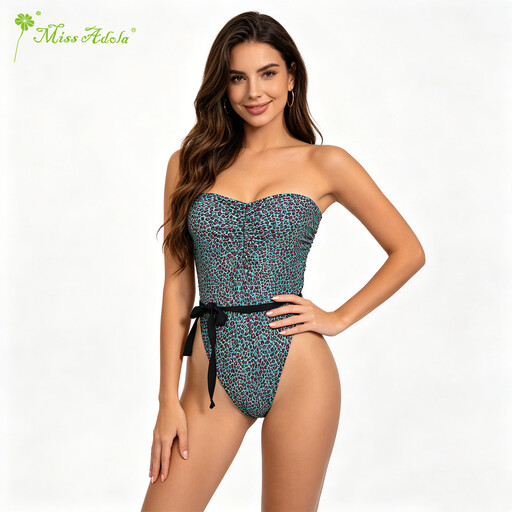
Why This Fits Their Persona: A straightforward one-piece option for shoppers wanting one garment for beach days, hotel pools and warm-weather travel. The blue colour is easy to coordinate with a cover-up or sandals.
The listing provides bust measurements, fabric composition and care instructions, making it easier to assess fit rather than choosing by image alone.
80% nylon and 20% spandex fabric; removable horseshoe cups; lightweight strapless bandeau construction.

Why This Fits Their Persona: Suitable for shoppers who prefer a structured two-piece with a natural, non-padded top and a higher-waisted bottom for beach holidays or poolside wear.
The listing states that the top is non-padded and works best for small to medium busts, helping shoppers set realistic expectations before ordering.
86% polyamide and 14% elastane; crisscross lattice front; side-cutout bottom sits at the natural waist.
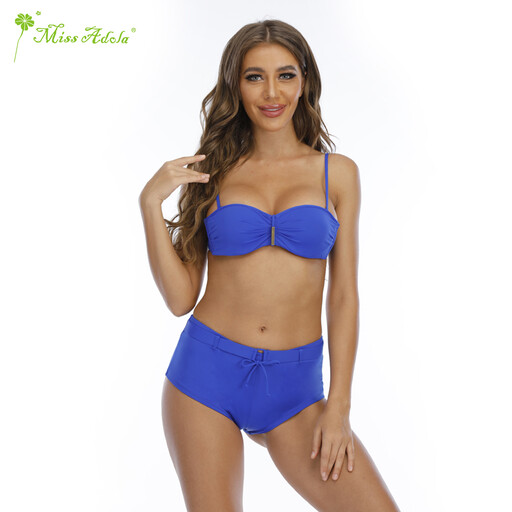
Why This Fits Their Persona: A practical choice for shoppers wanting a two-piece for swimming, tanning and active beach days, with more lower-body coverage than a standard brief.
The product information specifies the half-cup top, boy short bottom and measurement chart, rather than leaving coverage and fit to interpretation.
75% nylon and 25% spandex; quick-dry fabric; boy short bottom with a decorative bow belt.
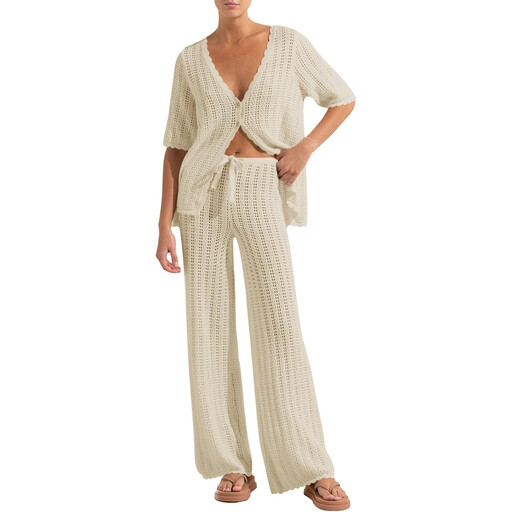
Why This Fits Their Persona: Useful for anyone who wants a simple layer for walking from the beach to a café, covering swimwear during poolside lounging or adding an outfit for evening travel.
It is clearly presented as a cover-up rather than swimwear, so shoppers can pair it with a suitable swimsuit instead of expecting the knit set to provide water-ready support.
Includes a hollow-out crochet cardigan and drawstring wide-leg trousers; lightweight design for beach and holiday styling.
We have compiled a complete, real-time list of products that fully satisfy these strict selection criteria and UK safety regulations.
A strapless swimsuit or bandeau design can reduce shoulder tan lines. Look for removable cups, a secure fit and clear care instructions. Remember that tanning increases exposure to ultraviolet radiation, so use suitable sun protection and avoid treating a tanning swimsuit as protective clothing.
A one-piece is convenient when you want continuous coverage and fewer separate pieces to pack. A two-piece can be more flexible for changing, tanning and combining different coverage levels. Your choice should depend on comfort, support and how often you expect to move between swimming and lounging.
Rinse it in cool, clean water after use to remove salt, chlorine and sunscreen residue. Hand wash with mild soap where the care instructions require it, lay flat to dry and avoid bleach, ironing and prolonged direct sunlight. Rotating between two swimsuits can also reduce repeated wear on one garment during a longer holiday.