What matters when buying?
Start with the busiest period in which colleagues will want espresso: occasional use may suit a compact machine, while sustained demand makes exact-model workplace output guidance more relevant. Decide separately whether milk drinks warrant a milk system and its cleaning routine.
| Concern | What to check | Who this matters to |
|---|
| Espresso capacity |
Estimate peak-period drinks and check exact-model output guidance, water capacity and grounds capacity. |
If several colleagues want espresso together, I need to avoid queues and repeated refills. Around 36% of consumers put capacity first. |
| Cleaning ownership |
Check the instructions for cleaning used coffee and milk systems, required products and who will do the work. |
When several people share the machine, I need a cleaning routine that somebody will actually complete. Cleaning is the main concern for around 29% of consumers. |
| Simple espresso service |
Confirm an espresso function, usable controls and room for the intended cup or glass. |
For an occasional affogato, I want to make espresso without managing a broader milk-drink menu. Around 21% of consumers prioritise that straightforward workflow. |
| Workplace and food-service checks |
Review electrical maintenance, the machine’s pressure configuration and whether the service forms part of a food business. |
Before setting up a workplace service, I need to understand which safety and food-service responsibilities apply. For around 14% of consumers, those checks take priority. |
Joybuy options for occasional affogato
These bean-to-cup models are options for making espresso for occasional shared-office affogato. Before choosing one for regular or peak-time office use, check its exact-model capacity guidance and agree who will handle refilling and cleaning.
 No image available
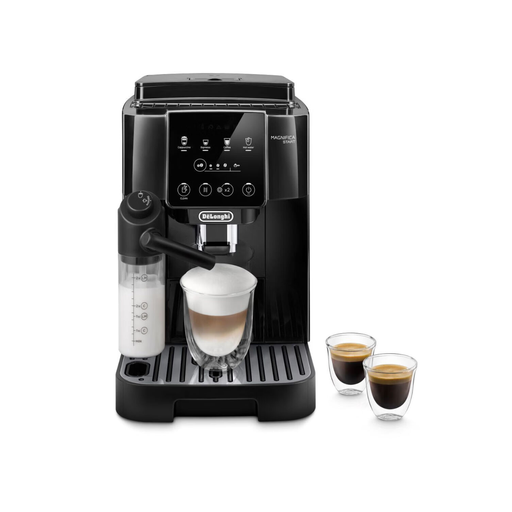
De'Longhi Magnifica Start ECAM220.60.B, black, automatic milk system
A bean-to-cup option to consider for occasional affogato; check how its espresso function fits the office’s peak demand.
The named variant has an automatic milk system and four one-touch recipes. If colleagues use the milk system, assign its cleaning.
View on Joybuy
 No image available
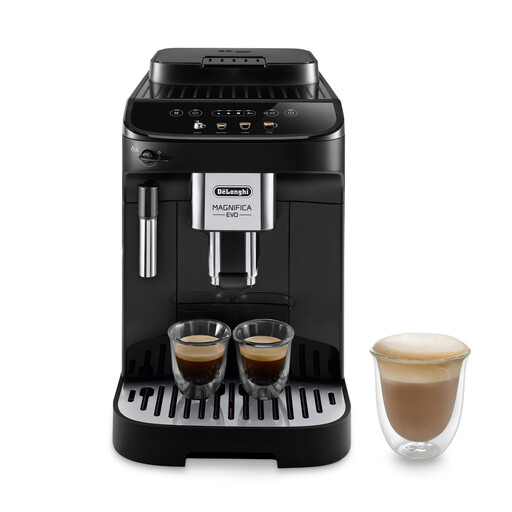
De'Longhi Magnifica Evo ECAM290.21.B, black, milk frother
De'Longhi GB lists one-touch espresso for this model, making it relevant to an occasional affogato routine.
It has a 1.8 L water tank and a 14-portion grounds container. Plan who will refill and empty them, and check peak-use requirements before placing it in a shared office.
View on Joybuy
 No image available
De'Longhi Magnifica Evo ECAM290.83.TB, black, automatic milk system
Consider this bean-to-cup variant if occasional affogato sits alongside a genuine need for milk drinks.
Its named variant has an automatic milk system. Check the espresso controls, peak-use fit and milk-cleaning instructions for the intended office routine.
View on Joybuy
 No image available
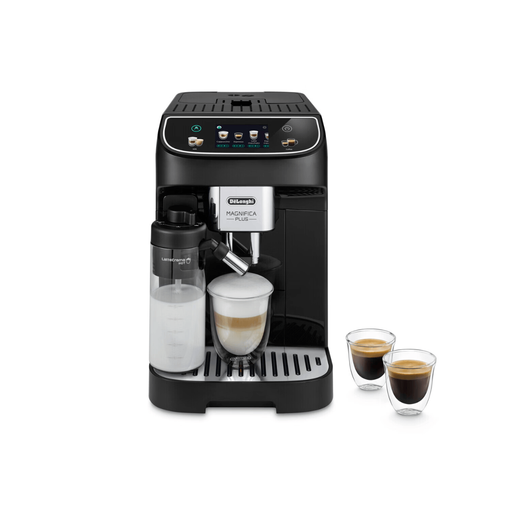
De'Longhi Magnifica Plus ECAM320.60.B, black
A bean-to-cup option to assess for occasional shared-office espresso and affogato.
Check the exact model’s espresso controls and peak-use guidance, and establish its cleaning routine before several people share it.
View on Joybuy
 No image available
De'Longhi Magnifica Start ECAM220.22.GB, black and grey, milk nozzle
Consider this bean-to-cup variant for occasional affogato if its espresso function and refill routine suit the people sharing it.
Its named variant has a milk nozzle and four one-touch recipes. Assign cleaning after milk use if colleagues intend to use the nozzle.
View on Joybuy
Frequently asked questions
Do we need a milk system to make affogato?
No: the bean-to-cup machine’s job in affogato is to make espresso, which is poured over ice cream. Consider a milk system only if the office also wants milk drinks and can take responsibility for cleaning it.
Does an office coffee machine need a PAT test every year?
Not automatically. The Health and Safety Executive says annual portable appliance testing is not required for every appliance in a low-risk office; the employer still needs electrical equipment to be maintained so that it does not cause danger. Set checks according to the workplace risk assessment.
Could pressure-system rules apply to a bean-to-cup machine?
They may apply if the particular coffee machine produces steam under pressure and meets the relevant conditions. Stratford-on-Avon District Council advises checking steam-producing espresso equipment against the Pressure Systems Safety Regulations 2000. Confirm the machine’s configuration and obtain competent advice for its installation.
Must an office register to serve affogato?
That depends on how the food and drink service operates, not simply on its being in an office. GOV.UK says organisations that sell, cook, store, handle, prepare or distribute food may be considered food businesses. If the service could fall into that category, check registration requirements with the relevant local authority.


