
24/7 Customer Support

Free returns

Same-day & Next-day Delivery

Quality Guaranteed

Unlock Your Welcome Offers: FREE Delivery | Up to 80% OFF | Free 30-day JoyPlus trial
Download the APP
A bean to cup coffee machine can simplify the daily coffee routine, but the wrong model may create more work than expected. UK buyers often focus on pump pressure, drink icons or a glossy finish while overlooking grinder control, milk-system cleaning and the space needed around the appliance.
Before choosing an automatic coffee machine, watch for these common pitfalls:
A fully automatic coffee machine normally grinds beans, doses coffee and brews at the press of a button. This is useful for busy households, shared kitchens and anyone who wants repeatable espresso or long coffee with minimal preparation.
A semi-automatic coffee machine or manual espresso machine gives you more control. You usually grind into a portafilter, tamp the coffee and manage milk steaming yourself. This takes longer but can suit users who enjoy adjusting recipes and practising milk texture.
Do not assume that every bean to cup coffee maker prepares the same drinks. Check whether it offers espresso, long coffee, Americano, hot water, cappuccino or latte, and whether these are genuinely one-touch or require separate steps.
The grinder is central to a bean-to-cup system. More adjustment levels can make it easier to adapt the grind to different roasts, although a large number does not guarantee a better cup. A finer setting is generally associated with slower espresso extraction, while a coarser setting can suit longer coffee styles.
Capacity is also important. Models in this selection offer bean hoppers from 250g to 300g and water tanks from 1.5L to 2.8L. A larger hopper and tank may reduce refilling for families, but they also add size and weight. Keep beans sealed and avoid filling the hopper with more than you expect to use regularly, particularly if you switch between roasts.
If you regularly drink cappuccinos or lattes, compare a coffee machine with milk frother systems carefully. Automatic milk carafes prioritise convenience, while steam wands offer more control over texture but need hands-on preparation and wiping after use.
For iced drinks, a standard machine can brew espresso over ice, but this is different from dedicated cold extraction. If cold coffee is a frequent choice, look for clearly stated cold-brew or cold-espresso functions rather than relying on general “iced coffee” wording.
Also check the cleaning routine. Useful features include removable brew units, automatic rinse cycles, dishwasher-safe parts and filter or descaling alerts. Follow the supplied instructions, use suitable descaling products and allow hot components to cool before handling them.
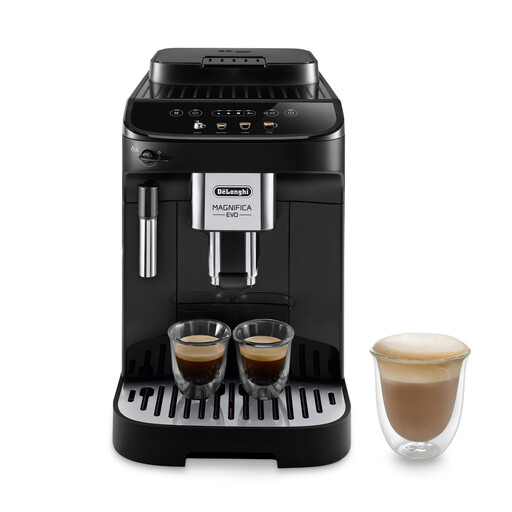
Why This Fits Their Persona: A straightforward option for UK households moving from pod coffee or instant coffee to fresh beans, with simple drink icons and a manual milk frother.
Its manual steam wand makes the milk process clear rather than implying every drink is fully automatic. The removable brew unit and dishwasher-safe drip grid support routine cleaning.
13 grinder settings, a 250g bean hopper, a 1.8L removable tank and one-touch espresso, coffee and hot-water functions.

Why This Fits Their Persona: Suitable for coffee enthusiasts who want guided preparation, custom drink settings and cold coffee options alongside manual-style control.
The touchscreen distinguishes cold espresso and cold brew from ordinary hot coffee poured over ice. The guidance system also makes dosing and tamping steps visible.
30 grinder settings, cold extraction programmes, eight customisable drink presets and automatic milk texturing settings.

Why This Fits Their Persona: A practical match for families or frequent drinkers who want a broad menu of hot, iced and cold coffee recipes.
Cold Extraction Technology is specified separately from over-ice preparation, helping buyers identify what the machine actually does for cold drinks.
Over 50 listed hot and cold recipes, a 300g hopper, 1.8L water tank and LatteCrema Hot & Cool systems.

Why This Fits Their Persona: Designed for users who want an espresso machine with grinder but prefer to control dosing, tamping, extraction and milk steaming.
It is clearly a manual bean-to-cup design, so buyers can see that it is not intended for one-touch milk drinks or completely hands-off brewing.
30 grind settings, an integrated burr grinder, a 54mm portafilter and a manual steam wand for milk texturing.
We have compiled a complete, real-time list of products that fully satisfy these strict selection criteria and UK safety regulations.
Running costs include electricity, coffee beans, water filters, milk and descaling products. Bean prices vary considerably, so compare the cost per drink rather than looking only at the machine price. Automatic rinsing and heating cycles also use some water and power. Use the appliance’s energy-saving settings where available and switch it off when it will not be used for an extended period.
Lifespan depends on usage, water hardness, cleaning and servicing. Empty the grounds container and drip tray as instructed, clean milk components after use, rinse removable brew parts where permitted and descale when prompted. In hard-water areas, a compatible water filter may help reduce scale build-up, but it does not replace the manufacturer’s maintenance schedule.
No. A bean to cup coffee maker has an integrated grinder. A separate grinder is only necessary if you choose a machine without one, want to use different beans without emptying the hopper, or prefer greater control over grinding. Before buying, check the grinder adjustment range, hopper size and whether the machine also accepts pre-ground coffee.