
24/7 Customer Support

Free returns

Same-day & Next-day Delivery

Quality Guaranteed

Unlock Your Welcome Offers: FREE Delivery | Up to 80% OFF | Free 30-day JoyPlus trial
Download the APP
As a Joybuy Product Recommendation Officer, my role is to help you navigate the crowded market of home coffee appliances. The dream of pulling a perfect, café-quality espresso in your own kitchen is more attainable than ever, but it's also easy to fall into common traps. Many find their expensive new gadget gathers dust after a few months because it fails to deliver on its promises.
Before you invest, let's look at the most frequent pitfalls that UK buyers encounter. Understanding these will help you choose a machine that becomes a cherished part of your daily routine, not a source of frustration.
espresso machine with grinder seems like the perfect package, but not all grinders are created equal. Many lower-end models use cheap blade grinders that violently chop beans into uneven fragments. This leads to inconsistent extraction and a disappointing cup. For a true bean to cup coffee machine experience, a quality burr grinder is essential.To avoid buyer's remorse, focus on the functional heart of the machine. These three parameters are non-negotiable for anyone serious about making good coffee at home.
The pressure rating, measured in bars, indicates the force the machine uses to push hot water through the compacted coffee grounds. While the technical standard for a true espresso is around 9 bars at the point of extraction, a machine rated for 15 to 20 bars provides a crucial performance buffer. This ensures it can consistently deliver the required pressure, even if your grind or tamp isn't perfect, giving you a rich shot with a stable crema every time.
This is perhaps the most critical component.
bean to cup coffee machine, ensure it specifies an integrated burr grinder, preferably with multiple grind settings to adjust for different beans.For those who enjoy lattes, cappuccinos or flat whites, the coffee machine with steam wand is a must. However, there's a big difference between an automatic frother and a manual steam wand. A manual wand, also known as a "panarello" or a professional-style wand, gives you complete control over the aeration and temperature of the milk. This allows you to create silky microfoam for latte art, rather than the stiff, bubbly foam produced by most automatic systems. This control is a hallmark of a true home barista coffee machine.
We've matched some models to different user profiles to help you find a machine that fits your specific needs and avoids the pitfalls we've discussed.
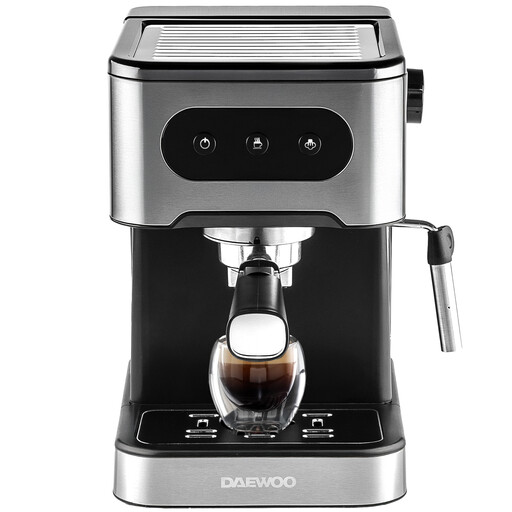
Why This Fits Their Persona: This is an excellent starting point for anyone wanting to learn the craft of espresso. It provides the essential manual controls and a powerful steam wand without the high price tag, making it perfect for UK households wanting to step up from pod machines.
It sidesteps the "integrated grinder myth" by being a dedicated manual espresso machine. This empowers you to pair it with a separate, quality grinder of your choice or use high-quality pre-ground coffee, giving you full control over your grind quality.
Its 20-bar pressure pump provides more than enough power for excellent extraction. The simple, intuitive dial controls make it easy to learn the basics of brewing and steaming.
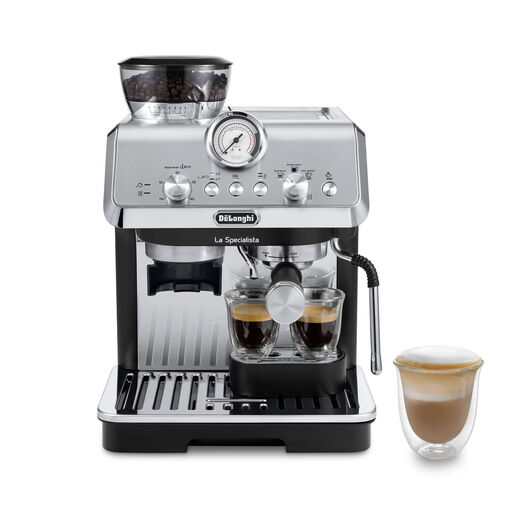
Why This Fits Their Persona: For the enthusiast who wants an integrated, high-performance setup. The De'Longhi La Specialista Arte combines a quality grinder, precise brewing and a powerful steam wand in a single, stylish unit that looks the part in any modern kitchen.
It directly counters the "integrated grinder myth" by including a proper integrated burr grinder with 8 settings. It also features three active temperature control settings, avoiding the "unstable performance" pitfall by letting you match the water temperature to your beans.
It includes a complete barista kit (tamper, dosing funnel, milk jug), providing everything you need straight out of the box. The My Latte Art steam wand is specifically designed to help create fine, silky microfoam.
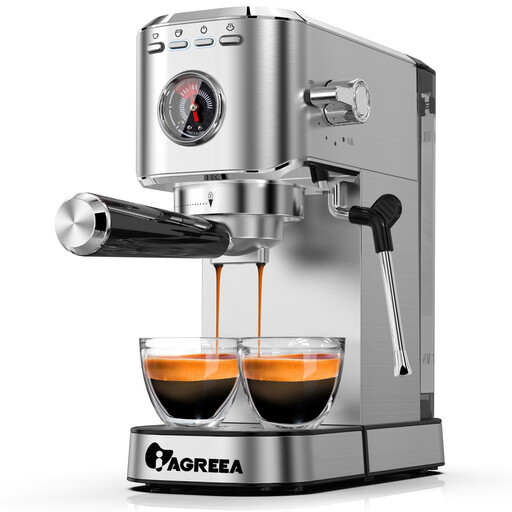
Why This Fits Their Persona: Ideal for those in flats or with limited kitchen worktop space who refuse to compromise on performance. This machine packs professional-level features into a slim, stainless steel body that is both durable and stylish.
It provides a visible pressure gauge, giving you real-time feedback during extraction. This helps you diagnose issues with your grind or tamp, actively helping you learn and avoid the "unstable performance" pitfall that plagues many other machines.
The pressure gauge is an excellent learning tool not often found at this size. Its detachable drip tray is designed to accommodate taller mugs, a highly practical feature for daily use.
Becoming a home barista isn't just about the machine; it's about creating an organised and enjoyable workspace. A tidy station makes the process smoother and more pleasant. To keep your tamper, milk jug and coffee grounds contained, consider adding a simple tray to your setup. A sleek, minimalist black metal tray can protect your worktop from spills and coffee dust, while also adding a professional, café-like touch to your coffee corner.
We have compiled a complete, real-time list of products that fully satisfy these strict selection criteria and UK safety regulations.
1. How long should a good bean to cup coffee machine last? With proper care, a well-made machine should serve you well for 5 to 10 years. The key to longevity is regular maintenance, which includes routine cleaning of the group head and steam wand, as well as periodic descaling according to the manufacturer's instructions to prevent mineral build-up.
2. Is a more expensive coffee machine always better? Not necessarily. The right machine is one that matches your needs and skill level. A simple, robust manual espresso machine in the hands of a knowledgeable user can often produce better coffee than a very expensive, fully automatic machine. Focus on the core parameters—pump pressure, grinder quality and thermal stability—rather than price alone.
3. What is the real cost of running a home espresso machine? Beyond the initial purchase, the main ongoing costs are high-quality coffee beans, which will be the biggest factor in your coffee's taste. You will also need to budget for occasional cleaning supplies like descaling solution. While there will be a minor increase in your electricity bill, the cost per cup is significantly lower than buying from a coffee shop, meaning the machine can pay for itself over time.