
24/7 Customer Support

Free returns

Same-day & Next-day Delivery

Quality Guaranteed

Unlock Your Welcome Offers: FREE Delivery | Up to 80% OFF | Free 30-day JoyPlus trial
Download the APP
Moving from instant coffee or pods to a bean to cup coffee machine is a significant upgrade for any kitchen. The promise of café-quality lattes and rich espressos at home is tempting, but the market is filled with models that can lead to buyer's remorse. As a Joybuy Product Recommendation Officer, my role is to help you see past the marketing jargon and focus on what truly matters for a great daily coffee experience.
Before you invest, be aware of these common pitfalls that UK consumers often encounter:
iced coffee machine function. However, most simply dispense hot espresso over ice, resulting in a diluted, lukewarm drink. True cold extraction is a different technology that uses low temperatures to produce a smoother, less acidic coffee, a feature found only in specific models.barista coffee machine for home with lots of chrome and dials looks impressive, but cheaper models often suffer from inconsistent grinders and unstable water temperatures. This can make "dialling in" a perfect shot a frustrating daily battle, leaving you with sour or bitter coffee and a feeling of wasted potential.To ensure your investment pays off with delicious coffee for years to come, focus on these three non-negotiable components.
The most important part of any bean to cup coffee machine is its integrated coffee machine with grinder. Without a good grind, even the most expensive machine will produce a disappointing cup.
How you enjoy your milk-based drinks will determine the right system for you. This is a key differentiator between a fully automatic coffee machine and a more manual home espresso machine.
The machine's ability to heat water quickly and hold it at a precise temperature is vital for proper extraction.
Sage coffee machine models, this innovative system can reach the optimal extraction temperature in as little as three seconds. This not only eliminates waiting time but can also be more energy-efficient.Instead of a generic list, we've matched specific machines to the different types of coffee drinkers we see most often in the UK.
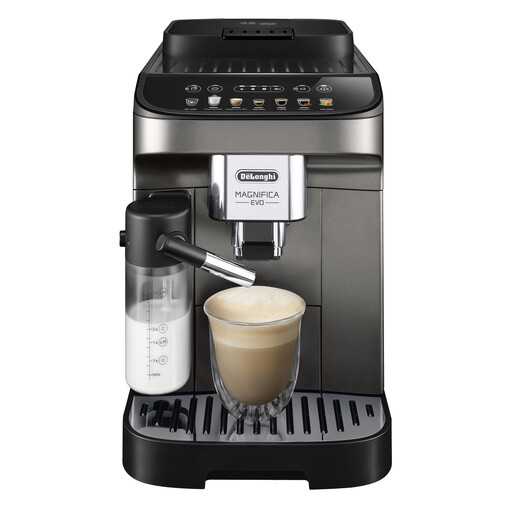
Why This Fits Their Persona: This user wants a great cappuccino or latte before the morning commute, without any fuss. The one-touch colour display and automatic milk system deliver consistent results every time, making it a reliable workhorse for a busy household.
It directly solves the "hidden cleaning burden." The LatteCrema milk carafe has an integrated auto-clean function, and the internal brewing unit is fully removable for a simple weekly rinse under the tap.
Features seven one-touch recipes, including Cappuccino and Latte Macchiato. The MyLatte function also lets you customise milk levels, so none is wasted.
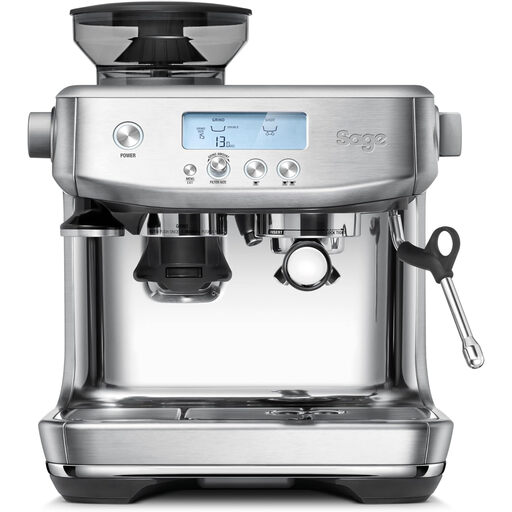
Why This Fits Their Persona: Perfect for the enthusiast who wants to replicate the third-wave café experience. It offers the manual control needed to experiment with grind size, shot timing and milk texturing for latte art, providing a rewarding, hands-on process.
It sidesteps the "frustrating learning curve" trap by providing high-quality components. The precise burr grinder, stable temperature control and intuitive LCD interface give you the feedback needed to learn and improve, rather than fighting against the machine.
The ThermoJet heating system is ready in 3 seconds, so there's no waiting. Its powerful manual steam wand creates authentic, silky microfoam essential for latte art.
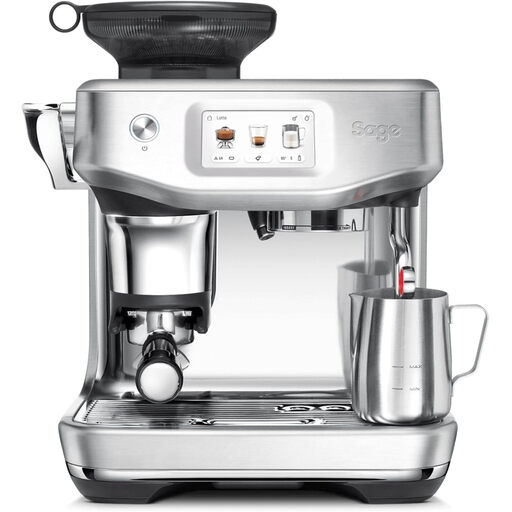
Why This Fits Their Persona: This user wants it all: barista-level control, smart assistance and the versatility to make both hot lattes in winter and genuine cold brew in summer. The guided touchscreen and automated systems bridge the gap between manual and automatic.
It completely avoids the "fake iced coffee" trap by incorporating dedicated Cold Extraction Technology. This feature uses lower temperatures to create a true cold brew or cold espresso, not just hot coffee poured over ice.
The Impress Puck System assists with dosing and tamping for a perfect puck every time. The Auto MilQ system also has settings optimised for oat, soy and almond milk.
We have compiled a complete, real-time list of products that fully satisfy these strict selection criteria and UK safety regulations.
It is generally not advisable. Dark, oily beans can leave a residue that clogs the internal grinder and brewing unit over time, potentially leading to malfunctions and affecting the taste of your coffee. For the longevity of your machine, it is better to stick with medium-roast, non-oily beans.
This depends heavily on the water hardness in your area. In hard water areas, you may need to descale every 2-3 months. Most modern machines, like the Philips EP2220/10, feature an automatic alert that tells you when it's time. Using a compatible water filter, such as the Philips AquaClean, can significantly reduce the frequency of descaling to once every few thousand cups.
The price difference typically reflects improvements in several key areas:
De'Longhi coffee machine might offer automatic frothing for both hot and cold milk, with settings for different milk types, compared to a basic manual steam wand on a cheaper model.