
24/7 Customer Support

Free returns

Same-day & Next-day Delivery

Quality Guaranteed

Unlock Your Welcome Offers: FREE Delivery | Up to 80% OFF | Free 30-day JoyPlus trial
Download the APP
A bean to cup coffee machine can make fresh coffee with far less manual work than a separate grinder and espresso machine. However, the wide range of automatic espresso machine features can make comparison difficult. Touch screens, 20-bar pumps and “professional” settings may sound persuasive, but they do not always tell you how practical a machine will be in everyday UK use.
The key is to look beyond headline claims and check the specifications that affect taste, convenience, maintenance and long-term value.
Many machines advertise 20-bar pressure, but this figure usually describes the pump’s maximum capability rather than the pressure used throughout extraction. Espresso quality also depends on grind size, dose, water temperature, pre-infusion and the consistency of the coffee puck.
A 20-bar espresso machine can be a useful specification, but it should not be the only reason to choose one. Look for adjustable grinding and temperature management as well.
A fully automatic coffee machine may prepare drinks at the touch of a button, but it still needs regular care. Coffee oils, used grounds, milk residue and limescale can affect hygiene and performance if neglected.
Before buying, check whether the brew group, drip tray, milk components and coffee-ground container are removable or dishwasher-safe. A machine that is convenient to use but awkward to clean may become frustrating in a busy household.
A coffee machine with built-in grinder is not always compact. Measure the available depth, width and height, including the space needed to open the bean hopper or remove the water tank.
A larger 1.8L or 2.8L water tank may suit several drinkers, an office or a small hospitality setting. For one or two users, a smaller machine may occupy less space and reduce the amount of water standing in the tank.
A built-in burr grinder is generally more suitable for espresso than a basic blade grinder because it is designed to produce a more consistent particle size. Consistency matters when adjusting extraction.
Check the number of settings, but do not assume a higher number automatically means better results. A 12-, 15-, 20- or 30-level adjustment range gives different degrees of control, while the grinder’s burr design and adjustment mechanism also matter.
A ceramic grinder may be appealing for users prioritising durability and lower heat generation. Stainless steel burrs can also offer precise adjustment and a robust construction. Whichever type you choose, use beans that are suitable for the machine and follow the manufacturer’s cleaning instructions.
Coffee flavour can change noticeably when brewing temperature is inconsistent. Some machines use PID temperature control to manage water more precisely, while dual-heating systems separate coffee brewing from milk steaming.
If you regularly prepare espresso and milk drinks, an espresso machine with milk frother should provide a practical steam wand or integrated milk system. A manual steam wand gives more control over milk texture, but it requires practice and cleaning after every use.
Compare:
A touch-screen coffee machine may make drink selection straightforward, but physical controls can also be reliable and easy to use. Choose the interface that suits the people who will use it most often.

Why This Fits Their Persona: Its 4.3-inch touch screen and automatic operation suit beginners who want straightforward espresso and milk drinks at home. The 1.5L tank is suitable for moderate daily use.
The removable milk tank makes routine handling more practical, while the 15 grind settings provide adjustment beyond a fixed pre-set grinder.
20-bar pump specification, built-in grinder, touch controls and an integrated milk tank.
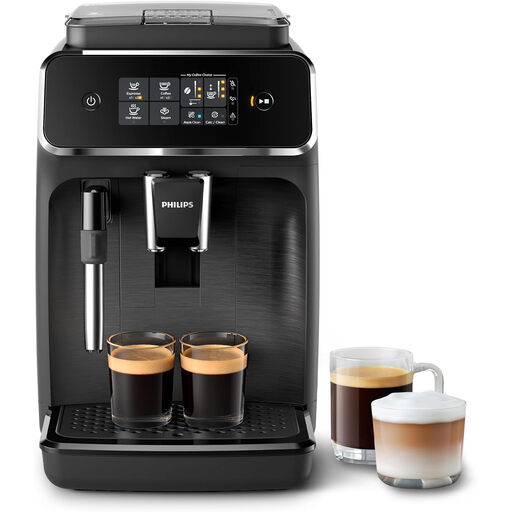
Why This Fits Their Persona: This fully automatic coffee machine offers touch selection, three strength settings and a classic milk frother for users who value repeatable daily preparation.
The removable brew group, dishwasher-safe parts and descaling alert address the common problem of difficult maintenance.
275g bean capacity, 1.8L water tank, 12-step ceramic grinder and two coffee-spout outlets.
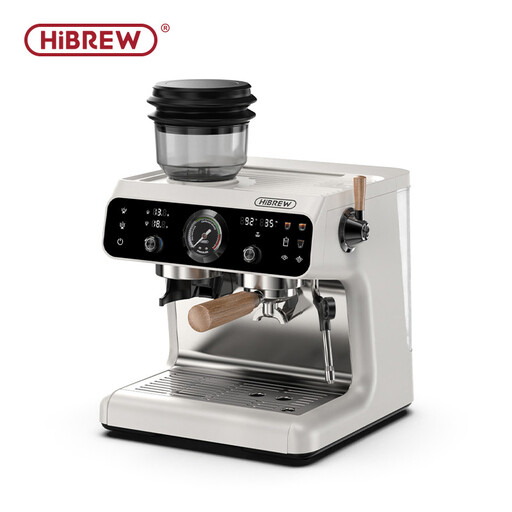
Why This Fits Their Persona: Its larger 2.8L tank and 250g bean capacity are suited to busy households, offices, cafés, hotels and restaurants with frequent drink preparation.
Dual heating reduces the need to switch between brewing and steaming functions, while PID control supports more consistent temperature management.
30 grind settings, 58mm portafilter, 20-bar pump specification and one-touch drink options.

Why This Fits Their Persona: Campers, hikers, boaters and commuters can brew without mains electricity using hot or cold water, with the included manual coffee grinder.
It does not rely on mains power or a large worktop footprint. The waterproof carrying bag supports transport, provided all components are dried before storage.
Stainless steel conical burrs, 12 grind settings, reusable filter and hot-or-cold brewing.
We have compiled a complete, real-time list of products that fully satisfy these strict selection criteria and UK safety regulations.
Use filtered water if your local supply is hard, and follow the machine’s descaling schedule rather than waiting for poor performance. Hard water can increase scale build-up, especially in frequently used machines.
For lower running costs, buy whole beans in suitable quantities and avoid filling a large hopper with more beans than you will use soon. Keep the grinder dry and remove coffee grounds as instructed. Milk systems require particular attention: wipe and purge a steam wand after use, or rinse an integrated milk path according to the manual.
A hot and cold coffee maker can be useful for iced drinks, but check whether it genuinely brews cold coffee or simply dispenses hot coffee over ice. The HiBREW H20, for example, lists dual hot and cold extraction modes, alongside a 1.8L tank and 20 grind adjustments.
Yes. Automatic grinding, dosing and brewing reduce the number of manual steps. Beginners should prioritise clear controls, adjustable strength, accessible cleaning parts and a milk system that matches their willingness to practise.
Service life depends on usage, water quality, cleaning and maintenance. Regular rinsing, descaling, grinder care and prompt replacement of filters or seals can help preserve performance. Always follow the supplied instructions and stop using a machine if its cord, plug or housing is damaged.
It normally uses whole beans, water, electricity and periodic cleaning supplies, so the cost per cup varies with bean price, drink size and usage. Preparing coffee at home may reduce the need to buy takeaway drinks, but the purchase price and maintenance requirements should be included in your comparison.