
24/7 Customer Support

Free returns

Same-day & Next-day Delivery

Quality Guaranteed

Unlock Your Welcome Offers: FREE Delivery | Up to 80% OFF | Free 30-day JoyPlus trial
Download the APP
Moving on from instant coffee or pods is a big step towards enjoying genuinely fresh, café-quality coffee at home. A bean to cup coffee machine promises just that: the aroma and flavour of freshly ground beans at the touch of a button. However, the market is filled with technical jargon and enticing features that can sometimes lead to a disappointing purchase.
As a Joybuy Product Recommendation Officer, my role is to help you navigate the options and avoid common pitfalls. Before you invest, let's look at a few frequent traps that UK buyers encounter.
To make a sound choice, focus on the core components that directly impact your daily coffee experience.
The defining feature of a bean to cup coffee machine is its integrated coffee machine with grinder. This is what delivers that unparalleled freshness. Look for machines with burr grinders (either ceramic or stainless steel), as they crush beans uniformly, unlike blade grinders which chop them inconsistently. The number of grind settings is also crucial. A machine with 12 or more steps gives you the control to 'dial in' your beans, adjusting from a fine grind for a rich espresso to a coarser one for a longer coffee, accommodating different roasts and origins.
How you enjoy your coffee will determine the right milk system for you.
This is a non-negotiable factor for the longevity and hygiene of your machine. Always check if the brew group—the internal mechanism that tamps and brews the coffee—is removable. A removable unit can be easily rinsed under the tap once a week, preventing the build-up of old coffee oils and grounds. Also, check if parts like the drip tray and milk carafe are dishwasher-safe, as this significantly eases the daily clean-up routine.
To help you narrow down the choices, we've matched a few models to common user profiles.
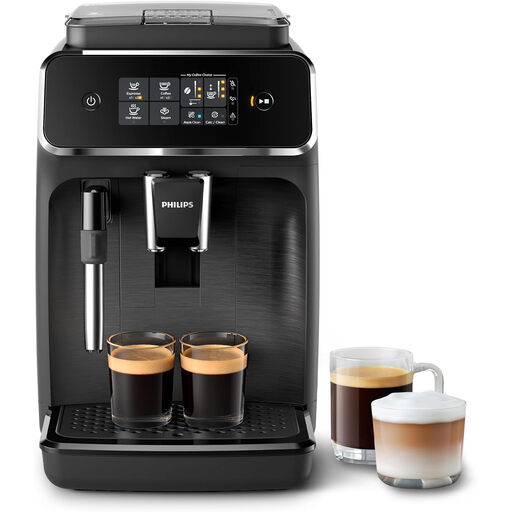
Why This Fits Their Persona: This machine is for those who want a great espresso or coffee for their morning commute without any fuss. The intuitive touch display makes it simple to select a drink, adjust the strength and go. It's a reliable workhorse for busy households.
It directly counters the cleaning trap with a fully removable brew group that can be rinsed under a tap. Key parts are also dishwasher-safe, making maintenance straightforward.
The AquaClean filter system is a standout feature, reducing the need for descaling for up to 5,000 cups. It also features a durable ceramic grinder with 12 settings.
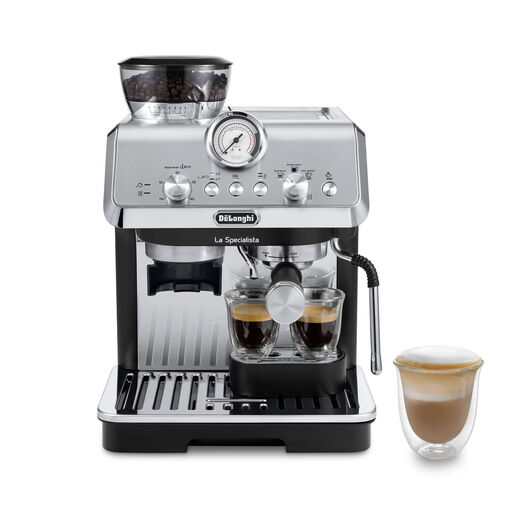
Why This Fits Their Persona: For the user who enjoys the ritual of making coffee and wants to develop their skills. This semi-automatic De'Longhi coffee machine provides the tools and control to craft drinks from scratch, from grinding and tamping to steaming milk for latte art.
It avoids the pressure myth by focusing on consistency. Its Active Temperature Control and 15-bar pump are engineered for stable extraction, not just high numbers. It's designed for hands-on use, not misleading one-touch promises.
It includes a full professional barista kit (tamper, dosing funnel and milk jug), providing excellent value and ensuring you have the right tools from day one. The My Latte Art steam wand is designed to create fine microfoam.
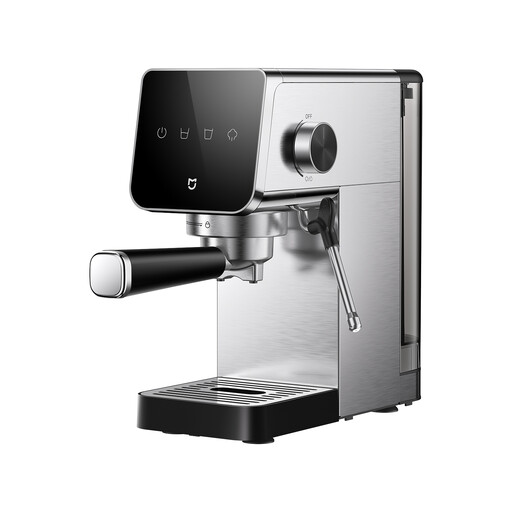
Why This Fits Their Persona: This machine is an excellent choice for those in flats or with smaller kitchens. At only 14cm wide, it offers the core functions of a proper espresso machine for home use without dominating the countertop. It's a significant step up from pods in a very small package.
It avoids the "compact with hidden flaws" trap by making its slim design the main feature. The 0.9L water tank is a known trade-off for its size, not a hidden drawback. It delivers on its promise of being a space-saver.
Its primary advantage is its exceptionally slim, stainless steel body. It also features NTC temperature control for consistency and a powerful steam wand, offering great functionality for its size.
We have compiled a complete, real-time list of products that fully satisfy these strict selection criteria and UK safety regulations.
The lifespan of a bean to cup machine typically ranges from 5 to 10 years, but this depends heavily on usage and maintenance. Regular cleaning of the brew group, emptying the drip tray promptly and periodic descaling (as prompted by the machine) are essential for longevity. Build quality also plays a part; machines with more metal components and durable ceramic grinders often have a longer service life.
While the initial investment in a bean to cup machine is significantly higher, the cost per cup is much lower. A 1kg bag of quality coffee beans can make over 120 single espressos, bringing the cost per coffee down to just a few pence. In contrast, coffee pods can cost 30p to 50p each. If you drink coffee daily, a bean to cup machine can become more economical after the first year or two.
Not at all. A fully automatic coffee machine is designed for simplicity. You just need to ensure the bean hopper and water tank are full. The machine handles the grinding, tamping and brewing with a single button press. While semi-automatic or manual machines require you to learn some basic skills, the fully automatic models are built for effortless, consistent results.