Sleepers concerned about airborne pollen
If pollen suspended in bedroom air is your main concern, look beyond a HEPA label: check that the exact model addresses pollen and that its stated output suits your room.


Choose a bedroom purifier that explicitly addresses airborne pollen and has clean-air output suited to your room, then check whether its overnight setting and replacement filters work for you. Allergy UK says running a purifier as instructed can help reduce airborne allergens, but a purifier does not stop pollen entering the room or cure hay fever.
If pollen suspended in bedroom air is your main concern, look beyond a HEPA label: check that the exact model addresses pollen and that its stated output suits your room.
For overnight use, compare the stated noise level and display-light controls for the setting you expect to run. A quiet setting may move less air than a higher fan speed.
Filter reminders, automatic operation and app scheduling may make regular use easier. Check room suitability and access to the correct replacement filter before weighing those conveniences.
Start with pollen filtration and clean-air output for the bedroom you actually use. Then consider what will let you keep the purifier running and maintain it.
| Concern | What to check | Who this matters to |
|---|---|---|
| Pollen filtration and room output | Look for an explicit pollen-filtration statement and a CADR in m³/h or coverage claim with its air-change conditions. Use your bedroom dimensions, not the floor area of your home. | I want to reduce pollen suspended in my bedroom, not choose by a filter label alone; around 36% of consumers put room-suitable pollen filtration and output first. |
| Overnight noise and light | Check the exact setting’s stated noise level in dB and whether display lights can be dimmed; consider the airflow at that setting. | When a fan runs beside my bed, I need it quiet and dim enough to leave on; for around 29% of consumers, overnight comfort is the main concern. |
| Replacement-filter upkeep | Identify the compatible filter and manufacturer’s replacement guidance, then check access to that filter. A filter-life indicator can help with reminders. | I need to be able to replace the correct filter when the time comes; around 21% of consumers make manageable upkeep their primary concern. |
| Automatic and remote control | Check the exact model for an auto mode, particle display or app scheduling, and any setup requirements. | If I want to adjust the purifier before bedtime, scheduled or remote control would help; convenience comes first for around 14% of consumers. |
A filter can capture only particles in air that reaches the machine. Coverage figures can also assume different numbers of air changes per hour.
Measure your bedroom and check the exact model’s pollen-filtration statement alongside its CADR or stated coverage conditions.
A room purifier does not prevent pollen entering on clothing or through an open window, and it does not remove pollen already settled on surfaces.
Alongside purifier use, follow NHS advice to shower and change after being outdoors, clean regularly, and keep windows and doors shut as much as possible when pollen is high.
The maintenance plan matters if you intend to run the purifier regularly. Replacement guidance and compatible filters are specific to the model.
Find the correct filter before choosing a purifier and follow the manufacturer’s replacement guidance rather than assuming a generic filter is equivalent.
A setting that delivers more air may be too disruptive for sleep, while a quieter mode may move less air.
Compare noise, display controls and room suitability at the setting you would actually leave running overnight.
Levoit offers Core 300 and Core 300S models positioned for bedrooms and airborne particles including pollen.
Philips has compact 800 and connected 800i models with published clean-air output and pollen-related filtration claims.
Meaco offers HEPA air-cleaner products and guidance on matching a purifier to the room and allergy-related use.
Dyson’s air-treatment range includes purifier and heater combinations as well as models with sealed filtration.
These purifiers offer different stated clean-air outputs and bedroom-use controls. Compare each listing’s filtration, room conditions and overnight setting against your own bedroom before choosing.
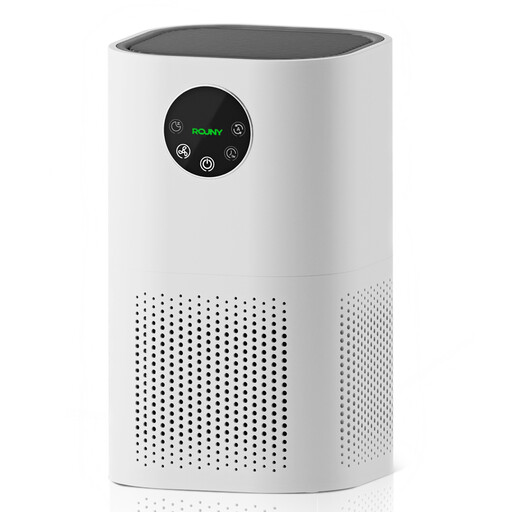 No image available
Consider this model if you want a stated clean-air output and controls for overnight bedroom use.
The title lists an H13 HEPA filter, 150 m³/h CADR, four fan speeds, an air-quality display and a sleep mode rated at no more than 25 dB.
Check the air-change conditions behind its stated 20–50 m² coverage range and identify the compatible replacement filter.
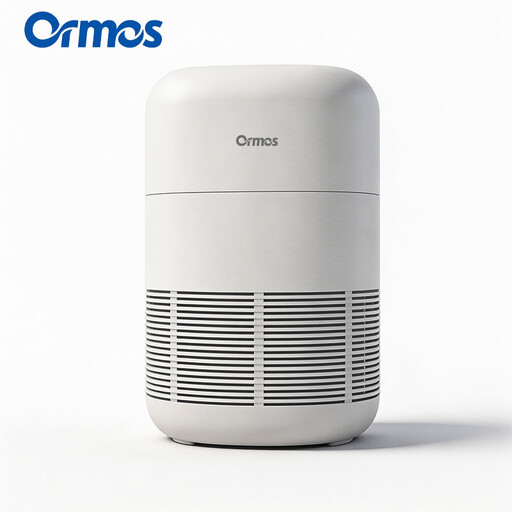 No image available
Consider this model if automatic operation and a stated clean-air output matter for your bedroom.
The title specifies a 150 m³/h CADR, H12 HEPA and activated-carbon filters, PM2.5 and TVOC sensors, and sleep and auto modes.
Check room suitability at your intended setting and identify the compatible replacement filter.
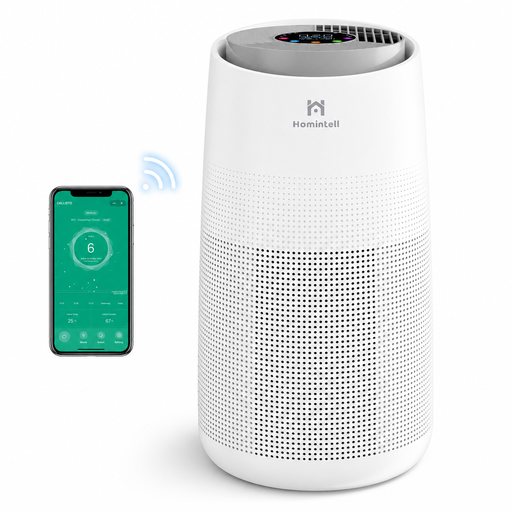 No image available
Consider this variant if you want a stated clean-air output alongside connected bedroom controls.
The title specifies H13 HEPA and activated-carbon filters, Wi-Fi control, an eight-hour timer and a 36 m² coverage claim.
Check the air-change conditions behind that coverage claim and identify the compatible replacement filter.
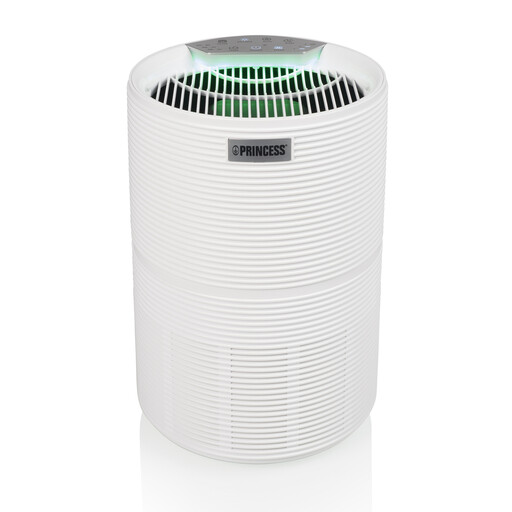 No image available
Consider this model if app control and an air-quality indicator matter alongside a stated clean-air output.
The title specifies a 160 m³/h CADR, H13 HEPA filter, built-in air-quality sensor, eight-hour timer and 55 m² coverage claim.
Check the conditions behind that coverage figure, the noise level for overnight use and the compatible replacement filter.
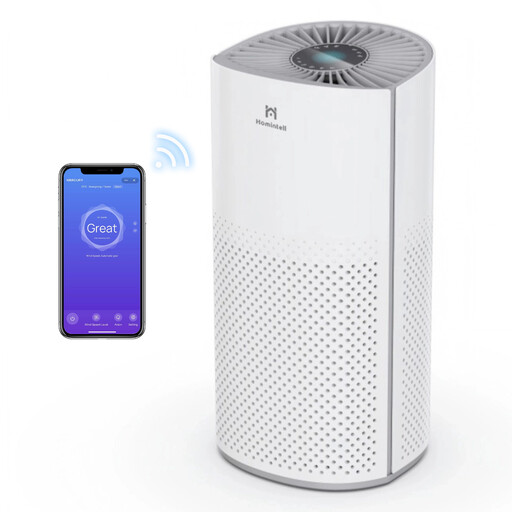 No image available
Consider this variant if you want remote control and a stated clean-air output for bedroom use.
The title specifies H13 HEPA and activated-carbon filters and Wi-Fi control.
Check the coverage conditions, the noise level for the setting you intend to use and the compatible replacement filter before choosing it for overnight operation.
No: check that the exact model’s particle-filtration description addresses pollen and that its CADR or conditional room-coverage claim suits your bedroom. A maximum area figure may assume a different number of air changes per hour from another model’s figure.
Overnight use can help reduce airborne allergens if the purifier suits the room and its operating setting is tolerable while you sleep, according to Allergy UK’s guidance on running purifiers as instructed. Check that setting’s noise and light controls, and continue practical steps to limit pollen entering the room.
Follow the guidance for your exact model and filter, as timing can vary with use and conditions. Levoit recommends replacement every 6–8 months for the Core 300 and Core 300S; a filter-life indicator on a different model does not make that interval universal.
No. The NHS says hay fever cannot be cured. A purifier may help with pollen suspended in bedroom air, but it does not replace other pollen-control measures or appropriate advice when symptoms remain troublesome.