If shower moisture reaches your bedroom despite working bathroom ventilation, consider a dehumidifier with humidity control, a noise specification you can live with and a practical way to empty or drain it. Address poor extraction, leaks or persistent damp at their source: a bedroom dehumidifier does not replace those measures, and an ordinary plug-in unit should not be assumed suitable for a wet bathroom.
Who this is for
Light sleepers with bedroom condensation
If moisture reaches your bedroom after a shower, compare the noise stated for the mode you would use overnight. Humidity control matters too, so you can choose a setting rather than leave the machine running continuously at full output.
Flat dwellers managing occasional shower moisture
In a smaller home where steam can reach the sleeping room, check bathroom extraction before choosing a unit. Then consider where a dehumidifier would stand and whether its tank is manageable.
Renters facing recurring damp or mould
A dehumidifier may help manage moisture in the room, but it cannot repair a leak or failed ventilation. Record and report recurring problems rather than treating an appliance as the whole solution.
What matters when choosing
Improve bathroom extraction
Choose this when: The extractor is not working, vents are blocked, or damp persists beyond occasional condensation.
Trade-off: Ventilation deals with moisture nearer its source, but may increase heating demand in cold weather; a dehumidifier cannot repair a building defect.
Control moisture in the dry bedroom
Choose this when: Shower moisture still reaches the bedroom while bathroom ventilation is in use, and you need control in the sleeping space.
Trade-off: A compressor dehumidifier makes noise and collects water; its quoted extraction capacity does not guarantee the same result in your room.
| Concern | What to check | Who this matters to |
|---|
| Quiet overnight control |
Compare quoted noise for the intended mode, room suitability and whether a humidity target can be set. |
If the unit may run while I sleep, fan noise and its response to changing humidity matter more than a headline extraction figure. Roughly 29% of consumers would put quiet overnight control first. |
| Moisture at source |
Check that the bathroom extractor works and its route is unobstructed; investigate leaks or persistent damp. |
When condensation keeps returning, I want to stop shower steam spreading rather than rely on a larger appliance. About 29% of consumers would make source control their primary concern. |
| Automatic operation |
Compare the exact model’s humidity settings, cycling behaviour and stated input power under relevant operating conditions. |
If humidity rises after bathing but is not always high, I want the machine to respond to my chosen setting without running unnecessarily. For roughly 24% of consumers, controllable operation would come first. |
| Water handling and placement |
Check tank size, drain-hose provision and whether a suitable dry location and drain route are available. |
If emptying a tank is awkward, I need a water-handling arrangement I can maintain without putting a mains appliance in a wet room. Around 18% of consumers would prioritise placement and water handling. |
Buying pitfalls
-
Using an appliance instead of finding the moisture source
Energy Saving Trust distinguishes condensation that may improve with ventilation from penetrating or rising damp, which needs different action. A dehumidifier cannot repair a leak or failed extraction.
Check the bathroom fan and vents, look for plumbing or building defects, and investigate damp that persists rather than choosing a larger machine.
Running the appliance while the underlying defect remains also means ongoing electricity use.
-
Putting an ordinary plug-in unit in a wet bathroom
Bathrooms present particular electrical risks. A product’s ability to collect moisture does not establish that it can safely be used beside a shower.
Choose a suitable dry room unless the exact product instructions and electrical installation permit another location.
-
Choosing by litres per day alone
Manufacturer extraction ratings are given for specified conditions; they do not establish how much water a machine will collect in your bedroom. Noise, humidity control and operating conditions also affect the choice.
Compare the exact model’s full specification against the room and the times you expect to use it.
-
Overlooking the tank or drain route
A full tank can interrupt operation. Continuous drainage is useful only where a suitable route can be installed as the manufacturer directs.
Decide where the unit will stand and whether you can empty its tank or arrange a drain before buying.
Brands to consider for this use
Meaco
Meaco offers a 12 L low-energy dehumidifier positioned for smaller homes and flats.
- For that model, Meaco lists an adjustable humidistat from 30% to 80% and noise of up to 41 dB.
- Check whether that model’s stated noise and water-handling arrangements suit your bedroom; its listed features do not resolve inadequate bathroom extraction.
Ebac
Ebac positions its Ebac 15 for flats, bungalows and smaller homes.
- Ebac describes a dial humidistat and a two-year warranty for the Ebac 15.
- Ebac describes the model as suited to humidity levels that do not change; consider how well its control fits moisture that rises after showers.
Pro Breeze
Pro Breeze offers a 12 L compressor model specified for rooms up to 15 m².
- For that model, Pro Breeze lists a humidistat, continuous drainage, a 1.8 L tank and 38 dB noise.
- Its stated operating range is 5–32°C; check the intended room temperature and whether the tank or a drain route will be practical.
De'Longhi
The De'Longhi DEP214 combines humidity controls with a 4 L tank and continuous drainage.
- De'Longhi lists an adjustable humidistat, hygrometer and 38 dB noise for the DEP214.
- Its quoted moisture-removal capacity is measured under a stated test condition, not a promise of the same extraction in a bedroom.
Joybuy product choices
These dehumidifiers offer different humidity-control and water-handling options for use in a suitable dry room when shower moisture reaches the bedroom. Check the exact model’s noise and operating conditions before choosing one for overnight use.
 No image available
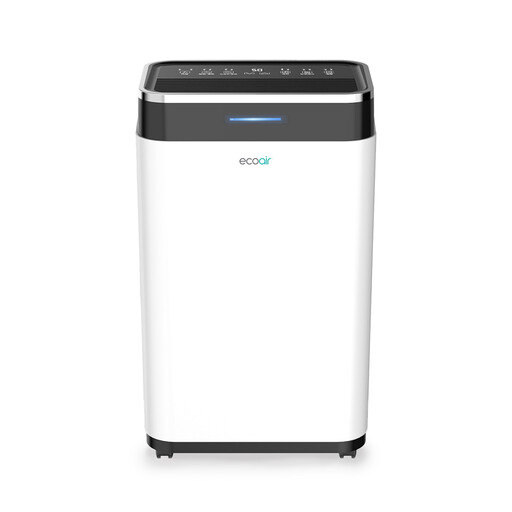
EcoAir DC18 MK2 Compressor Dehumidifier, 18 L/day, 6.5 L tank
Consider this model if you want a humidistat and a larger tank for a dry bedroom or adjacent room.
The title specifies a maximum extraction rating of 18 L/day and a 6.5 L tank; the product information also describes a continuous-drain option. Check its noise level and operating-temperature range before planning overnight use.
Joybuy
 No image available
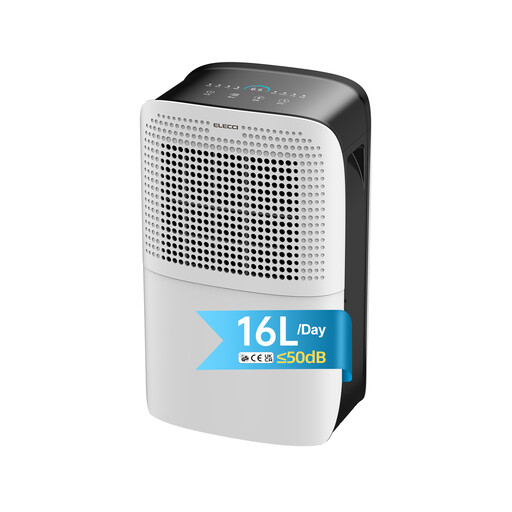
ELECCI 16 L/day Dehumidifier, 3.1 L tank and drain hose
Consider this model if a tank and drain-hose option would help you manage moisture that reaches a dry room after showers.
Its title specifies four modes and a 24-hour timer. Confirm the noise level and operating-temperature range for your intended bedroom use; the 16 L/day rating does not establish extraction in that room.
Joybuy
 No image available
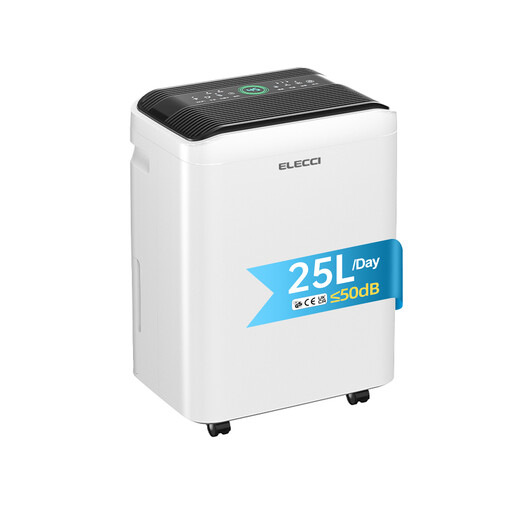
ELECCI 25 L/day Dehumidifier, 4.8 L tank
Consider this model if its tank and continuous-drain arrangement suit your dry-room placement.
The title specifies three speeds, a 24-hour timer and a drain hose. Its maximum 25 L/day rating is stated at 30°C and 80% relative humidity, so do not treat it as expected bedroom extraction. If a settable humidity target is essential, confirm that function for this exact model.
Joybuy
 No image available
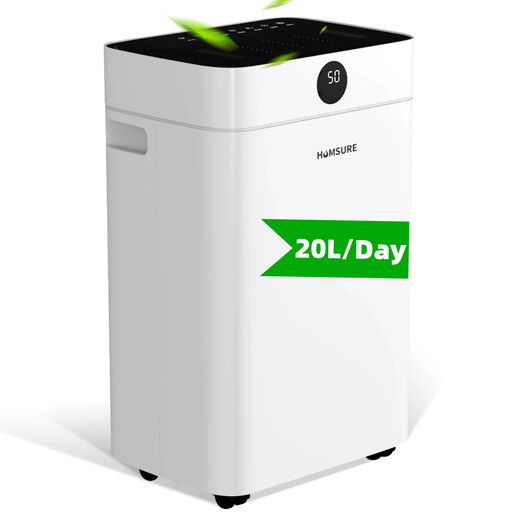
HUMSURE 20 L/day Dehumidifier, 2.8 L tank
Consider this model if you want to compare a tank with continuous drainage for moisture control in a suitable dry room.
The title specifies a 24-hour timer and a room rating of 50 m². Check bedroom suitability, the noise level and the operating-temperature range before relying on it overnight; the 20 L/day figure is a maximum rating.
Joybuy
 No image available
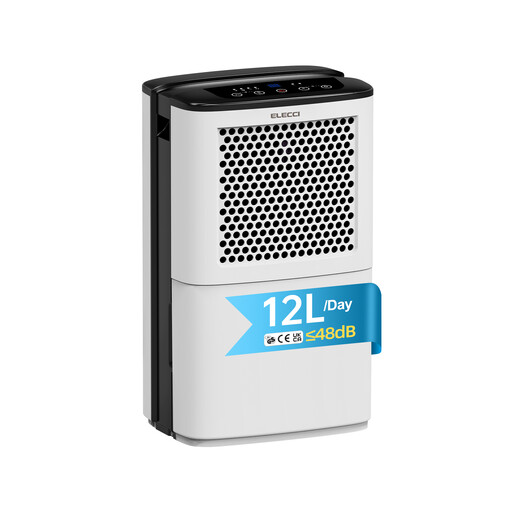
ELECCI 12 L/day Dehumidifier, 3.8 L tank and drain hose
Consider this model if its stated room rating and water-handling options fit the dry room where you plan to use it.
The title specifies a 24-hour timer and a rating for rooms up to 25 m². Its maximum 12 L/day extraction is stated at 86°F and 90% relative humidity; check bedroom suitability, noise and operating temperature before choosing it for overnight use.
Joybuy
Common questions
Should I put a plug-in dehumidifier in the bathroom after a shower?
Do not assume an ordinary plug-in dehumidifier is suitable for a wet bathroom. Electrical Safety First highlights the electrical risks in bathrooms; choose a suitable dry bedroom or adjacent room unless the exact product instructions and electrical installation permit bathroom use.
Will a dehumidifier fix shower-related damp on its own?
A dehumidifier can help manage moisture in a room, but it cannot fix a leak or ineffective bathroom ventilation. Energy Saving Trust advises identifying the source of damp: condensation may improve with ventilation, while penetrating or rising damp needs different action.
What should I do after showering if steam reaches my bedroom?
Use the bathroom extractor and keep its ventilation route clear while limiting the spread of steam into the bedroom. South Gloucestershire Council advises closing internal doors while showering and ensuring bathroom fans extract moisture effectively; consider a dehumidifier in the dry bedroom if moisture still reaches it.
What humidity setting should I choose for a bedroom dehumidifier?
Start with the guidance for the exact model and adjust its setting to how the room is used. Pro Breeze recommends 40%–60% for its cited 12 L model, while the cited Meaco model allows settings from 30% to 80%; those model-specific figures are not a universal target.
If I rent in England, should I report recurring mould or damp?
Yes—report recurring damp or mould to your landlord in writing rather than relying on a dehumidifier instead of addressing its cause. Government guidance for rented housing in England calls for the underlying issue to be identified and tackled; the route for getting it resolved depends on your tenancy and housing circumstances.


