Bedside silent-film viewers
If you watch from bed and can darken the room, a projector that aims at a wall or ceiling without a permanent mount may suit your setup. BenQ positions its GV50 specifically for bedside ceiling projection.


For silent films in a bedroom you can darken, start with a projector you can aim comfortably from your viewing position; a flexible portable 1080p model may be more useful than extra brightness. Consider a brighter 4K model if you also need a larger image, cannot control the room light or regularly watch modern 4K material. Preserve a film’s original framing rather than stretching a 4:3 picture to fill a 16:9 image.
If you watch from bed and can darken the room, a projector that aims at a wall or ceiling without a permanent mount may suit your setup. BenQ positions its GV50 specifically for bedside ceiling projection.
If retaining the original composition matters to you, check how your film source displays 4:3 material on a 16:9 projector. The British Film Institute identifies 4:3, or 1.33:1, as an early cinema standard.
If the projector will also show modern 4K films or work in a room with more ambient light, brightness and optical placement controls may matter more to you than a compact bedside design. Check those features against both rooms.
Work out where the projector can stand and where you will look first. Then check the film’s framing, the light you cannot block and the equipment you will use for playback.
| Concern | What to check | Who this matters to |
|---|---|---|
| Bedside placement | Check the available surface, projection direction and stand adjustment; leave room for ventilation. | If I watch from bed, I need to aim the picture comfortably without fitting a permanent mount. Around 37% of consumers put placement first. |
| Original film framing | Check whether your player or app can show a 4:3 source without stretch or zoom. | I would rather see side bars than distort the composition of a 4:3 film. For around 27% of consumers, faithful framing is the primary concern. |
| Room lighting | Compare the room light you can control with your planned image size; note the brightness unit used for each model. | When I cannot fully darken the bedroom, I need to judge whether the image will work at my chosen size. Image output comes first for around 18% of consumers. |
| Film source and sound | Confirm the required player connection, app access and headphone or speaker options for the exact model. | If my films come from a disc player or streaming app, I want the soundtrack to work without an awkward bedside setup. Around 18% of consumers chiefly prioritise source and audio convenience. |
The British Film Institute identifies 4:3, or 1.33:1, as an early cinema standard. Stretching a 4:3 transfer across a 16:9 image changes its proportions.
Look for an original or 4:3 display setting in the player or app, and allow for side bars.
Extra light output does not solve a projector that cannot be aimed from your available furniture. BenQ’s GV50 bedside base and Epson’s adjustable EF-71 stand illustrate different placement approaches.
Check the bedside surface, projection direction and distance before deciding how much output your room needs.
In the UK, the service and type of programme matter, not whether you watch on a projector. TV Licensing says watching or downloading programmes on BBC iPlayer requires TV Licence coverage.
Check the conditions for the exact service and programme you intend to watch, particularly if you use BBC iPlayer or watch live television.
A silent-film presentation may include a musical score, while fan sound and speaker clarity will depend on how the projector works in your room.
Try a representative film at your usual listening level and check the exact model’s connections if you plan to use headphones or an external speaker.
An external audio setup can mean more equipment and connections beside the bed.
BenQ’s GV portable range is relevant if bedside or ceiling-facing projection is your main requirement.
Epson’s Lifestudio Flex EF-71 is a portable Full HD option to examine when stand adjustment and integrated viewing features matter.
XGIMI’s HORIZON 20 is relevant if the same projector must also serve larger images or modern 4K viewing.
These portable projector listings are relevant to bedroom placement and connected film viewing. Check each model’s position in your room, your playback source and how it handles a 4:3 film before choosing.
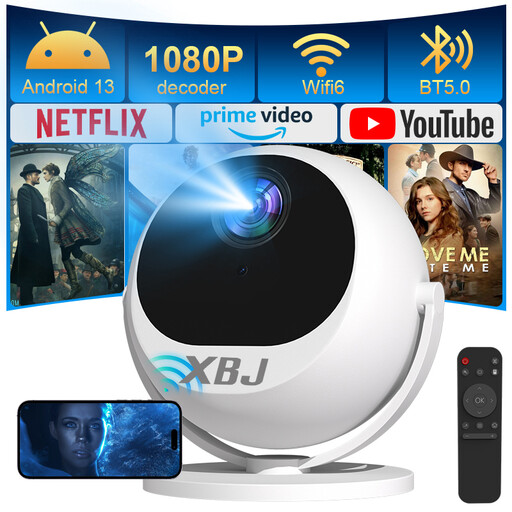 No image available
Consider its stated 360° rotation if you need to aim a picture from a flexible bedroom position. The listing describes Full HD 1080P, 500 lumens, auto keystone adjustment and Wi-Fi, Bluetooth and HDMI connectivity. Check the 4:3 playback setting and listen for fan noise from the bed.
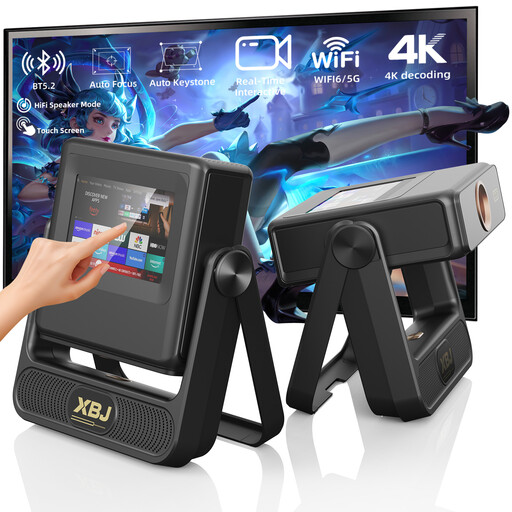
 No image available
Its listed rotation may help where the projector needs to sit away from a straight-on wall position. The title states native 1080P, 900 ANSI lumens, Android 14 and auto keystone adjustment. Assess the image under your bedroom lighting, and confirm 4:3 playback and bedtime fan noise.
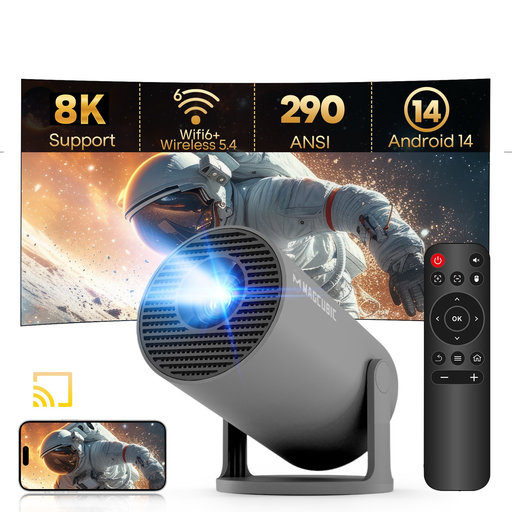
 No image available
Consider this listing if you want its stated native 1080P picture and automatic focus and keystone features in a bedroom setup. The product information gives conflicting brightness figures, so confirm the exact variant’s figure before using it to judge suitability. Test your film’s 4:3 framing and the projector’s sound from your viewing position.
 No image available
Its listed 180° rotating stand may be useful if you need to change projection direction beside the bed. Native resolution is 720p; support for a 1080p source does not make the projected image native 1080p. Check whether its image suits your planned size, and preserve 4:3 films with suitable playback settings rather than stretching them.
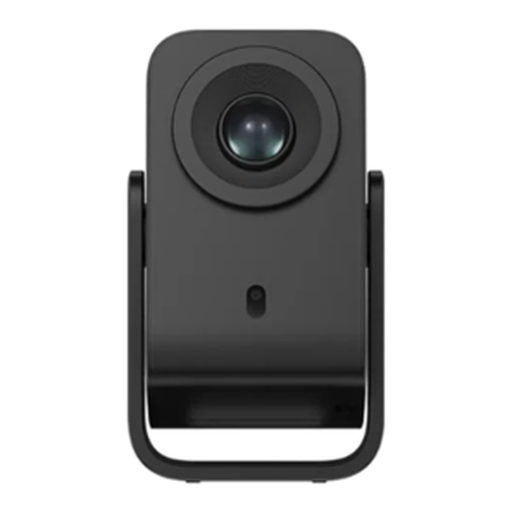 No image available
Consider the TCL C1 if you want a portable Full HD listing for connected film viewing. Its title also says 4K supported, which is not a claim of native 4K resolution. Confirm that its adjustment range allows the bedroom position you need, and test the image, 4:3 playback and fan noise in that position.
Not if you keep the film’s original aspect ratio. The British Film Institute identifies 4:3, or 1.33:1, as an early cinema standard; a correctly displayed 4:3 transfer will have side bars in a 16:9 image area. Check the settings on the player or app you will actually use.
Choose brightness with your room lighting and planned image size in mind, rather than using one number for every bedroom. Epson’s UK buying guide places 500–1,500 lumens in its indoor, controlled-lighting range for portable projectors. If light remains in the room, check how a candidate performs at your intended image size and note whether competing brightness figures use the same unit.
In the UK, the projector itself does not determine the requirement; what you watch and where you watch it matter. TV Licensing states that watching or downloading programmes on BBC iPlayer requires TV Licence coverage. Check its conditions for the particular service and programme before viewing.
Play a representative film with its musical accompaniment at the volume you normally use in bed. Listen from your pillow position, then check the exact projector’s connections if you would prefer headphones or an external speaker.