Viewers who move the projector
If you watch from bed and want to switch between a wall and ceiling, look for a workable position and adjustment features rather than planning around a permanent mount.


Choose a portable projector if you need to move it between bedroom positions, a short-throw model if there is little distance to the wall, or a conventional home-cinema model if you have room for a more fixed setup and want to prioritise image controls and external connections. Before deciding, check the exact model’s image size at your available distance, how you will play concert films and how you will connect your preferred audio equipment.
If you watch from bed and want to switch between a wall and ceiling, look for a workable position and adjustment features rather than planning around a permanent mount.
If the bed or other furniture restricts the projector-to-wall distance, a short-throw model is worth considering—but its image must still fit your usable wall.
If picture adjustment and connections to external sources or sound equipment matter most, you may be willing to measure and accommodate a less portable projector.
Start with the space between your intended projector position and the wall; that determines which setups deserve a closer look.
Consider it when: You need to move the projector or aim it at different bedroom surfaces, usually with the room darkened.
Trade-off: Flexible positioning does not guarantee that your intended image size will fit; check the model’s distance guidance and stated light output.
Consider it when: Furniture limits how far from the wall you can place the projector.
Trade-off: Short throw addresses depth, not wall size or projector height. BenQ states that its Full HD TH671ST produces a 100-inch image from 4.9 ft.
Consider it when: You have enough throw distance for a more fixed position and value optical adjustment and external-source connections.
Trade-off: Measure the exact throw range. Epson’s lamp-based EH-TW7100 offers lens shift and zoom, but its lamp terms and replacement arrangements also warrant a check.
| Concern | What to check | Who this matters to |
|---|---|---|
| Image fit | Measure usable wall dimensions and lens-to-wall distance; use the exact model’s throw table or calculator. | If furniture fixes where I can put the projector, I need to know the image will fit before choosing a screen size. Around 36% of consumers may put placement first. |
| Picture priorities | Check the exact model’s resolution, compatible source formats and available optical adjustments. | For concert footage, I would rather make room for picture adjustment and my preferred playback format than favour a smaller unit. Picture quality may be the primary concern for around 29% of consumers. |
| Playback and sound | Confirm support for your content source and the connections needed for headphones, speakers or a soundbar. | I want to start a concert film without juggling devices, while keeping a workable route to the sound equipment I use. Around 21% of consumers may prioritise this setup need. |
| Room lighting | Decide how far you can darken the bedroom, then compare stated light output on a like-for-like measurement basis. | When I cannot reliably block room light, I need to consider that constraint before favouring portability. Light tolerance may come first for around 14% of consumers. |
A quoted maximum does not establish what the projector can produce from your bedside shelf or other intended position. Throw distance and image width vary by model.
Measure the wall and lens-to-wall distance, then check the exact model’s throw table or calculator. BenQ’s worked example uses 8.2 ft for a 100-inch image at a 1.13:1 throw ratio; it is not a distance to apply to every projector.
If the planned position cannot produce the image you want, you may have to change the mount or screen arrangement.
Projector listings here include ISO lumens, ANSI lumens and Epson’s white and colour light output. A larger number measured on a different basis does not establish how two models will look in your bedroom.
Check the measurement unit on each exact model, control room light where possible and compare the output alongside your planned image size.
App support, HDMI inputs and audio connections differ. Built-in speakers alone do not tell you whether your preferred streaming device or soundbar will connect as intended.
Identify your content source and audio device before buying, then check the model’s UK app support and connection specifications.
Your chosen setup may need a separate streaming device, cable or audio adapter.
LED and lamp-based projectors have different ownership considerations. XGIMI states an expected 25,000-hour LED light-source life for the Elfin Flip; Epson describes lamp light sources for the EH-TW7100 and EH-TW840.
For the exact model, check the stated lifetime conditions, warranty and replacement arrangements rather than treating a light-source label as a running-life guarantee.
A lamp-based projector may require a replacement lamp and time for servicing.
Its Elfin Flip is an example to examine if you want a compact projector that can be repositioned for bedroom viewing.
The TH671ST and GP520 illustrate different BenQ routes: short-throw Full HD placement and a 4K UHD model with additional audio-connection options.
Its EH-TW7100 and EH-TW840 provide examples of more conventional lamp-based home-cinema setups.
These projectors offer different ways to set up bedroom concert-film viewing, from portable smart models to one that uses an external content source. Check image fit and your intended audio connection for each model rather than assuming a shared setup.
 No image available
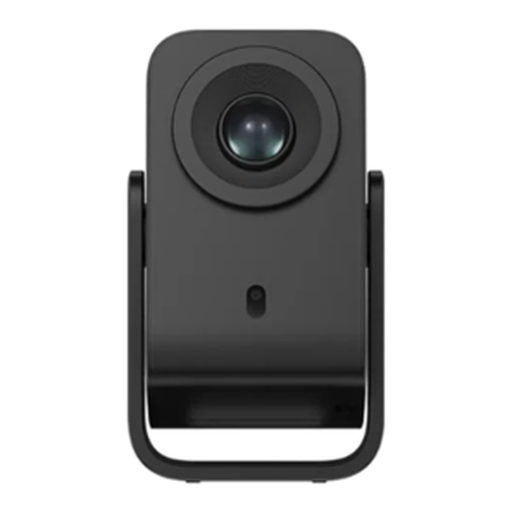
Consider its rotating design if you want to change projection direction in the bedroom, provided the intended image fits your available distance.
The listing names native 1080p, Android 14, 180° rotation, automatic keystone correction and a stated 900 ANSI lumens. Check support for the streaming apps you use and the exact image size at your planned position.
 No image available
Consider it if you plan to connect an external source for concert films and can establish a suitable position in the room.
The listing states Full HD 1080p, 4K input support, keystone correction and dual stereo speakers. Check its throw guidance for your intended image and confirm the connection needed for your audio setup.
 No image available
Its portable format may suit a bedroom where you want to put the projector away between viewing sessions.
The listing names 1080p Full HD and 4K input support. Check the image size at your available distance, support for your preferred apps and whether the stated battery playback time suits a full concert film.
 No image available
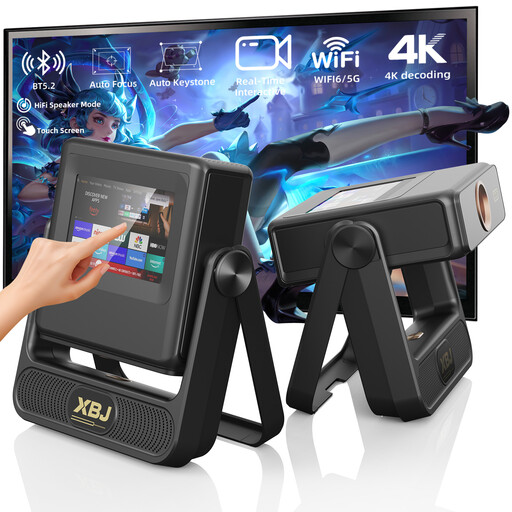
Consider its adjustable projection direction if wall or ceiling viewing is part of your bedroom plan.
The listing names native 1080p, 4K input support, an Android system, automatic focus and keystone correction, and a stated 900 ANSI lumens. Confirm the throw distance and the external audio connection you need.
 No image available
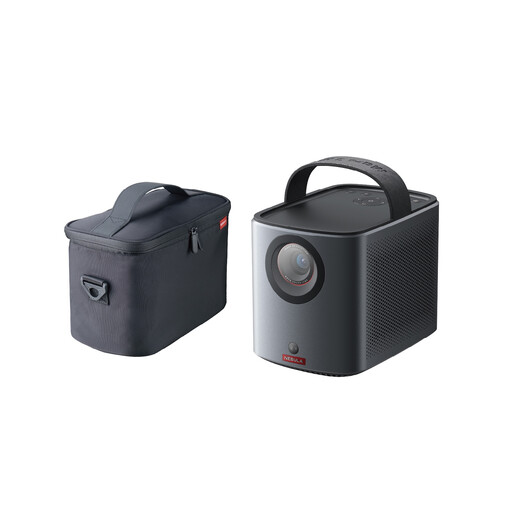
This bundle may suit viewers who want to move the projector or store it between concert films.
The bundle includes a carry case. Check the projector’s image-size guidance, compatibility with your preferred streaming service and connections for any external sound equipment.
Measure both the usable wall and the distance from the proposed lens position to that wall, then consult the exact projector’s throw table. In BenQ’s worked example, a 100-inch 16:9 image is about 7.2 ft wide and needs 8.2 ft at a 1.13:1 throw ratio; another model may need a different distance.
Only if a suitable ordinary-throw position will not fit your room. BenQ states that its short-throw TH671ST produces a 100-inch image from 4.9 ft, but you should still check usable wall size, projector height and the exact model’s placement guidance.
They may suit casual listening, but choose based on how you want to hear the film rather than speaker wattage alone. Check the exact projector’s audio connections against your headphones, speakers or soundbar before buying.
Confirm that the exact model supports the services you use in the UK, as well as your preferred way to connect external devices and audio. Check the manufacturer’s stated software and security-update support if the projector will connect to your network.
For most UK distance sales of goods, GOV.UK explains that consumers can cancel up to 14 days after delivery; the Consumer Contracts Regulations define the period by when the consumer or their nominated recipient receives the goods. Check how to notify the seller and return the projector, including any applicable exception. An additional retailer return scheme is separate from cancellation rights, while a faulty or misdescribed projector raises different remedies.