Light sleepers beside the sofa
If the fan may run while you sleep, adjustable airflow, a timer and unobtrusive night-time controls matter alongside its sound.


Choose a compact desk fan if you mainly want a direct breeze beside the sofa and have room for it on a nearby table. If you want to direct air further around the bedroom, consider a circulator with horizontal and vertical oscillation; if the fan must move between table and floor, consider a convertible model. For overnight use, check the noise setting, controls and timer rather than relying on a quiet-sounding product description.
If the fan may run while you sleep, adjustable airflow, a timer and unobtrusive night-time controls matter alongside its sound.
If the fan cannot sit close to the sofa, you may want to aim air around more of the room instead of keeping a breeze on one seat.
If you plan to use the fan beside the sofa and later near the bed, both its table configuration and its floor position need to fit the available space.
Start with where the fan can stand and where you want its airflow to reach. Then decide how much control you need at night or when moving it between the sofa and bed.
Choose when: A nearby side table can hold the fan and a direct breeze at the sofa is the main aim.
Trade-off: Its table-height position offers less flexibility if you later want airflow from the floor.
Choose when: You want to redirect air around the bedroom rather than aim it only at the sofa.
Trade-off: A stated airflow distance does not tell you how the fan will feel in your particular room layout.
Choose when: You expect to alternate between a table beside the sofa and a floor position near the bed.
Trade-off: The base and extended height also have to work in both positions.
| Concern | What to check | Who this matters to |
|---|---|---|
| Airflow beyond the sofa | Check for horizontal and vertical movement, then consider where the fan can stand without an obstructed airflow path. | If I cannot place the fan close to the sofa, I want to direct air further around the bedroom. Around 33% of consumers put broader airflow first. |
| Overnight use | Check which setting a stated noise figure applies to, plus the lowest speed, timer and night-time display controls. | When I settle down to sleep, I want airflow I can adjust without a distracting sound or display. Low-distraction operation comes first for around 27% of consumers. |
| Table fit | Measure the available width and depth; check tilt and oscillation if you need to aim a compact fan. | My sofa-side table has limited room, so a fan that fits and gives me a nearby breeze matters most. Around 20% of consumers prioritise compact placement. |
| Flexible positioning | Check both fan heights, the base footprint and whether a remote and timer are included. | If I move between the sofa and bed, I want to change the fan’s height or operate it from where I am sitting. Flexible positioning is the main concern for around 20% of consumers. |
A compact desk fan can be aimed at the sofa, while a circulator with movement in two directions offers more ways to aim air elsewhere in the room. Neither feature tells you exactly how airflow will feel around furniture.
Decide where the fan will stand in relation to the sofa and bed. Look for tilt and oscillation for a nearby breeze, or documented horizontal and vertical movement if you need to redirect air more widely.
Meaco’s stated 29 dB for the MeacoFan 1056 and Duux’s stated 13 dB for Whisper Flex 2 are manufacturer figures for different models; they are not a like-for-like room test.
Check the operating setting behind a noise figure and whether the fan has a usable low speed, timer and night-time display controls.
A fan that changes height still needs a suitable base position on the table and enough clearance when standing on the floor.
Measure the intended table, floor space and cable route. Duux states that Whisper Flex 2 changes from a 54 cm table fan to a 92 cm standing fan, so check which configuration suits each location.
Moving a fan closer to the sofa can put pressure on a cable or lead. London Fire Brigade warns that overloaded extensions and coiled cable drums can overheat.
Keep the cable out of walking routes, do not use a damaged lead or patch it with tape, and fully unwind a cable drum. If an extension is necessary, follow London Fire Brigade’s advice to use a suitable fused inline type rather than a plug-in cube.
Its MeacoFan circulator range is relevant if you want to aim airflow beyond the nearest seat.
Whisper Flex 2 is a reference point for changing between sofa-side table placement and floor placement.
Options include a conventional 12-inch desk fan and a separate 16-inch model that changes between desk and pedestal use.
The Cool CF1 is a desk-fan option for consumers who specifically want a design without exposed fast-spinning blades.
These products cover different ways to move air near a bedroom sofa, including a circulator, portable personal fans and a floor-standing fan heater with a cooling-fan function. Check placement and overnight controls for the particular model before choosing.
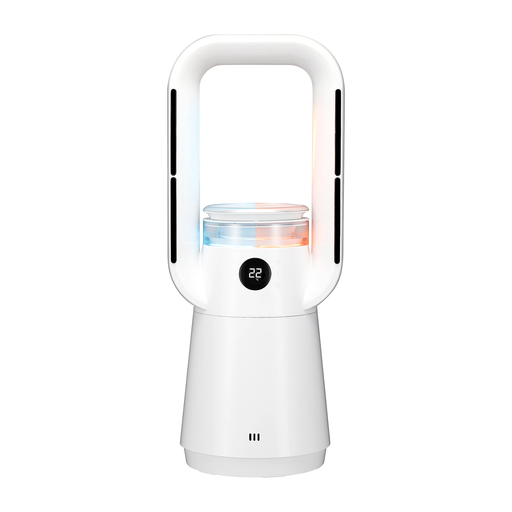 No image available
Consider this model if you want a cooling-fan function with airflow that can sweep beside the sofa. The product name specifies 65° oscillation and also identifies heater, humidifier and air-purifier functions. Check its dimensions against the intended position and confirm the night-time controls you need; oscillation alone does not establish how air will move through your room.
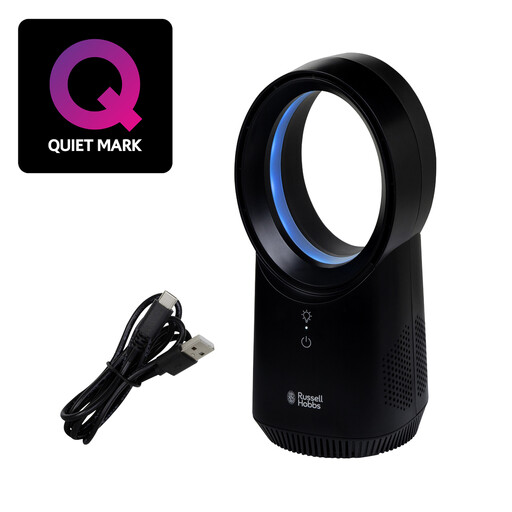 No image available
This desk format is an option for a nearby table when cordless positioning is useful. Its product name specifies three speed settings and USB charging. If you need the breeze to sweep across the sofa or run for a particular period, check the oscillation, timer and battery-runtime details before choosing it.
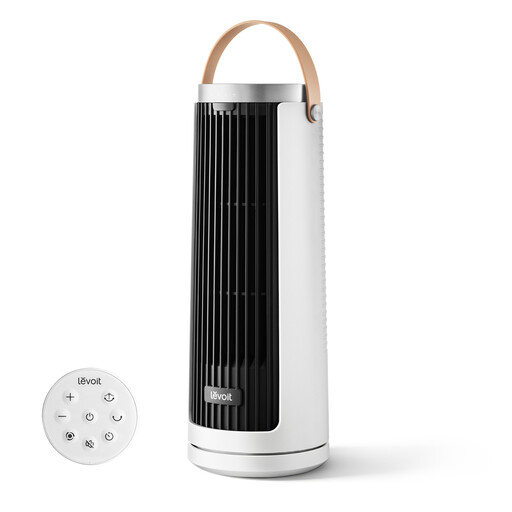 No image available
Consider this portable fan for personal airflow near a bedside or sofa-side table. Its product name specifies USB Type-C recharging and multiple airflow modes. Check its dimensions and battery runtime for your intended position and duration of use, and confirm whether it has the direction controls or timer you want.
 No image available
This is a floor-standing fan heater rather than a dedicated desk fan, so consider it only if a floor position and its cooling-fan function suit your sofa-side setup. Its product name specifies 70° oscillation and an electronic thermostat for the heater. Check its operating modes and fan controls for the airflow you want without heating.
A desk fan can direct a breeze near the sofa, but wider airflow depends on its controls, position and the room layout. If the fan must stand away from you, check for oscillation and tilt; Meaco states that the MeacoFan 1056 has both horizontal and vertical oscillation, though that does not establish how it will feel in every bedroom.
Check the noise setting behind any stated dB figure, the lowest usable speed, timer and night-time display controls. Meaco and Duux publish noise figures for the MeacoFan 1056 and Whisper Flex 2 respectively, but those manufacturer figures are not a standardised comparison between the models.
Use a stable position that suits the fan’s intended table or floor configuration, and keep its cable clear of places where it could be trapped or tripped over. Measure the available surface or floor space before buying a larger or convertible model.
An extension lead can be used if it is suitable for the connected appliances and is not overloaded. London Fire Brigade advises using a fused inline extension rather than a plug-in cube, fully unwinding cable drums and replacing worn leads instead of attempting a tape repair.
Not necessarily: the Department for Business and Trade’s guidance for Great Britain says CE marking continues to be recognised alongside or in place of UKCA marking where the relevant product requirements are met. That guidance covers England, Scotland and Wales, not Northern Ireland; check the listing and seller documentation for the market in which you will use the fan.