Choose a bedroom TV by checking whether it fits your viewing position, how it handles fast football action and what reflections it will face during the match. OLED is worth considering for a room you can keep dim, while a bright room calls for close attention to the exact TV’s reflection-handling features; neither panel label establishes how live football will look. Check sound and access to the broadcaster before deciding.
Who is this for?
Fast-action football viewers
If following the ball through passes and camera pans is your priority, look beyond a gaming refresh-rate label. Which? assesses motion stability in fast-action scenes separately from other picture qualities, so check evidence for the exact TV and try its picture settings with sport if you can.
Space-conscious bedroom upgraders
If furniture, wall space or your viewing position limits the screen size, measure the intended location before choosing a model. LG UK lists a 42-inch OLED evo C6, illustrating why it is worth checking the available sizes within a range rather than assuming every series starts at a large size.
Daytime and mixed-use viewers
If the screen will face daylight or lamps, check reflection handling for the exact model and size. Samsung UK, for example, specifies an anti-reflection screen for its QN90D; that feature should not be assumed for another Samsung TV. Check app access and the energy label if the TV will also be used regularly for streaming.
What matters when choosing?
Start with the space and lighting you have, then assess football motion on the exact model. An OLED, Mini LED or QLED label can narrow your search, but model-specific features and broadcast viewing matter more than the label alone.
| Concern |
What to check |
Who this matters to |
| Fast football motion |
Look for exact-model assessments of broadcast HD and fast action; compare adjustable motion settings with sport if possible. |
If I struggle to follow the ball during quick passes and camera pans, stable motion matters more to me than a gaming feature on the box. Around 33% of consumers put football-motion clarity first. |
| Bedroom fit |
Measure the viewing position and available space; check the TV’s dimensions, stand footprint or wall-mount requirements. |
I need a screen that fits my furniture or wall without making the room awkward to use. Bedroom placement comes first for around 27% of consumers. |
| Light and viewing angle |
Check where windows and lamps reflect, then inspect the exact model’s screen treatment and viewing-angle information. |
If I watch with the curtains open or sit off-centre, reflections and the view from my seat could change my choice. Around 20% of consumers make room-light and viewing-angle needs their first concern. |
| Sound and match access |
Confirm the broadcaster’s app or receiver, suitable audio connections and the exact model’s energy-label information. |
I want to hear commentary at a comfortable bedroom volume and know I can access the live final. Straightforward viewing and sound are the primary concern for around 20% of consumers. |
Buying pitfalls
-
Taking a gaming refresh rate as a verdict on football
A gaming feature does not establish how broadcast football will look. Which? assesses stability in fast-action scenes as a separate part of TV picture testing.
Check assessments of the exact model with broadcast material, or watch sport on it if possible, before relying on the advertised rate.
-
Choosing the screen size before measuring
Even a size that sounds suitable can leave too little room for the stand or put the screen in an awkward wall position.
Measure the furniture or wall area and check the dimensions and mounting arrangement for the exact size you plan to buy.
-
Leaving Sport mode on without comparing it
Which? notes that Sport mode can smooth motion while making colours look excessively vivid.
Compare it with a more neutral mode during a match, then keep only the motion adjustments you prefer.
-
Assuming a smart TV is all you need for the final
The TV still needs a way to receive the event. TV Licensing says watching a programme live through a streaming service can require a TV Licence.
Before match day, confirm the broadcaster, its app or receiver requirements, any required access and whether your household needs TV Licence cover.
Brands to consider
These brands provide examples of features to investigate, not a verdict on every TV they make. Compare the exact model and screen size against your room and viewing needs.
LG
LG UK lists OLED TVs in bedroom-relevant sizes, including a 42-inch OLED evo C6.
- LG describes contrast, wide-angle detail and smooth motion as benefits of its OLED evo approach for sport.
- Those are LG’s claims, not proof of the result for every model. Check the exact TV’s size, reflections and position in your room.
Samsung
Samsung offers Neo QLED models with specifications relevant to shoppers comparing motion features and bright-room viewing.
- Samsung UK lists Motion Xcelerator 144Hz for the QN80H and an anti-reflection screen with a wide viewing angle for the QN90D.
- Those specifications belong to different models. Neither a 144Hz label nor the brand name establishes the same features or football picture quality across the range.
Hisense
Hisense is relevant if you are comparing 4K QLED models with gaming-oriented features.
- Which? describes the 65E7NQTUK PRO as a 4K Quantum Dot QLED TV with 144Hz Game Mode Pro.
- A gaming specification does not establish broadcast motion, sound or viewing-angle performance. Assess those separately for the exact model, and measure carefully if considering a 65-inch screen for a bedroom.
Joybuy TVs for bedroom viewing
These 43-inch and 50-inch TVs offer different screen sizes and display types to consider for a bedroom final. Measure your space and check live-sport motion and reflections for the exact model; a named motion feature or gaming refresh rate is not a substitute for seeing how the match looks.
 No image available
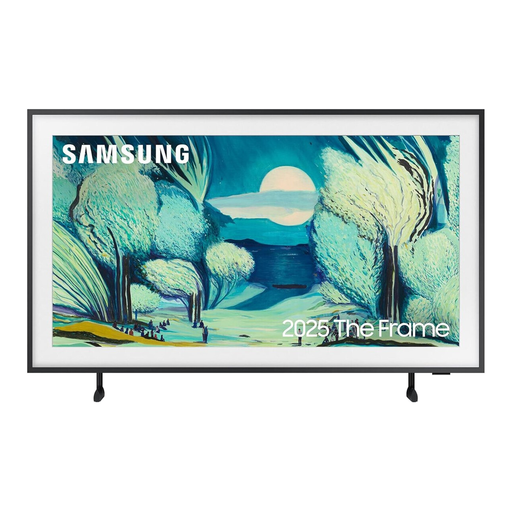
Samsung The Frame QE43LS03FAU 43-inch 4K TV
Consider this 43-inch option if a smaller screen may suit your bedroom layout. Check its stand or wall-mount arrangement, and assess football motion on the exact model rather than relying on a named motion feature.
View on Joybuy
 No image available
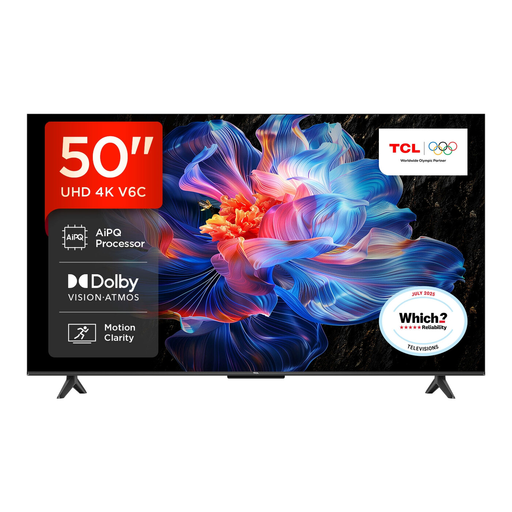
TCL 50V6C 50-inch Direct LED 4K HDR Google TV
Consider the 50V6C if you have measured space for a 50-inch screen and want Google TV. Its listed 120Hz Game Accelerator applies to FHD gaming; check broadcast football motion separately, along with the stand footprint and screen reflections.
View on Joybuy
 No image available
TCL 43V6C 43-inch Direct LED 4K HDR Google TV
Consider the 43V6C where the 50-inch version would be difficult to place. The title lists 120Hz Game Accelerator for FHD gaming, not a result for live football; check broadcast motion, the stand footprint and reflections for this 43-inch variant.
View on Joybuy
 No image available
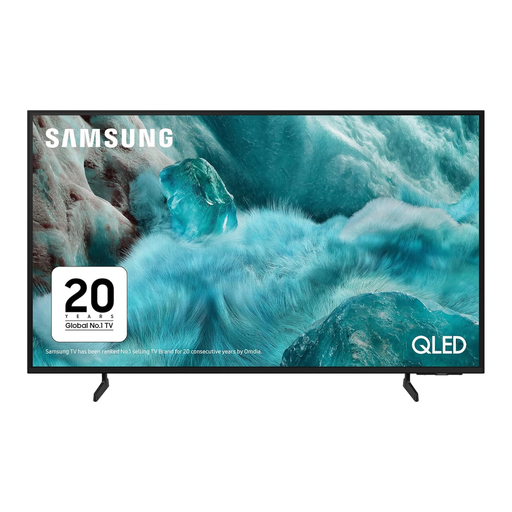
Samsung Q7F QE43Q7FAAU 43-inch 4K TV
Consider this 43-inch model when bedroom space makes screen size a priority. Check its placement dimensions and reflection handling, and look at fast broadcast action before treating a motion-feature name as evidence of football performance.
View on Joybuy
 No image available
TCL 50Q6C-UK 50-inch QD-Mini LED 4K HDR Google TV
Consider this QD-Mini LED model if your bedroom has space for a 50-inch screen. Confirm the exact model’s refresh specification before relying on it: the product information gives conflicting descriptions. Check broadcast motion, screen reflections and placement dimensions separately.
View on Joybuy
Frequently asked questions
Does 144Hz mean live football will look better?
No: a 144Hz feature can relate to gaming rather than establish the quality of a live broadcast. Check the exact TV’s handling of fast action and broadcast HD; Which? assesses motion stability separately in its TV testing.
Should I use Sport mode for the final?
Try it, but compare it with a neutral picture mode before leaving it on. Which? notes that Sport mode can smooth motion while making colours look excessively vivid.
Do I need a TV Licence to stream a football final live in the UK?
TV Licensing says you need TV Licence cover when watching a programme live through a streaming service. Confirm how the final will be shown and whether your household has the required cover before watching.
What energy information should I compare between TVs?
Compare the exact models’ energy labels rather than assuming TVs with similar screen sizes use the same amount. GOV.UK identifies on-mode energy consumption for standard dynamic range content in kWh per 1,000 hours as television energy-label information.


