Detail-focused documentary viewers
If you watch closely for animal texture, foliage and detail in darker scenes, compare the exact model’s resolution, colour specifications and HDR support before prioritising portability.


Choose a bedroom projector only after checking the available lens-to-wall distance and deciding whether picture detail, a compact placement or easy storage matters most. A conventional home-cinema model suits a measured, more permanent position; short throw addresses limited depth, while a portable model makes occasional setup easier. For any route, check the exact model’s displayed resolution, connections, brightness terminology and image size rather than relying on a generic 4K or smart label.
If you watch closely for animal texture, foliage and detail in darker scenes, compare the exact model’s resolution, colour specifications and HDR support before prioritising portability.
If furniture restricts the distance to the wall, the deciding question is whether a projector can make your intended image size from an available position. Check operating noise if that position is near the bed.
If the projector will move between rooms or go back into storage, automatic setup and integrated audio may matter more to you than a permanent installation. Check displayed resolution and your viewing-source connection as well.
Choose when: You can give the projector a measured, relatively fixed position and want to compare model-specific resolution, HDR and colour features for documentary footage.
Trade-off: Placement still has to match the intended image size; adjustment features such as zoom and lens shift depend on the model.
Choose when: Furniture or the room layout prevents a longer lens-to-wall distance. ViewSonic specifies a 100-inch image from 1.5 m for its X2-4K.
Trade-off: Short throw solves a positioning problem, not picture quality by itself; confirm the image-size range and whether the projector will be too close to the bed for your comfort.
Choose when: You would rather move or store the projector than reserve a permanent position for it.
Trade-off: Check displayed resolution separately from 4K input support, and confirm how you will play documentaries and power the projector for a full viewing session.
Across all three routes, start with the image size you want and the position available for the lens. Then decide which picture features and viewing-source connections matter in your bedroom.
| Concern | What to check | Who this matters to |
|---|---|---|
| Colour, detail and dark scenes | Check the exact model’s displayed-resolution terminology, supported HDR formats and stated colour specification, plus the resolution of your viewing source. | If feather detail and darker wildlife scenes are my priority, I would choose the picture specification before portability. Around 37% of consumers put image fidelity first. |
| Distance and image size | Measure from the proposed lens position to the wall, then check the model’s distance chart, image-size range and available adjustment. | With furniture limiting where I can put the projector, I need my chosen image size to fit the space. Bedroom placement is the primary concern for around 27% of consumers. |
| Room light and connections | Consider the light present during viewing, compare brightness figures only with their stated units, and check the ports needed by your source device. | I may watch with a lamp on and need to connect my usual streaming device without changing my setup. Around 27% of consumers chiefly prioritise viewing conditions and source compatibility. |
| Storage and simple setup | Check the power arrangement, setup controls, speaker information and displayed resolution for the exact portable model. | When I only watch occasionally, I want to put the projector away and set it up again without a permanent installation. Ease of moving and setting up comes first for around 9% of consumers. |
A projector can accept a 4K source while displaying it at Full HD resolution. That distinction matters when you are choosing a larger image for detailed documentary footage.
Read the displayed or native resolution separately from the accepted input formats. The XGIMI MoGo 2 Pro listing, for instance, identifies 1920 × 1080 resolution alongside 4K video support.
The projector may not make the image size you want from an available shelf or other position, even if it otherwise suits your viewing plans.
Measure from the proposed lens position to the wall and consult the exact model’s distance and image-size guidance. ViewSonic’s 100-inch image at 1.5 m is a specification for the X2-4K, not a rule for other short-throw models.
Projector specifications use different brightness terminology. A larger number alone cannot establish how two models will look with your room lighting and image size.
Check the measurement unit and stated conditions before comparing figures; assess colour features, placement and connections separately.
In an August 2026 report concerning an identified HY300 LCD projector, the Office for Product Safety and Standards reported a high electric-shock risk linked to plug dimensions that did not meet BS 1363 requirements. That finding does not apply to every mini projector.
Check the exact product and seller, the supplied power arrangement and current product-safety alerts before use. Keep the projector’s ventilation openings clear and protect it from moisture.
Epson’s home-cinema range is relevant if the bedroom can accommodate a conventional projector position.
BenQ’s W4000i is a home-cinema model to examine when published colour specifications and HDR features are central to the choice.
ViewSonic’s X2-4K provides a specific short-throw reference for a bedroom with limited projection depth.
XGIMI has models relevant to viewers who want automatic alignment or a setup they can move, as well as more permanent home projection.
These choices centre on moveable or occasional bedroom setups, including models listed with Full HD resolution. Compare their viewing-source requirements and projection distances with your room before deciding; this selection does not stand in for the conventional and short-throw routes discussed above.
 No image available
Consider this model if you plan to use an external source for bedroom documentaries. Its listing names Full HD 1080p, 1200 ANSI lumens and 4K input support; 4K support does not change the stated Full HD resolution.
Check that your intended device connects as needed, and confirm the image size at your available projection distance. Verify the supplied power arrangement for the exact product.
 No image available
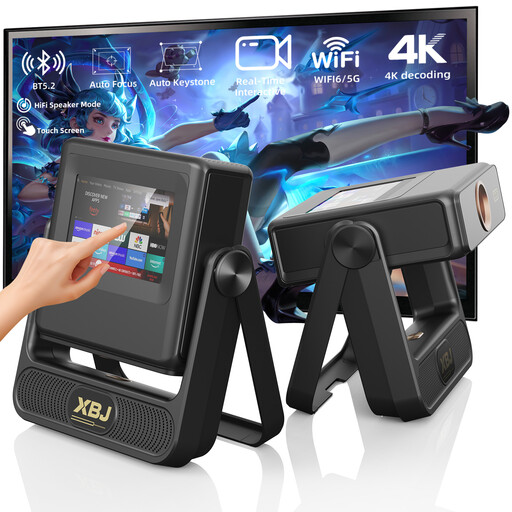
This is an occasional-setup option if adjustable positioning and automatic focus matter to you. The listing names native 1080p, 4K input support, autofocus and keystone correction.
Its brightness information differs between the title and description, so confirm the applicable figure. Check the distance needed for your intended image and the supplied power arrangement.
 No image available
Consider the rotating design if you need to aim a temporary setup at a wall or ceiling. The listing names Full HD 1080p, 500 lumens, automatic keystone correction and HDMI connectivity.
Confirm the projection distance for your chosen image size. Because this is identified as the European Version, check the supplied power arrangement for where you will use it.
 No image available
This model may suit a temporary position where its rotating design and automatic keystone correction are useful. Its listing distinguishes native 1080p resolution from 8K input support.
Confirm the resulting image size at your available lens-to-wall distance rather than relying on a distance figure alone. Check the supplied power arrangement for the exact model.
 No image available
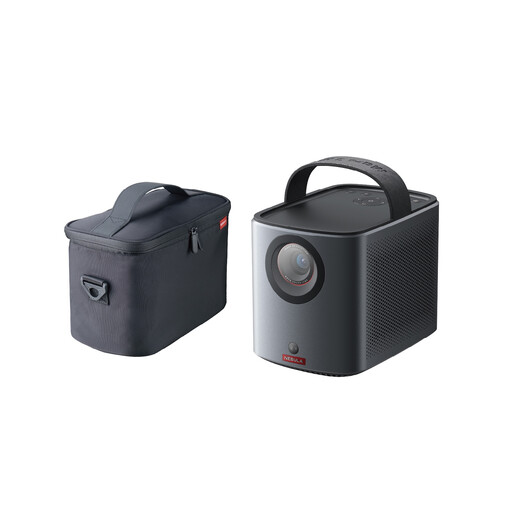
The carry case makes this bundle relevant if you will move the projector or store it between documentary sessions. Check that its viewing-source options suit the services you use.
Confirm the projection distance for your wall and the available charging or mains-power options if you expect a long viewing session.
Not necessarily: Full HD may suit an occasional, portable setup, while a larger image and a strong interest in fine texture make the model’s displayed-resolution specification more important. Check HDR and colour information separately, and do not mistake 4K input support for a native 4K image.
Measure from the proposed lens position to the wall, then match that distance and your intended image size to the exact model’s guidance. ViewSonic specifies 100 inches from 1.5 m for its X2-4K, while Epson lists zoom and lens shift for the EH-TW7100; neither model’s placement features can be assumed for another projector.
Confirm that your chosen streaming device or other source can connect to the exact projector. Epson lists two HDMI inputs for the EH-TW7100, but built-in apps and service compatibility vary by model, so check your preferred service’s requirements before purchase.
Yes: a lamp-based projector and an LED-light-source model call for different replacement-part checks. Epson identifies the EH-TW7100 as a lamp model, while ViewSonic states a 60,000-hour LED light-source life for the X2-4K; a light-source rating is not a guarantee of whole-projector life. Check the exact model’s cleaning instructions, parts and support terms.
Check the exact product, seller and supplied power arrangement, and review current safety alerts before use. The Office for Product Safety and Standards’ Great Britain guidance explains that the Electrical Equipment (Safety) Regulations 2016 set requirements for electrical equipment placed on the GB market; Northern Ireland has different provisions under the Windsor Framework, so the GB position should not automatically be applied there.