Who is choosing?

Evening animation viewers

If you usually watch with the lights dimmed, black backgrounds and contrast between bright and dark parts of a scene may guide your choice. LG and Sony describe individually controlled OLED pixels as a way to produce deep blacks.

Viewers with limited bedroom space

Your usual bed-to-screen distance, furniture and access route may decide the screen size before display technology does. Samsung’s UK sizing guide places 32–43-inch TVs in its bedroom and compact-space range.

Daytime and larger-screen viewers

If you watch with daylight or room lights on, or want a 50-inch screen, check reflections, the particular model’s backlight features and whether the larger set fits. TCL lists local dimming and anti-reflection features for its 50C805K; those specifications should not be assumed for other models.

What matters when choosing?

Compact OLED

Consider it when: You mostly watch in a dim bedroom and put dark-scene contrast first; LG and Sony describe OLED’s individually controlled pixels as producing deep blacks.

Keep in mind: Follow the chosen model’s guidance on prolonged static images and panel care.

Mini LED

Consider it when: You often watch in a brighter bedroom or want a 50-inch-class screen with a locally dimmed backlight.

Keep in mind: Mini LED is backlit rather than self-illuminating; compare dark scenes and reflections on the particular model rather than assuming identical results across the range.

Concern What to check Who this matters to
Dark-scene contrast and colour Consider the display technology and check HDR formats against the films and playback services you use. If I mainly watch animation with the lights low, I want dark backgrounds to remain distinct while bright colours stand out. Around 42% of consumers put that picture-quality need first.
Bedroom fit and viewing distance Measure from your usual viewing position and check the TV’s overall dimensions and stand footprint, not just its diagonal. A screen is no use to me if it crowds the furniture or feels too large from the bed. For around 33% of consumers, a comfortable fit is the primary concern.
Mixed-light viewing and ownership Check reflections and model-specific backlighting, then compare energy consumption for the viewing modes you expect to use. When I also watch during the day, I need to judge how the screen works in my room and what its running information means. That combined need comes first for around 25% of consumers.

Buying pitfalls

  • Choosing by screen diagonal alone

    A suitable-looking diagonal does not tell you whether the stand fits your furniture or whether the packaged TV can reach the bedroom.

    Measure your viewing position, furniture width and depth, wall space and access route. Samsung’s UK guide also advises checking the TV’s physical dimensions, stand and packaging.

  • Assuming every OLED needs the same care

    Sony’s guidance for its A1 OLED series says prolonged static images can cause image retention. Its maintenance instructions are specific to the models covered.

    Follow the protection settings and panel-maintenance instructions for the exact OLED model you choose, particularly before starting a manual refresh.

  • Comparing only the energy-rating letter

    The rating alone does not convey a TV’s stated consumption in every viewing mode.

    Compare the exact models’ kWh per 1,000 hours figures for SDR and HDR where shown. GOV.UK’s television energy-label documentation identifies on-mode consumption per 1,000 hours as a label data field.

  • Assuming collection of an old TV is included

    Taking an old set away from your home is a different arrangement from returning it at a collection point.

    Before arranging delivery, ask the retailer how same-type TV take-back works and whether home collection carries a transport charge.

    Home collection may involve a separate transport arrangement.

Brands to consider

LG

LG lists a 42-inch OLED evo C6 option for bedrooms where a smaller OLED is the priority.

  • LG describes the OLED42C66LB’s self-lit pixels as producing deep blacks and contrast.
  • Check the dimensions, stand and energy label for the exact variant; LG’s claims for this model do not establish the specifications of every LG TV.

Sony

Sony’s BRAVIA OLED range is relevant if you can accommodate a 48-inch screen and want to consider Google TV.

  • Sony describes individually controlled OLED pixels and screen-based sound on applicable models.
  • Check sound features and panel-care instructions for the specific TV. Sony’s published image-retention guidance cited here covers its older A1 OLED series.

Samsung

Samsung’s Neo QLED range provides a Mini LED route to consider for a bedroom where a backlit screen suits the preferred size and lighting.

  • Samsung explains that its Neo QLED technology uses Mini LED backlighting and local dimming.
  • Check contrast, reflections and dimensions on the shortlisted model; the technology description does not establish the same result for every set.

TCL

TCL’s 50-inch C805K is an example to examine if a larger Mini LED TV will fit your bedroom.

  • TCL lists 500+ local-dimming zones, HDR support and an anti-reflection feature for the 50C805K.
  • Those are manufacturer specifications for that model, not a zone count or feature list to apply to every TCL size or series.

Joybuy product choices

These choices cover compact OLED TVs for predominantly dim-room viewing, a 50-inch QD-Mini LED option, and two 43-inch TVs for size-led selection. Check physical fit and the exact model’s features before deciding which route suits your bedroom.

Sony BRAVIA A90 XR42A90K 42-inch OLED TV

Sony BRAVIA A90 XR42A90K 42-inch OLED TV

Consider this 42-inch model if bedroom space is tight and you mainly watch animation in dim light.

The product name identifies a 4K HDR OLED TV with Google TV and Dolby Vision. Check its full dimensions and stand footprint against your intended position.

View on Joybuy
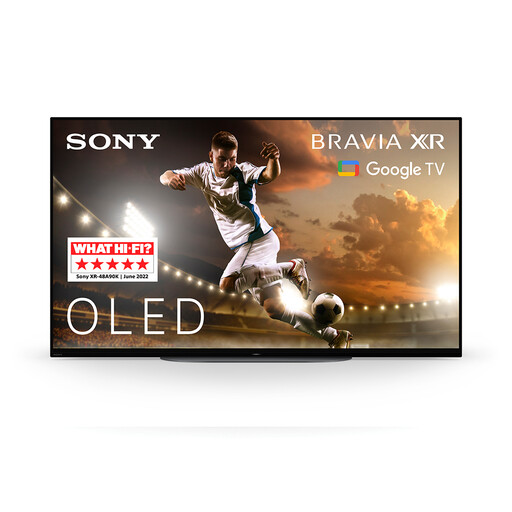
Sony BRAVIA A90 XR48A90K 48-inch OLED TV

Sony BRAVIA A90 XR48A90K 48-inch OLED TV

Consider the 48-inch OLED if you want a larger screen for dim-room films and have the viewing distance and furniture space for it.

The product name identifies 4K HDR, Google TV and Dolby Vision. Measure for the stand as well as the screen before choosing this size.

View on Joybuy

TCL 50Q6C-UK 50-inch QD-Mini LED TV

TCL 50Q6C-UK 50-inch QD-Mini LED TV

This 50-inch option is worth considering if you watch with more ambient light or prefer a larger bedroom screen that your space can accommodate.

The product name identifies 4K HDR, Google TV and QD-Mini LED. Check reflections in your room, viewing distance and the stand footprint rather than assuming the screen size will fit.

View on Joybuy
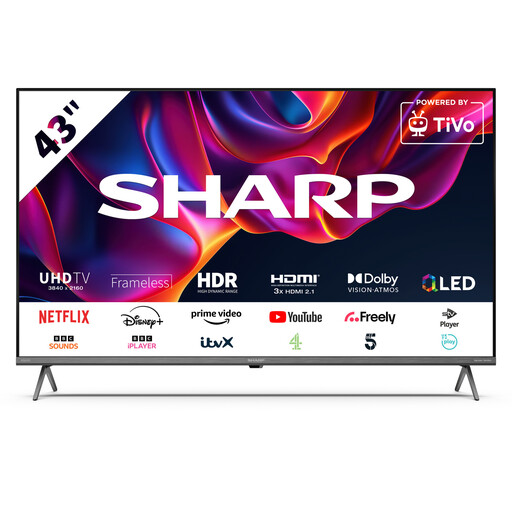
SHARP 43GM6245K 43-inch 4K Ultra HD Smart TV

SHARP 43GM6245K 43-inch 4K Ultra HD Smart TV

Consider this 43-inch TV when fitting the bedroom is the starting point rather than choosing OLED or Mini LED specifically.

The product name identifies a 4K Ultra HD Smart TV. Compare its dimensions with your furniture and check the picture features you need for your films.

View on Joybuy
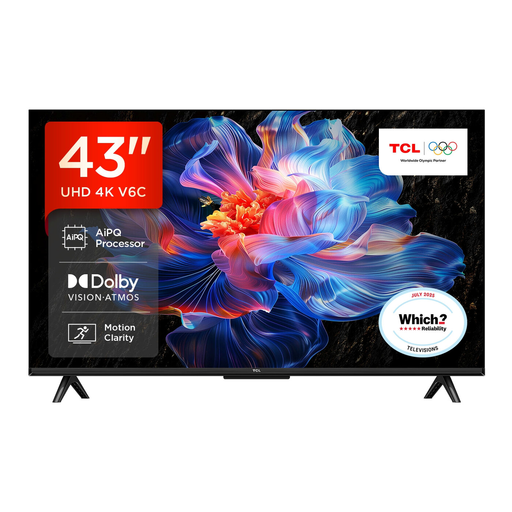
TCL 43V6C 43-inch Direct LED 4K HDR TV

TCL 43V6C 43-inch Direct LED 4K HDR TV

This 43-inch Direct LED option suits a size-first shortlist for a bedroom, provided its complete dimensions work in the space.

The product name identifies 4K HDR and Google TV. Check the stand footprint and your viewing distance before settling on the model.

View on Joybuy

Frequently asked questions

Is OLED or Mini LED more suitable for animated films in a bedroom?

Consider OLED when you mainly watch in dim light and prioritise dark-scene contrast; consider Mini LED when brighter-room viewing or a larger screen matters more. For either choice, check the exact TV’s size, reflections and picture features rather than assuming its display technology settles the decision.

What screen size should I consider from my bed?

Start with your usual bed-to-screen distance and the space available for the TV. Samsung’s UK guide places 32–43 inches in its bedroom and compact-space range and gives approximate 4K viewing distances of 1.4 m for 43 inches and 1.5 m for 50 inches; check the chosen model’s stand and overall dimensions too.

What if streaming menus stay on an OLED screen?

Follow the protection and panel-care instructions for your particular OLED TV. Sony says prolonged static images can cause image retention in its guidance for the A1 OLED series, but its maintenance instructions should not be assumed to apply unchanged to another model.

What should I compare in a TV’s energy information?

Compare the exact models’ stated energy consumption in kWh per 1,000 hours for SDR and HDR where those figures are shown, as well as their energy classes. GOV.UK’s television energy-label documentation identifies on-mode consumption per 1,000 hours as a data field; compare the same viewing mode across TVs.

Can I arrange take-back for my old TV?

Ask the retailer how it handles take-back of an old TV when you buy a replacement. GOV.UK’s guidance says retailers must offer take-back of waste equipment of the same type as the new item; confirm the handover method and any home-collection transport charge before arranging delivery.