Evening art-documentary viewers
If you mainly watch after dark, you may want to compare restrained picture modes and how candidate TVs present subtle shades and darker scenes, rather than choosing by daytime brightness claims alone.


For art documentaries in a bedroom, measure the viewing distance and available space before choosing a screen size; Samsung UK identifies 32–43-inch TVs as options for bedrooms and compact rooms. An OLED model is worth considering for mainly evening viewing, while persistent window or lamp reflections make the exact TV’s light-handling features a more important check, whether you choose OLED or Mini LED.
If you mainly watch after dark, you may want to compare restrained picture modes and how candidate TVs present subtle shades and darker scenes, rather than choosing by daytime brightness claims alone.
Your choice needs to fit the distance from bed to screen, the TV unit or wall, and the route into the room. Samsung UK identifies 32–43-inch sets as options for bedrooms and compact spaces, but the dimensions of the particular TV still matter.
If you watch at different times of day, check where windows and lamps appear in the screen from your usual seat. Samsung UK distinguishes anti-reflection from anti-glare approaches; the treatment needs checking on the exact model.
Settle the screen’s physical fit first, then weigh picture controls against the lighting you actually watch in. For private late-night viewing, check audio connections on the exact TV as well.
Consider it when: You usually control the bedroom lighting and want to compare dark-scene presentation and filmmaker-oriented picture controls.
Bear in mind: A panel type or picture-mode label does not establish colour accuracy; check the exact model’s formats, dimensions and reflections.
Consider it when: Windows or lamps regularly interfere with viewing and a suitably sized model fits the room.
Bear in mind: Manufacturer brightness claims do not establish how faithfully every art documentary will look; assess the exact screen treatment and picture modes.
| Concern | What to check | Who this matters to |
|---|---|---|
| Colour and dark scenes | Look for a restrained cinema or filmmaker-oriented mode and HDR formats that match the programmes and devices you use; neither guarantees colour accuracy. | If nuanced colour and shadow detail matter more to me than other upgrades, I want to compare picture settings rather than rely on an HDR logo. Around 36% of consumers put this picture concern first. |
| Size and fit | Measure the usual eye-to-screen distance and compare the TV’s width, stand depth and weight with the intended position. | A screen needs to fit my bedroom furniture and feel comfortable from the bed; roughly 29% of consumers make room fit their primary concern. |
| Reflections | Note the path of window and lamp light, then check whether the exact model and size specify anti-reflection or anti-glare treatment. | When light falls across the screen during my usual viewing hours, I need to see the programme without a distracting reflection. Around 21% of consumers prioritise reflection control. |
| Private listening | Confirm the exact TV’s headphone-output options and compatibility with any headphones or streaming device you plan to use. | Late-night viewing needs to stay quiet for other people in the home; about 14% of consumers put private listening first. |
A suitable-sounding diagonal does not tell you whether the set fits the furniture or viewing position. Panasonic UK lists its 42-inch TV-42Z90BEB as 933 mm wide, 300 mm deep with its stand and 19.5 kg.
Measure the normal viewing position, intended unit or wall area, delivery route and cable space, then compare them with the dimensions of the model you intend to order.
Screen treatments differ by model and size. LG UK limits its Reflection Free statement to specified 2025 OLED M5 and G5 sizes, while Samsung UK describes anti-reflection and anti-glare as different approaches.
Identify where direct reflections occur and check the precise model and size for a documented treatment; if possible, view a screen in lighting similar to your bedroom.
Supported formats describe playback capabilities, not how faithfully a particular documentary will appear. The programme source, app, picture mode and room lighting also matter.
Match HDR support to the services and devices you use, and compare the available cinema or filmmaker-oriented settings on the exact model.
In the UK, TV Licensing says a TV Licence is needed to watch live programmes or BBC iPlayer. Replacing a TV also means arranging what happens to the old set.
Check the licensing rules for your intended viewing and ask the retailer about like-for-like electrical-equipment take-back or collection before delivery.
Panasonic UK lists the 42-inch 4K OLED TV-42Z90BEB with FILMMAKER Mode, Dolby Vision IQ, HDR10+ Adaptive and Bluetooth Audio Link.
Samsung UK lists a 43-inch 4K Neo QLED/Mini LED QN73H and provides guidance on different approaches to screen reflections.
Sony UK describes individually controlled pixels in its OLED range, making its model specifications relevant to an OLED comparison.
LG UK discusses OLED colour and reflection features, including a Reflection Free claim for specified 2025 M5 and G5 sizes.
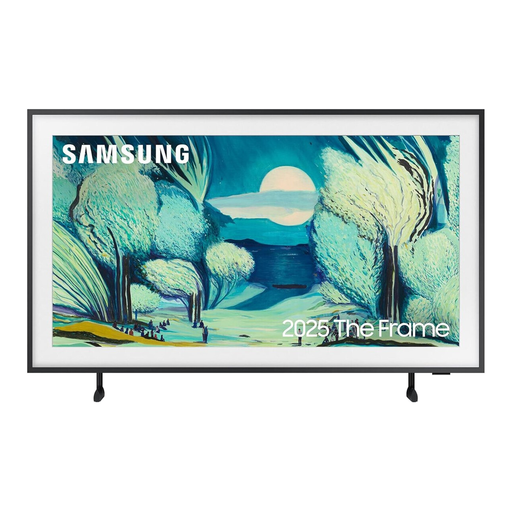
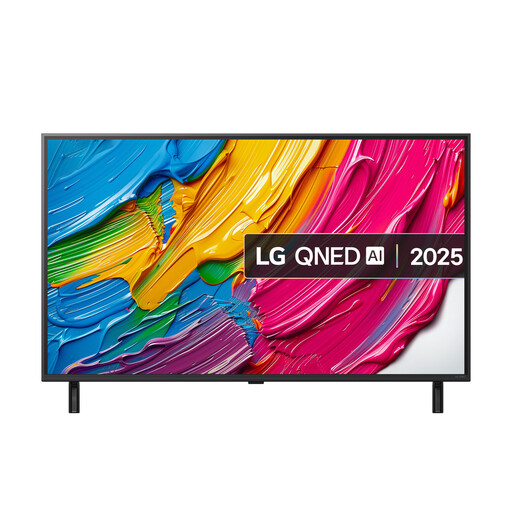
These 43-inch TVs are options to compare for a bedroom art-documentary setup. Check their physical fit, picture controls and behaviour in your room’s lighting before choosing between them.
 No image available
Consider this model if a 43-inch screen fits your viewing distance and intended furniture or wall space.
The listed variant is a 4K Ultra HD Smart TV with Wi-Fi. Check its exact picture controls, reflection handling and headphone-audio compatibility against your needs.
 No image available
Consider this model if you want to compare another 43-inch option for documentary viewing and have measured where it will go.
The listed QNED 4K UHD variant has webOS, an α7 AI Processor, AI Magic Remote, VRR, ALLM and eARC. Check its exact screen treatment and headphone-audio compatibility for your bedroom.
Start with the distance from your usual viewing position and the set’s full dimensions, not its diagonal alone. Samsung UK describes 32–43-inch TVs as options for bedrooms and compact spaces, but you should also check the stand, available furniture or wall space, and delivery route.
Choose according to the lighting you watch in rather than assuming either panel type always gives a better picture. OLED is worth comparing for mainly controlled evening lighting; if daylight or lamps are the main obstacle, examine a Mini LED option too and check the exact models’ reflection treatment, picture modes and HDR support.
You can if the exact TV supports audio output to your chosen headphones. Panasonic UK lists Bluetooth Audio Link for TV-42Z90BEB, but check compatibility and audio-output options separately for any other model or connected streaming device.
A TV Licence is required for live programmes and BBC iPlayer viewing, according to TV Licensing. Check how you intend to watch: owning a bedroom TV is not, by itself, the viewing activity that determines the requirement.
Ask the retailer about taking back the old TV when you buy a replacement. GOV.UK describes an in-store like-for-like take-back requirement for waste electrical equipment of the same type; arrange any home collection separately with the retailer.