
24/7 Customer Support

Free returns

Same-day & Next-day Delivery

Quality Guaranteed

Unlock Your Welcome Offers: FREE Delivery | Up to 80% OFF | Free 30-day JoyPlus trial
Download the APP
Welcoming a newborn into your home brings immense joy, but it also comes with sleepless nights and the constant desire to keep your little one close and safe. A bedside crib offers a practical solution, allowing your baby to have their own secure sleeping space right next to you. This makes night-time feeding, soothing and checking on them much more manageable, all while following safe sleep guidelines.
Navigating the market can be overwhelming, with so many features and models to consider. As the Joybuy Product Recommendation Officer, my role is to help you understand the key features to look for, so you can choose a crib that suits your family's needs. This guide will walk you through essential considerations and highlight a few recommended options for 2026.
Before diving into specific products, it's helpful to know what features make a bedside crib both safe and practical.
The primary function of a co-sleeper cot is to provide a safe sleep environment adjacent to your bed. Look for models with a robust frame and a secure strapping system that fastens the crib tightly to your bed frame, eliminating any gaps. Breathable mesh sides are also a key feature, as they provide good ventilation and allow you to see your baby easily. Always ensure the crib complies with current UK safety standards (BS EN 1130:2019).
Not all beds are the same height. An adjustable baby cot with multiple height settings is essential to ensure the crib mattress is perfectly level with your own, creating a seamless and safe surface. Some models also offer a tilt or incline function, which can be helpful for babies with reflux. Consider whether you need a multi-functional unit that can convert into a standalone baby bassinet, a rocking crib or even a travel cot for use beyond the first few months.
Think about your daily routine. Will you need to move the crib between rooms? If so, a lightweight, portable crib with lockable wheels can be incredibly convenient. Also, consider the ease of assembly and how simple it is to lower and raise the side panel, especially for those half-asleep, middle-of-the-night moments.
Here are a few options that stand out for their design, functionality and user-focused features.
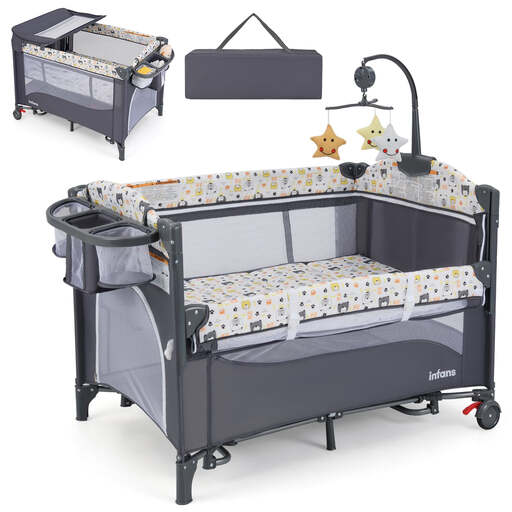
Why It Stands Out: This model is the definition of a multi-functional nursery centre. It adapts as your child grows, transforming from a bedside sleeper into a playpen, changing station and more, offering significant long-term value.
Pros:
Who is it for? Families looking for an all-in-one solution that will last well into the toddler years. It's particularly useful for those with limited space or who want a single, reliable piece of equipment for both home and travel.
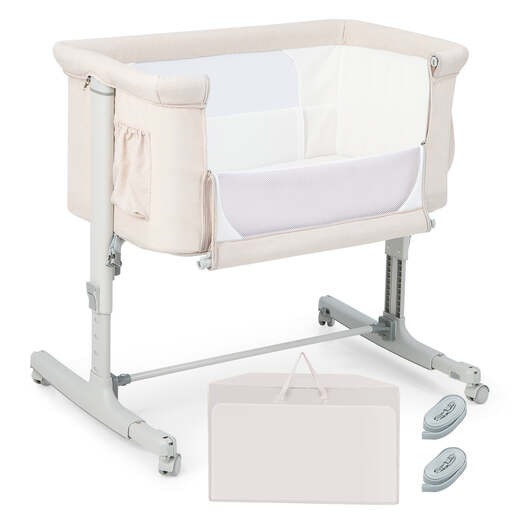
Why It Stands Out: This bassinet focuses on core convenience for the newborn stage. Its standout feature is the anti-spit-up tilt function, providing a thoughtful solution for parents concerned about their baby's comfort after feeding.
Pros:
Who is it for? New parents who prioritise a safe co-sleeping experience and convenient features for the first six months. The tilt function makes it a strong contender for those with babies prone to reflux.
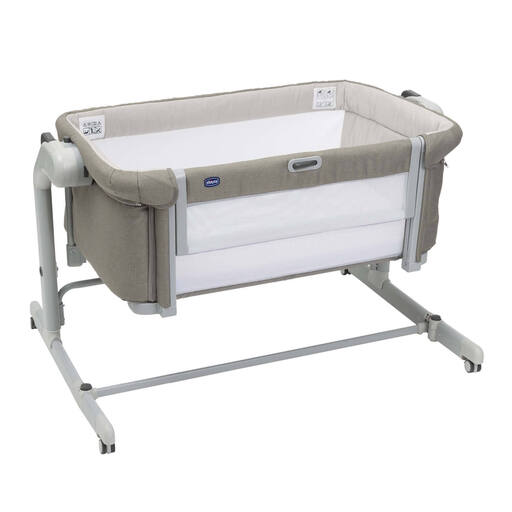
Why It Stands Out: As a well-known next to me crib, this model is engineered for ultimate ease of use. The one-hand opening system is a significant advantage for parents needing quick and quiet access to their baby during the night.
Pros:
Who is it for? Parents seeking a premium, dedicated bedside sleeper for the 0-6 month period, where ease of access and high-quality comfort features are the top priorities.
Every family's home and lifestyle are unique, and the right sleeping solution for you might be different. If you haven't found the perfect match here or want to see a wider variety of cots, bassinets and other essentials, we invite you to browse our full collection.
Explore our full range of baby & toddler nursery furniture to find the perfect fit for your home.
Most bedside cribs are designed for newborns up to approximately 6 months of age, or until the baby reaches a maximum weight limit (typically 9 kg). Crucially, you should stop using the crib as soon as your baby can sit up, kneel or pull themselves up independently to prevent falls.
Yes, when used correctly according to the manufacturer's instructions, they are a safe option. Key safety practices include:
A bedside crib is specifically designed to be used alongside an adult bed, featuring an adjustable height and a drop-down side. It is a semi-permanent sleep station. A Moses basket, on the other hand, is a smaller, more portable woven basket with handles, designed for supervised naps around the house. It is not intended to be attached to a bed.