Bedside fine-print readers
If you check labels, letters or forms beside the bed, you need light directed at a small reading area rather than a lamp that only lights the room. RNIB advises positioning task lighting to limit glare.


Choose a lamp that can direct adjustable light onto the print without putting the light source in your line of sight. A compact dimmable lamp can suit a crowded bedside table; an articulated lamp offers more reach, while a specialist reading light offers more control. Check the space each needs, how it is powered and whether its light source can be replaced.
If you check labels, letters or forms beside the bed, you need light directed at a small reading area rather than a lamp that only lights the room. RNIB advises positioning task lighting to limit glare.
A base must leave room for the page and other bedside items, while the head still needs to reach the print. Compare the lamp’s footprint, reach and cable route; Anglepoise publishes base and reach measurements for its compact 90 Mini Mini.
If ordinary print remains difficult with comfortable lighting, a different lamp may not be the whole answer. RNIB also discusses magnifiers, larger print and individual low-vision support.
Start with where the page and lamp will sit, then check how you will aim and adjust the light. A compact base, a clip and a long articulated arm solve different placement problems; none removes the need to check the beam on your reading area.
| Concern | What to check | Who this matters to |
|---|---|---|
| Page lighting and glare | Look for a head, neck or arm that can aim at the print while keeping the source out of your eyes. RNIB advises placing task lighting between you and the task, with the shade below eye level. | When I move between a book and a small label, I want to direct the light without looking into it. Around 36% of consumers put aiming and glare control first. |
| Brightness control | Check whether dimming is built in, how it works and whether you can reach the control from bed. Do not assume that an LED bulb makes a lamp dimmable. | Late-night reading and a quick check of small print call for different settings, so I want to adjust the light myself. Brightness control comes first for around 29% of consumers. |
| Space, reach and power | Measure the available surface and distance to the page. Check the base or clip fixing, reach and cable route; a rechargeable lamp also needs a practical charging arrangement. | If the table is crowded, I need a stable lamp that reaches the page without an awkward lead. Around 21% of consumers make bedside fit and power their primary concern. |
| Reading support beyond light | If comfortable, well-aimed light is not enough, consider a magnifier, larger print or advice from a low-vision service. RNIB presents lighting as one of several reading options. | When small print remains difficult, I need to consider whether magnification would help rather than simply choosing a brighter lamp. That wider reading need takes priority for around 14% of consumers. |
A lamp can fit neatly beside the bed yet leave a label in shadow or put an exposed light source in your line of sight.
Check whether its head or arm can reach your usual reading position. RNIB recommends keeping the shade below eye level to reduce glare.
Output alone does not tell you where the light lands or whether the source will cause glare. Persistent difficulty with print may call for support beyond lighting.
Assess the lamp’s direction and controls as well as its output. RNIB also identifies magnification and alternative reading formats as options.
Even a small lamp can put a lead across a walking route or leave a device charging on bedding.
Plan a stable position and a clear cable route. Electrical Safety First advises charging devices on a hard surface and, where possible, avoiding unattended or overnight charging.
Anglepoise describes the 90 Mini Mini as having an integrated dimmable LED. Its Original 1227 uses a replaceable E27 LED bulb, while its stated dimming requires additional hardware.
Before choosing between these designs, check whether the light source can be replaced and exactly what is needed to dim the lamp.
A replaceable-bulb setup may involve obtaining a compatible bulb or dimming hardware separately.
IKEA’s KORVSNÖRE is a desk-lamp option for readers who want to aim and dim light over a nearby page.
Its 90 Mini Mini and Original 1227 illustrate different choices between a compact integrated-LED lamp and a larger articulated, replaceable-bulb design.
The brand markets its High Definition table lights for reading tasks, including fine print.
These rechargeable Philips lamps offer a table-top or clip-on placement option. For checking fine print, confirm that the light can be directed comfortably onto your page before choosing either format.
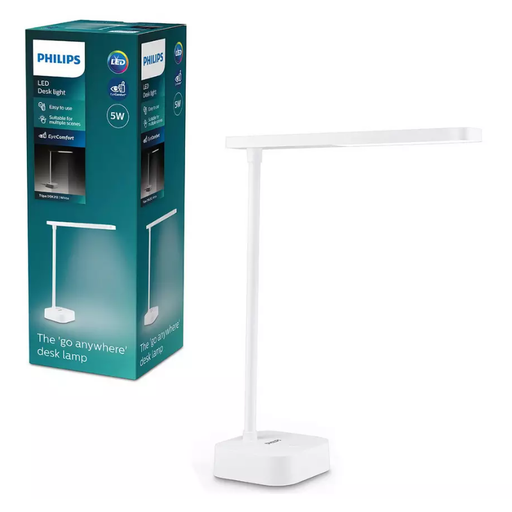 No image available
A table-top option if you want to place a rechargeable lamp beside the bed. Check whether you can aim its light onto the print without seeing the source directly.
Three brightness settings; 18W. Check the charging arrangement and whether the light covers your reading area.
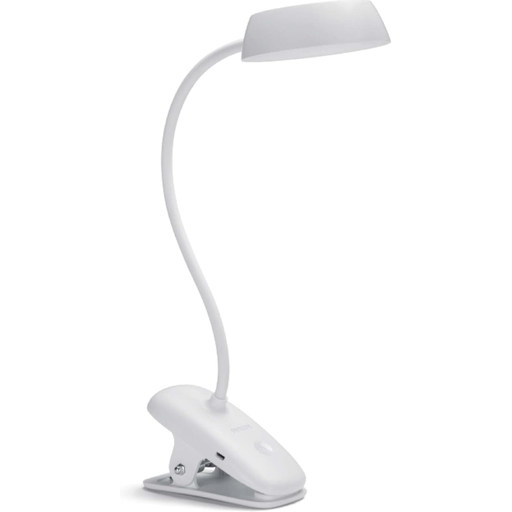 No image available
A clip-on option if you have a stable attachment point and want to keep the bedside surface clear. Check that it can direct light onto the page without shining towards your eyes.
3W. Confirm that the clip fits your intended position and that its charging arrangement suits your use.
Aim it at the page rather than your eyes. RNIB advises placing task lighting between you and the reading material, keeping the shade below eye level to reduce glare and using general room lighting alongside it.
No. Light placement and glare matter, and additional brightness may not resolve an individual reading difficulty. RNIB identifies magnifiers, larger print and other formats as options; a low-vision assessment may help when ordinary print remains difficult.
A USB port does not remove the usual bedroom charging precautions. Electrical Safety First advises using a hard surface rather than bedding and, where possible, avoiding unattended or overnight device charging.
Check the product instructions and your local electrical-equipment recycling arrangements. GOV.UK describes the waste electrical and electronic equipment framework as supporting recovery and recycling rather than disposal in landfill or by incineration.