Diagram-focused bedside learner
If you study printed labels, fine lines or colour-coded notes, you need to direct light onto the page and assess how clearly it shows the details you use.


Choose the mounting style before comparing light settings: a clip can leave more room for papers on a crowded bedside table, while a base-mounted lamp needs a stable surface but no attachment edge. For diagrams, look for light you can aim and dim, and check the stated colour rendering if printed colours matter; a wider-reaching task lamp also needs enough clearance.
If you study printed labels, fine lines or colour-coded notes, you need to direct light onto the page and assess how clearly it shows the details you use.
When papers already occupy most of the bedside table, the space taken by a lamp base—or the availability of a secure clip or clamp point—can determine what fits.
If the same lamp serves both diagram study and quieter reading, brightness control and, where offered, selectable colour temperature give you more ways to adjust the light.
Start with the space available for a base or attachment point, then check whether you can aim the light across your papers and adjust it for other bedside use.
| Concern | What to check | Who this matters to |
|---|---|---|
| Diagram detail and colour | Check head positioning, dimming and stated colour rendering index (CRI) for the exact model. Read any lux figure alongside its measurement position. | When small labels and colour-coded lines carry meaning, I want to see them across the page without relying on bedroom ambient light. Around 42% of consumers would put paper detail first. |
| Bedside fit | Measure the usable tabletop or attachment edge, then check the base size or clamp range and the lamp's reach. | If my papers take up the bedside table, I need a lamp that leaves room to study and can be mounted securely. Preserving that space would come first for around 33% of consumers. |
| Evening adjustment | Check whether dimming is built in and whether colour temperature can be changed, rather than assuming the two controls come together. | I may study diagrams and read more quietly later, so I want to change the light without moving to another lamp. That flexibility would be the primary need for around 25% of consumers. |
BenQ UK quotes 1,000 lux directly below the Genie in Paper Mode, while Daylight Company lists a 4,500-lux setting for Luminos. Those figures alone do not show how either lamp will illuminate papers in your bedside arrangement.
Check where a figure applies, then consider the lamp's reach, shade position and the area of paper you need lit.
A mounting point that is too thick, inaccessible or unable to hold the lamp securely can rule out a space-saving design. Daylight Company specifies a maximum clamp opening of 75 mm for Lumi.
Measure the intended edge and check the mounting instructions, cable route and available room to aim the lamp.
An integrated light source and a standard replaceable bulb are different arrangements. Anglepoise describes the 90 Mini Mini's LED replacement as work for a professional or competent person; its Type 75 uses a replaceable E27 bulb.
If changing the bulb yourself matters, confirm the light-source arrangement for the exact model before buying.
Anglepoise specifies a 2700 K supplied bulb for the Type 75, whereas Philips lists several colour-temperature settings for Einstein. A warm supplied bulb does not give you the same adjustment as a tunable lamp.
Decide whether you need fixed warm light, brightness control or selectable colour temperature for both diagram study and later reading.
These brands offer different lamp formats and controls; compare the particular model and mounting arrangement rather than treating a brand name as a guarantee of fit.
Philips lists both base-mounted desk lights and clip lights relevant to a bedroom study space.
Anglepoise offers a compact base-mounted option and a longer-reach mechanical task lamp.
Daylight Company's larger task lamps are relevant when papers spread beyond the area served by a small bedside light.
BenQ's Genie e-reading lamp illustrates a broad paper-lighting design with ambient-light adjustment.
These Joybuy options include foldable, base-mounted and clip-format lamps that may suit different bedside arrangements. Match the format to your available surface, then check how its light reaches your diagrams.
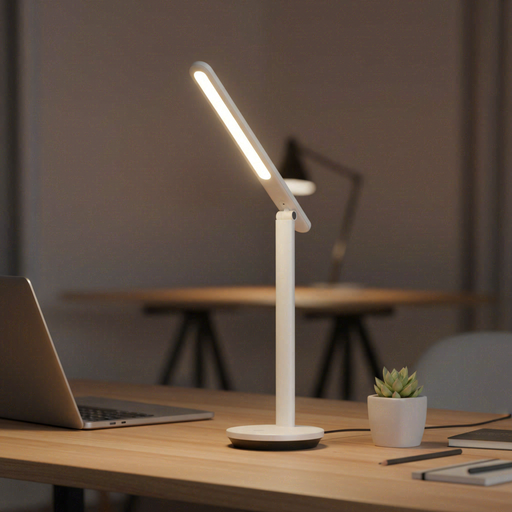 No image available
For a bedside surface shared with study papers, its folding design may make the lamp easier to put away between sessions.
Rechargeable, with adjustable brightness. Check its open footprint and colour-rendering specification if space or coloured diagram details will determine your choice.
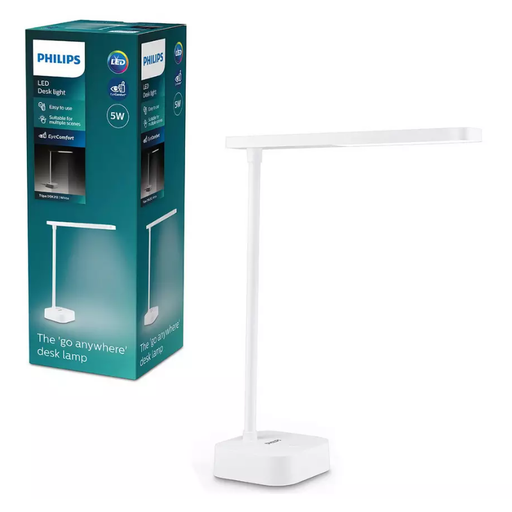 No image available
If you have a stable bedside surface for a table lamp, its three brightness settings offer a choice of light levels for study and reading.
USB rechargeable; labelled 18W. Check its dimensions, beam positioning and colour rendering against the papers you use.
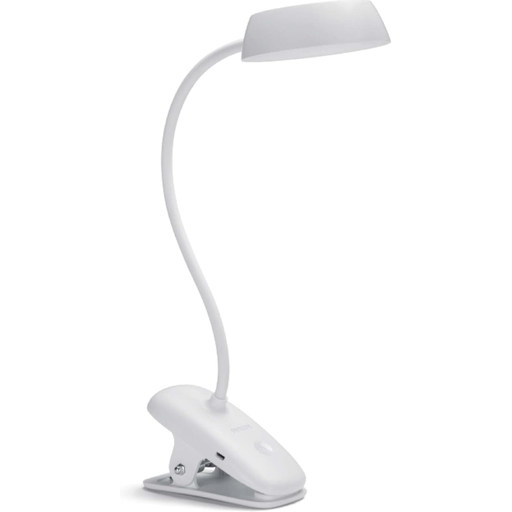 No image available
For a crowded bedside table, the clip format can leave more surface clear for diagrams if there is a secure place to attach it.
USB rechargeable; labelled 3W. Check the clip's fitting range, light direction and colour rendering before choosing it for detailed paper study.
Look for light you can aim and dim, and check the exact model's stated CRI when distinguishing printed colours matters. Philips specifies CRI 94 for Einstein and Daylight Company specifies CRI 95+ for Lumi; neither number alone tells you how the whole page will look in your bedside setup.
Yes, if the furniture provides a secure attachment point compatible with the particular lamp. Measure the edge and check the mounting instructions: Daylight Company specifies a 75 mm maximum clamp opening for Lumi, while a different clip lamp needs its own fit check.
Check the manufacturer's instructions and your local electrical-waste arrangements rather than putting it straight into ordinary household waste. Philips instructs owners of its Einstein and Forys lamps to follow local disposal rules and not use regular household waste.