
24/7 Customer Support

Free returns

Same-day & Next-day Delivery

Quality Guaranteed

Unlock Your Welcome Offers: FREE Delivery | Up to 80% OFF | Free 30-day JoyPlus trial
Download the APP
Beef jerky is a practical ready-to-eat meat snack for commutes, desk drawers, hiking trips, gym bags and long journeys. However, attractive packaging can make products appear more alike than they are. A small pouch may contain very different amounts of protein, sugar and salt from another pack of the same size.
The main buying traps are straightforward:
Nutrition information is normally shown per 100g, while a pouch may weigh only 25g, 30g, 40g, 45g or 60g. Convert the figures into the amount you will actually eat.
For example, a 25g pouch containing 35g of protein per 100g provides approximately 8.8g of protein per portion. A 30g pack with 59.7g per 100g provides approximately 17.9g. This makes portion size important when comparing a high-protein snack for work with a larger pack for travel or post-workout eating.
Fat also varies. Some Jack Link's beef jerky products list around 3.5–3.7g of fat per 100g, which may suit shoppers looking for a low-fat snack. Other recipes, particularly richer speciality flavours, contain more. “Low-fat” should therefore be assessed from the nutrition table, not front-of-pack language alone.
Choose the seasoning according to how you intend to eat it:
Ingredients should be listed in descending order by weight. Look for the beef content, sweeteners, curing ingredients, flavourings and allergens before ordering.
A sealed jerky pouch is useful as an on-the-go protein snack because several products can be kept without refrigeration. Nevertheless, always follow the packaging supplied with your order. Check the best-before date, storage temperature and opening instructions.
Some packs include an oxygen absorber. It is not food and must not be eaten. Resealable 60g packs can be useful for gradual snacking, while individually wrapped 25g portions may be more practical for lunchboxes, hiking or controlled serving sizes.
In the UK, food businesses must provide clear allergen information. Products in this selection may contain or be made with wheat, soya, celery, mustard, milk or gluten. If you have an allergy or intolerance, check the latest label rather than relying only on an online description.
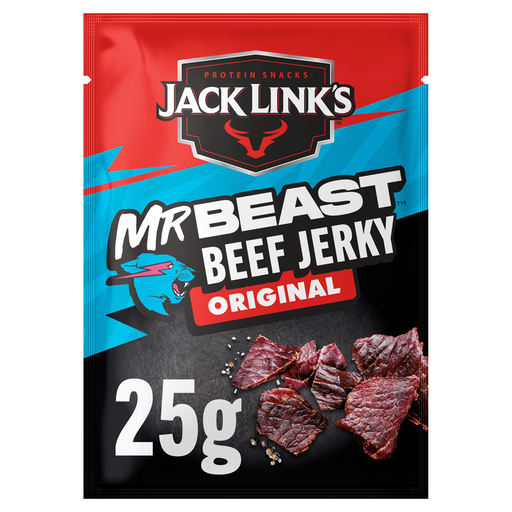
Why This Fits Their Persona: The 25g pouch offers a simple way to try original beef jerky without committing to a larger pack, making it suitable for first-time buyers and occasional office snacks.
Its clearly defined 25g portion makes it easier to compare the actual serving with larger pouches and multipacks.
35.2g protein per 100g; original seasoning; ready to eat and easy to carry.
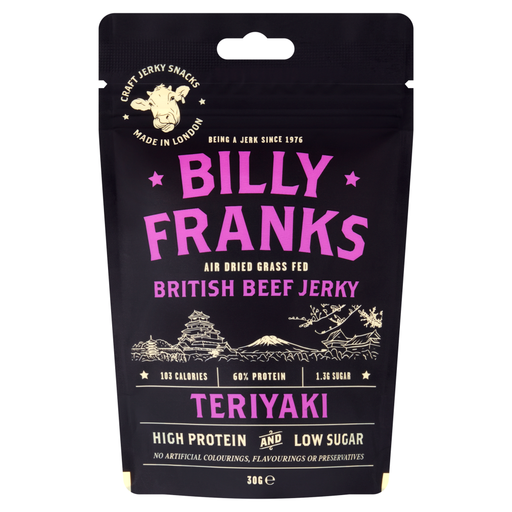
Why This Fits Their Persona: A 30g British-made option with teriyaki seasoning, vinegar, ginger, garlic and Sichuan pepper notes for shoppers seeking a more distinctive flavour.
The ingredient and nutrition details show what creates the flavour, rather than relying only on premium-sounding packaging.
17.9g protein per 30g pack; 2.5g fat per serving; compact format for travel or outdoor use.
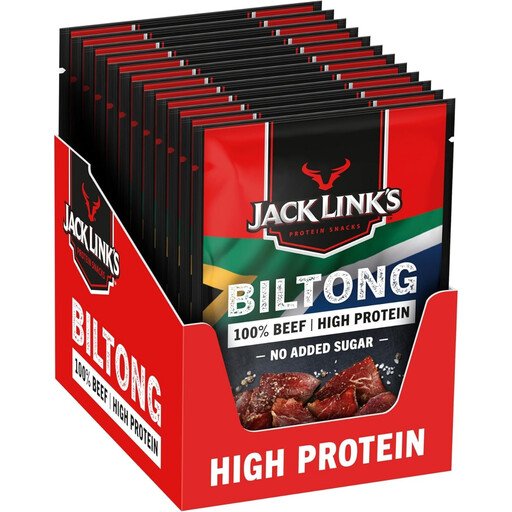
Why This Fits Their Persona: The 12 x 60g format suits regular gym users, shared cupboards and shoppers who want a larger supply of a ready-to-eat meat snack.
The multipack quantity and 60g individual packs make total weight and serving planning clearer than a single oversized pouch.
Listed at 50g protein per 100g; original biltong style; 12 individually sized packs.
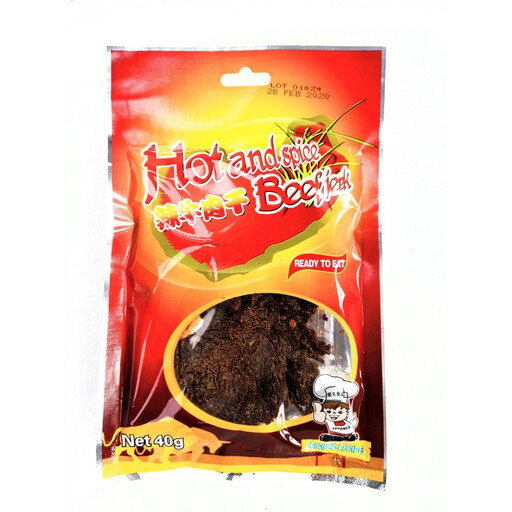
Why This Fits Their Persona: A 40g portion designed for shoppers who prioritise chilli seasoning and a more substantial snack during travel, work breaks or outdoor activities.
The listed 40g serving gives a clearer basis for comparing heat, calories and protein with smaller pouches.
14g protein per 40g serving; no allergens listed in the supplied product information; chilli-based seasoning.
We have compiled a complete, real-time list of products that fully satisfy these strict selection criteria and UK safety regulations.
Yes, unopened jerky is generally ready to eat and does not require preparation. Many sealed packs can be stored in a cool, dry place, making them suitable for desk drawers, commuting and hiking. Check the specific storage instructions and best-before date before carrying a pack for an extended journey.
No. Both are dried meat snacks, but their preparation and flavour can differ. Jerky is commonly seasoned, smoked or heat-dried, while biltong is often vinegar-marinated and air-dried. Compare texture, seasoning and nutrition rather than treating the two names as interchangeable.
Some products fit that description based on their listed nutrition values, but recipes differ. For example, several products in this range list approximately 35g protein per 100g and around 3.5–3.7g fat per 100g. Check salt, sugar and actual portion size as well, particularly when choosing a multipack for regular snacking.